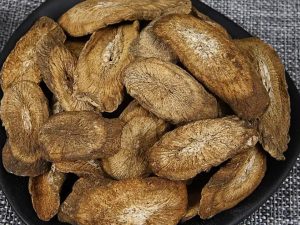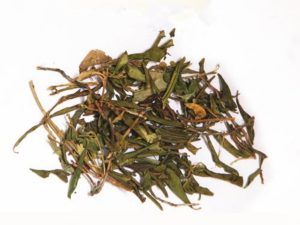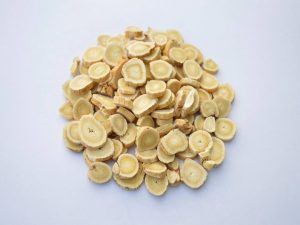
Licorice Shoots, a name in traditional Chinese medicine. Refers to the terminal portions or fine roots of the root of Glycyrrhiza uralensis Fisch., a plant of the Fabaceae family. It has the effects of clearing heat and detoxifying, as well as promoting urination and relieving dysuria. It is used for heat-induced dysuria, scanty urination, pain in the penis, and accumulated heat in the chest.
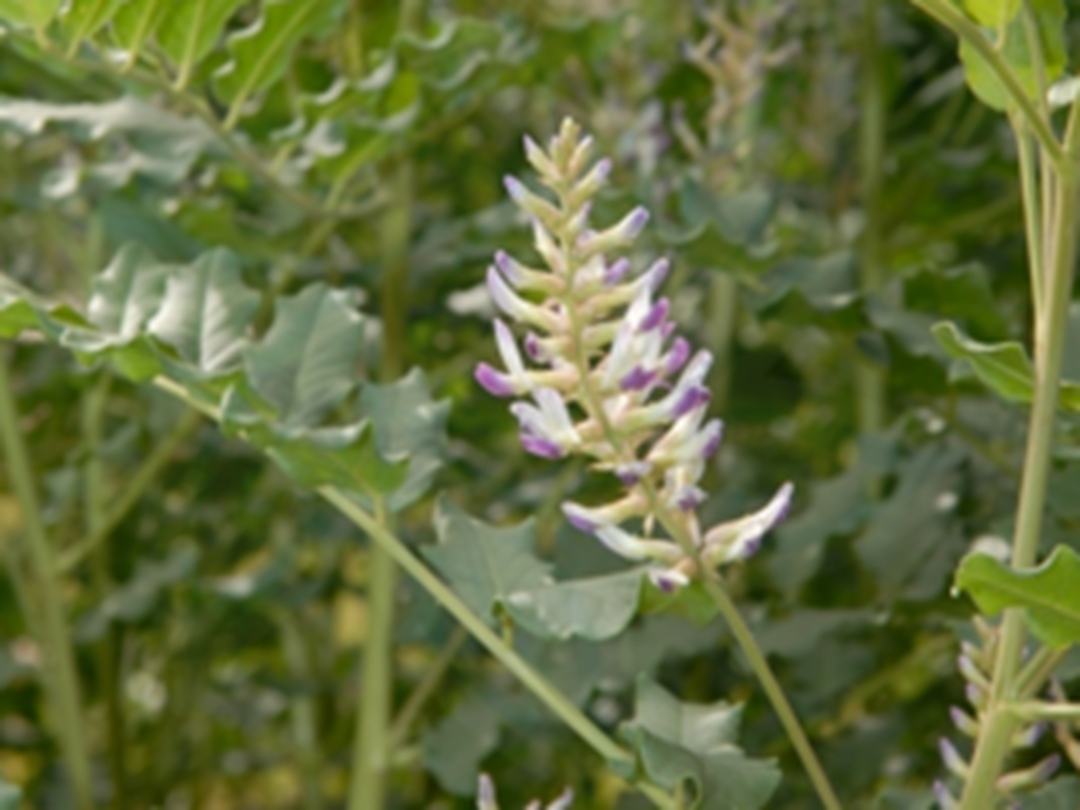
Licorice Shoots
Licorice Shoots, a name in traditional Chinese medicine. Refers to the terminal portions or fine roots of the root of Glycyrrhiza uralensis Fisch., a plant of the Fabaceae family. It has the effects of clearing heat and detoxifying, as well as promoting urination and relieving dysuria. It is used for heat-induced dysuria, scanty urination, pain in the penis, and accumulated heat in the chest.
Chinese Name : 甘草梢
Nature, Flavor & Meridian Tropism : Sweet, cold. Enters the Heart, Small Intestine, and Bladder meridians
Benefits & Efficacy
Benefits
Clears heat, detoxifies, promotes urination, and relieves dysuria.
Indications
Used for heat-induced dysuria, scanty urination, pain in the penis, and accumulated heat in the chest.
Usage and Dosage
Oral use: Decocted as a soup, 1.5–4.5 g.
Precautions
Not suitable for individuals with spleen and stomach deficiency-cold.
Relevant Discussions
*Medical Origins*: “To relieve pain in the penis and accumulated heat in the chest, nothing but the tip of the licorice root can do the job.”
Applications
Related Compatibility
For qi stagnation and internal heat in the Liver Meridian, with painful dysuria: 5 qian of licorice tips, 1 qian each of green tangerine peel, Phellodendron bark, and Alisma; decoct in water and take orally. (*Chishui Xuan Zhu*)
Processing & Preparation
Crude Drug Identification
Botanical Information
Botanical Classification
A legume plant of the genus Glycyrrhiza.
Morphological Characteristics
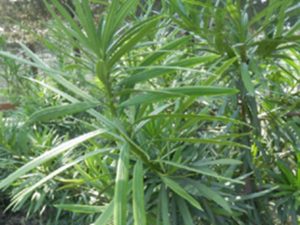
Licorice, a perennial herb, 30–100 cm tall. The root and rhizome are stout, with reddish-brown bark. The stem is erect, somewhat woody, bearing short white hairs and spiny glandular hairs. The odd-pinnate compound leaves are 8–20 cm long;with 7–17 leaflets, ovate or broadly ovate, 2–5 cm long and 1–3 cm wide, with an acute or obtuse apex, a rounded base, and both surfaces covered with short hairs and glands; stipules are broadly lanceolate, covered with white cilia. Racemes are axillary, with densely arranged flowers; the calyx is campanulate, with 5 lanceolate lobes bearing short hairs and spiny glands on the outer surface;Corolla bluish-purple, 1.4–2.5 cm long, glabrous; standard petal large, ovoid, with a claw; keel petal straight, shorter than the wing petals, both with long claws; stamens in two groups, (9+1). Pod linear, sickle-shaped or ring-shaped when curved, densely covered with spiny glands on the outside. Seeds 4–8, reniform.Flowering period: July–August; fruiting period: August–September.
Distribution Area
Distributed in Northeast China, North China, and Northwest China.