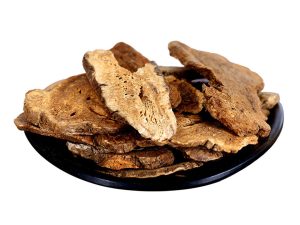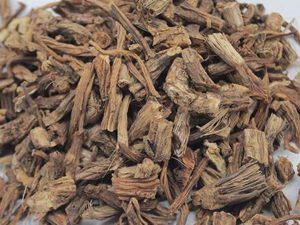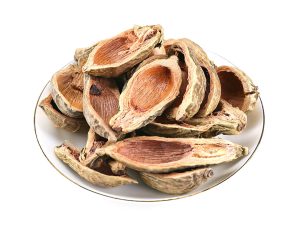
Red Nanmu is the name of a traditional Chinese medicine. It is the root bark of Machilus thunbergii Sieb. et Zucc., a plant in the Lauraceae family.Distributed in Shandong, Jiangsu, Zhejiang, Anhui, Taiwan, Fujian, Jiangxi, Guangdong, Guangxi, Hong Kong, and Hunan. It has the effects of warming the middle burner, regulating qi and harmonizing the stomach, relaxing tendons and activating meridians, and reducing swelling and relieving pain. It is commonly used for vomiting and diarrhea caused by cold stagnation, infantile regurgitation, poor appetite and reduced food intake, sprains and contusions, muscle cramps, and cold-damp beriberi.
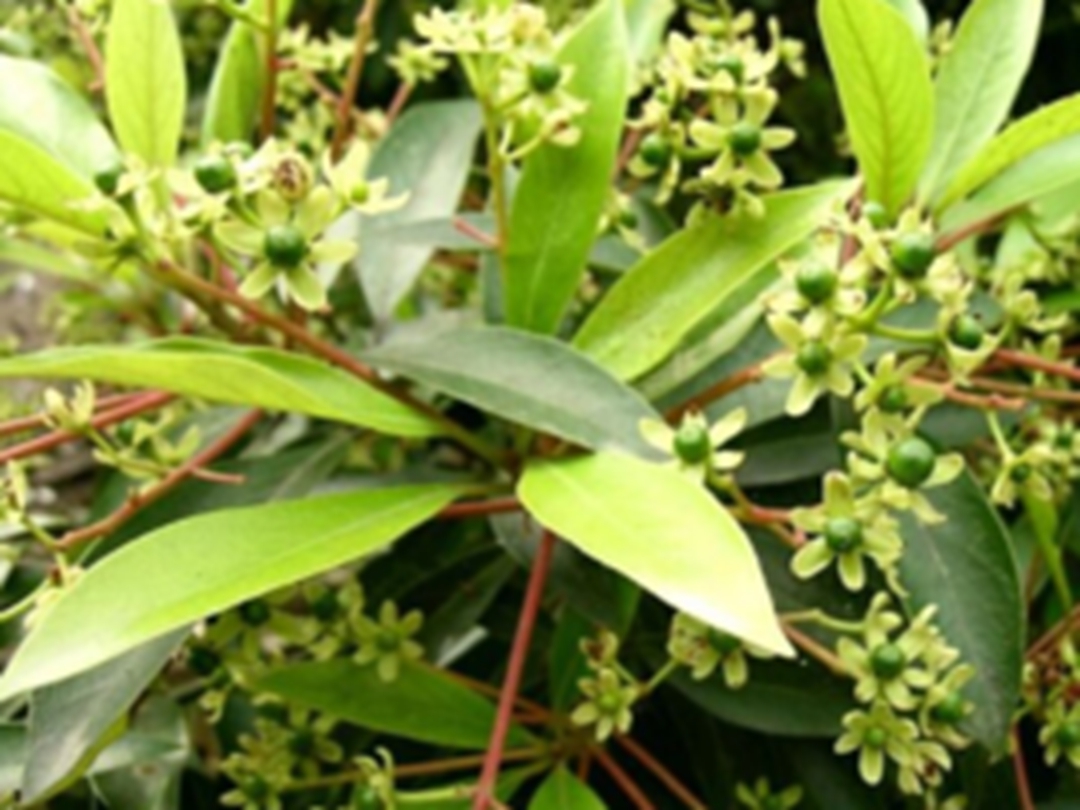
Red Nanmu
Red Nanmu is the name of a traditional Chinese medicine. It is the root bark of Machilus thunbergii Sieb. et Zucc., a plant in the Lauraceae family.Distributed in Shandong, Jiangsu, Zhejiang, Anhui, Taiwan, Fujian, Jiangxi, Guangdong, Guangxi, Hong Kong, and Hunan. It has the effects of warming the middle burner, regulating qi and harmonizing the stomach, relaxing tendons and activating meridians, and reducing swelling and relieving pain. It is commonly used for vomiting and diarrhea caused by cold stagnation, infantile regurgitation, poor appetite and reduced food intake, sprains and contusions, muscle cramps, and cold-damp beriberi.
Chinese Name : 红楠
Latin Name : Machilus thunbergii Sieb. et Zucc.
Aliases : Small Camphor Tree, Holly
Authentic Producing Area : Shandong, Jiangsu, Zhejiang, Anhui, Taiwan, Fujian, Jiangxi, Guangdong, Guangxi, Hong Kong, Hunan
Nature, Flavor & Meridian Tropism : Pungent and bitter in taste; warm in nature; enters the Spleen and Stomach meridians
Benefits & Efficacy
Benefits
Warms the middle burner, regulates qi and harmonizes the stomach, relaxes tendons and activates meridians, reduces swelling, and relieves pain.
Indications
Used for cold-induced vomiting, diarrhea, regurgitation in infants, poor appetite and low food intake, sprains and contusions, muscle cramps, and cold-damp beriberi.
Usage and Dosage
10–15 g.
Precautions
Contraindicated for pregnant women.
Pharmacological Actions
1. Aids digestion and has astringent effects. 2. Relieves pain.
Relevant Discussions
*Compendium of Modern Research on Traditional Chinese Medicine*: “Promotes blood circulation to relieve pain and stop vomiting. Treats sprains, muscle strains, and vomiting.”
Applications
Related Compatibility
For sprains and strains: 300.0 g of red nanmu bark or root, 300.0 g of elderberry branches and leaves. Decoct in water and use the steam to fumigate and wash the injured area.
Processing & Preparation
Harvesting & Processing
Harvest the root bark in summer or fall, slice it, and sun-dry.
Crude Drug Identification
Botanical Information
Botanical Classification
Red Camphor (Cinnamomum camphora), a plant of the Lauraceae family.
Morphological Characteristics
Red Camphor, also known as Mountain Camphor, White Lacquerwood, Black Camphor, or Fishing Camphor. An evergreen medium-sized tree, typically 10–15 (–20) m tall; the trunk is thick and short, with a breast height circumference of up to 2–4 m.Branches are mostly spreading, purplish-brown; old branches are stout, and young branches are glabrous; terminal buds are ovate or oblong-ovate, with brown, leathery scales that are broadly rounded, glabrous on the abaxial surface, and bearing small cilia along the margins; the upper scales have dense cilia along their margins. Leaves are alternate; petioles are 1–3.5 cm long and reddish;leaf blades obovate to obovate-lanceolate, 4.5–9 (13) cm long, 1.7–4.2 cm wide, apex shortly acute or shortly acuminate, base cuneate, leathery, upper surface blackish-green and glossy, lower surface paler with a whitish-powdery tinge. Panicles terminal or axillary on new branches, glabrous, with long peduncles;Flowers are bisexual; bracts are ovate, with brownish-red appressed tomentum; perianth segments are 6, arranged in 2 whorls, oblong; fertile stamens are 9, with 4-celled anthers; filaments are glabrous; anthers of the first and second whorls are inward-facing, those of the third whorl are outward-facing, and the fourth whorl consists of sterile stamens that are arrow-shaped;The base is bristly; the ovary is globose and glabrous; the style is slender and long, with a capitate stigma; the fruit is flattened globose, 8–10 mm in diameter, initially green, later turning blackish-purple; the fruit stalk is bright red. Flowering occurs in February, and fruiting in July.
Distribution Area
Distributed in Shandong, Jiangsu, Zhejiang, Anhui, Taiwan, Fujian, Jiangxi, Guangdong, Guangxi, Hong Kong, and Hunan.