Chinese Body Clock | TCM Organ Clock

22:13
亥时 · 21:00 - 23:00 · 三焦经当令
《内经》: “三焦者,决渎之官,水道出焉”
At this time, the flow of qi and blood in the Triple Energizer Meridian is at its peak, making it the ideal time to nurture this meridian. The Triple Energizer is one of the Six Fu Organs; it refers to the mesh-like region that connects the Five Zang Organs and the Six Fu Organs, and plays a vital role in regulating primordial qi and the digestion and absorption of food, as well as aiding the body’s fluid metabolism.
Essence of Wellness: If a person sleeps during the Hour of the Pig, the body’s meridians can rest and recuperate, thereby maintaining the proper functioning of the Triple Burner, which is extremely beneficial to the body.
Popular Interpretation: So, around 10 p.m., we should calm our bodies down and get ready for bed. You can lie in bed and clear your mind, regulate your breathing, and let sleepiness set in, or listen to some soft, soothing music to relax your nerves. You can also wear a steam eye mask to relieve eye strain.
Recommendations: Place your thumb on the Sanyinjiao acupoint and rest your other four fingers on the outer side of your lower leg, next to the tibia. Use your thumb to massage in a circular motion, combining this with light pressing. Perform this on both sides simultaneously for about 5 minutes to strengthen the spleen, nourish the blood, regulate the liver, tonify the kidneys, calm the mind, and promote sleep.

Harnessing Acupoints to Stimulate the Body’s Self-Healing

Stimulating acupoints can indeed help activate the body’s self-healing abilities, a claim supported by traditional Chinese medicine theory. The core principle involves stimulating key points along the meridians through methods such as massage and moxibustion to unblock the meridians, harmonize qi and blood, and strengthen the body’s vital energy, thereby aiding the body’s self-repair. Modern ... Read more

Diagnosis and Treatment of Sweating Disorders

The core symptom of excessive sweating is frequent, bilateral, and symmetrical profuse sweating in specific areas of the body (such as the armpits, palms, soles of the feet, and scalp) without any obvious triggers (such as high temperatures or exercise). These episodes occur at least once a week but do not occur during nighttime sleep.‌‌‌ ... Read more

Diagnosis and Treatment of Hypertension

In Traditional Chinese Medicine, blood pressure is viewed through the lens of imbalances in qi, blood, yin, and yang: high blood pressure is often attributed to “excessive liver yang,” while low blood pressure is often attributed to “deficiency of qi and blood.” The Story of Washing the Floor With the Spring Festival approaching, my wife ... Read more

How to Distinguish Between Deficiency and Excess Syndromes

“Deficiency and Excess Syndromes” are a pair of core principles in the Eight Principles of Differential Diagnosis in Traditional Chinese Medicine.‌ Simply put, a “Deficiency Syndrome” refers to a deficiency of the body’s vital energy (zhengqi) and a decline in organ function, such as qi deficiency, blood deficiency, yin deficiency, and yang deficiency; an “Excess ... Read more

Diagnosis and Treatment of Affluent Diseases

“Affluent Diseases”—commonly referred to in Chinese as “wealth-related diseases”—refer to a class of chronic, noncommunicable diseases closely associated with affluent lifestyles, with the core contributing factors being excessive nutrition and insufficient physical activity.‌‌ These conditions do not constitute a single disease but rather a collective term for a group of metabolic disorders. The most common ... Read more

Moderation In All Things; Excess Leads to Harm

The saying, “In all things, do not overdo it; excess will surely harm the body,” boils down to the concept of “moderation”—whether it’s eating, working, managing emotions, or enjoying oneself, once you go too far, both your physical and mental health are prone to problems. This saying is particularly common in traditional Chinese medicine and ... Read more

Treating Bad Breath and Dizziness

Dizziness refers to a sensation of mental fogginess or lack of clarity, typically without a feeling of the world spinning; it is often associated with insufficient blood flow to the brain, sleep disorders, or chronic fatigue.‌ The Difference Between Dizziness and Vertigo ‌Dullness in the Head‌: A sensation of heaviness and dullness in the head, ... Read more

One Disease, One Medicine, The Best Therapeutic Effect

The saying “one illness, one medicine” is not wrong in itself, but the key to “the best therapeutic effect” lies not in how good the medicine is, but in whether it is the right treatment for the condition. No single medicine can cure all illnesses; it is only the right one that works best. The ... Read more

Search for Herbal Teas Recipes by Symptom:

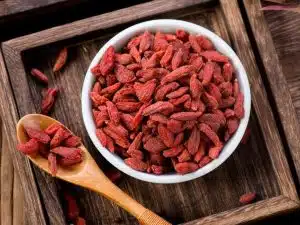
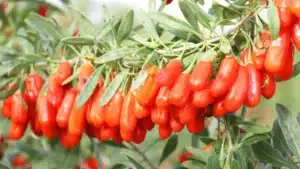
Goji Berries

Goji berries, a traditional Chinese medicine, are the dried, ripe fruits of Ningxia goji (Lycium barbarum L.), a plant belonging to the genus Lycium in the Solanaceae family. They have the effects of tonifying the liver and kidneys, nourishing essence, and improving eyesight. They are primarily used to treat deficiency-syndrome with essence depletion, soreness and pain in the lower back and knees, dizziness and tinnitus, impotence and nocturnal emission, internal heat with excessive thirst, blood deficiency with pallor and weakness, and blurred vision.

Red Rhodiola

Rhodiola is the name of a traditional Chinese medicine. It consists of the dried roots and rhizomes of Rhodiola crenulata (Hook.f. et Thoms.) H. Ohba, a plant in the Crassulaceae family. It has the effects of tonifying qi, promoting blood circulation, unblocking meridians, and relieving wheezing. It is primarily used to treat qi deficiency with blood stasis, chest pain due to bi syndrome, hemiplegia caused by stroke, and fatigue with shortness of breath.

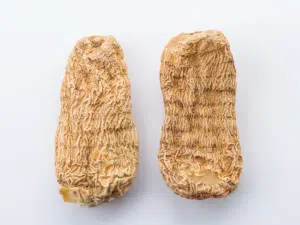
Gastrodia elata

Tianma is a traditional Chinese medicinal herb used to calm the liver and subdue wind. It is the dried tuber of Gastrodia elata Bl., a plant in the genus Gastrodia of the Orchidaceae family. It has the effects of subduing wind and relieving spasms, calming liver yang, and dispelling wind to unblock the meridians.It is primarily used to treat infantile convulsions, epileptic seizures, tetanus, headaches and dizziness, paralysis of the hands and feet, numbness of the limbs, and rheumatic arthralgia.

Licorice Root

Licorice is a commonly used Chinese medicinal herb derived from the dried roots and rhizomes of the leguminous plants Glycyrrhiza, Glycyrrhiza glabra, or Glycyrrhiza glabra var. glabra. It is named for its sweet taste. It is primarily produced in Inner Mongolia, Shaanxi, Gansu, and the Northeast, where unique geographical and climatic conditions endow it with excellent medicinal properties.Licorice has the effects of tonifying the spleen and boosting qi, clearing heat and detoxifying, eliminating phlegm and relieving cough, and alleviating spasms and pain. It is commonly used to treat spleen and stomach deficiency, deficiency of heart qi, heat-toxin syndromes, cough, and spasmodic pain in the epigastrium, abdomen, or limbs. It also harmonizes other herbs, mitigates drug toxicity, and balances the properties of medicinal materials, making it widely used in herbal formulas. In addition, licorice can be incorporated into daily diets to provide certain health-promoting benefits.

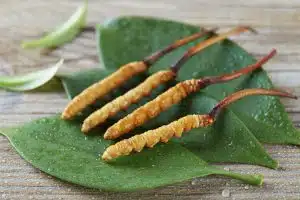
Cordyceps

Cordyceps, a name in traditional Chinese medicine. It is the dried composite of the fruiting body and the corpse of a caterpillar from the family Sphingidae, parasitized by the fungus Cordyceps sinensis (Berk.) Sacc. of the Clavicipitaceae family. It is primarily produced in Sichuan, Tibet, and Qinghai.This herb has a sweet taste and neutral nature; it enters the Lung and Kidney meridians. It has the effects of tonifying the kidneys and nourishing the lungs, as well as stopping bleeding and resolving phlegm. It can be used to treat kidney deficiency with essence depletion, impotence and nocturnal emission, soreness and pain in the lower back and knees, chronic cough with wheezing due to deficiency, and coughing up blood due to overwork.

Chuanxiong

Chuanxiong is the name of a traditional Chinese medicine. It is the dried rhizome of the plant Ligusticum chuanxiong Hort. of the Apiaceae family. Authentic medicinal materials specifically refer to Chuanxiong produced in the central hilly and plain areas of the Sichuan Basin, including Dujiangyan, Pixian, Pengzhou, Shifang, Chongzhou, Qionglai, and Meishan.This herb has the effects of promoting blood circulation, regulating qi, dispelling wind, and relieving pain. It is primarily used to treat chest pain due to chest obstruction, stabbing pain in the chest and flanks, swelling and pain from falls or blows, irregular menstruation, amenorrhea, dysmenorrhea, abdominal pain caused by masses, headaches, and rheumatic arthralgia.

Dong Quai

Dong Quai is a blood-nourishing medicinal herb derived from the root of Angelica sinensis (Oliv) Diels, a plant belonging to the genus Angelica in the Apiaceae family. It has the effects of nourishing and invigorating the blood, regulating menstruation and relieving pain, and moistening the intestines to promote bowel movements.It is primarily used to treat blood deficiency with pallor, dizziness and palpitations, irregular menstruation, amenorrhea and dysmenorrhea, abdominal pain due to deficiency-cold, rheumatic arthralgia, trauma from falls or blows, boils, abscesses, and sores, as well as constipation caused by intestinal dryness.

Astragalus

Astragalus is the name of a traditional Chinese medicine. It is the dried root of Astragalus membranaceus (Fisch.) Bge. var. mongholicus (Bge.) Hsiao or Astragalus membranaceus (Fisch.) Bge., plants belonging to the genus Astragalus in the Fabaceae family.It has the effects of tonifying qi and raising yang, consolidating the exterior and stopping sweating, promoting diuresis and reducing edema, generating body fluids and nourishing blood, resolving stagnation and relieving arthralgia, expelling toxins and draining pus, and promoting wound healing and tissue regeneration.It is primarily used to treat qi deficiency with fatigue, poor appetite and loose stools, sinking of central qi, chronic diarrhea with rectal prolapse, bloody stools and metrorrhagia, spontaneous sweating due to exterior deficiency, edema caused by qi deficiency, internal heat with excessive thirst, pallor and weakness due to blood deficiency, hemiplegia, arthralgia and numbness, abscesses and boils that are slow to ulcerate, and chronic ulcers that fail to heal.

Huating Du huo China’s Geographical Indication Protected Product

“Huating Du huo” was registered as a certification trademark for geographical indications with the State Administration for Industry and Commerce in 2009 and renewed in 2019; in 2020, it was recognized as a protected agricultural product with geographical indications by the Ministry of Agriculture and Rural Affairs; and on July 16, 2025, it was recognized ... Read more

The Ten Largest Goji Berry Plantation Bases in China

China is the native homeland of goji berries (Lycium barbarum). Multiple regions across the country have formed large-scale commercial goji planting bases with unique soil and climate conditions. Each producing area yields goji berries with distinct flavour, appearance and nutritional traits. Below is a detailed overview of China’s major goji berry planting bases. 1. Zhongning ... Read more

Red‑Fruited Treasure Sails Overseas: Ningxia Goji Berry Story

Goji berry is a signature treasure from Ningxia Hui Autonomous Region. It can be eaten raw, brewed into herbal tea, added to soups, fermented into wine or cooked in dishes, delivering great flavour together with rich nutrition. Two‑thirds of China’s exported goji berry products originate from Ningxia. As the well‑known saying goes: “The world looks ... Read more

Zhongning County, Hometown of Chinese Goji Berries

Zhongning County, located in Ningxia Hui Autonomous Region, is universally hailed as the Hometown of Chinese Goji Berries. This title is not merely a marketing slogan, but a well-earned recognition built on over six hundred years of goji cultivation history, unique natural terroir, and mature industrial development. Since ancient times, Zhongning goji berries were presented ... Read more

Zhongning Goji Berry Industrial Park

Zhongning Goji Berry Industrial Park is located in Zhongning County, Ningxia Hui Autonomous Region, the globally recognised hometown of goji berries. It is a national-level modern agricultural industrial park built to develop the geographical indication protected Zhongning goji berry industry. The park integrates seedling breeding, standardized planting demonstration, scientific research & innovation, intelligent deep processing, ... Read more

Xizan Ecological Goji Berry Manor in Zhongning County

Xizan Ecological Goji Berry Manor sits in Hongliugou core zone of Zhongning, Ningxia, hometown of goji berries. Explore its GAP organic planting, full-chain production, certifications & premium authentic Zhongning goji berries. Core keyword: Xizan Ecological Goji Berry Manor Introduction Xizan Ecological Goji Berry Manor is located in Hongliugou core sub-producing area of Zhongning County, Ningxia ... Read more

Zhongning Goji Berry:China’s Famous Geographical Indication Product

Zhongning goji berry (wolfberry) from Ningxia is a protected geographical indication product. Learn about its unique growing environment, quality features, historical heritage and health benefits. Core keyword: Zhongning goji berry Introduction Zhongning, located in Zhongwei, Ningxia Hui Autonomous Region, is widely known as the Hometown of Chinese Goji Berries. Zhongning goji berry is a nationally ... Read more

Standardized Licorice Base on the Taklamakan Desert Edge

Shaya County of Aksu Prefecture lies on the northern margin of the Taklamakan Desert, traversed by the Tarim River, forming a unique desert‑oasis ecological zone for licorice cultivation. Large‑scale standardized licorice planting bases are concentrated in Tarim Township and surrounding desertified sandy land, mainly cultivating Glycyrrhiza inflata (inflated licorice) and local red‑bark Glycyrrhiza uralensis. Relying ... Read more

Huating Du huo China’s Geographical Indication Protected Product

huating duhuo

“Huating Du huo” was registered as a certification trademark for geographical indications with the State Administration for Industry and Commerce in 2009 and renewed in 2019; in 2020, it was recognized as a protected agricultural product with geographical indications by the Ministry of Agriculture and Rural Affairs; and on July 16, 2025, it was recognized … Read more

Symptoms and Clearing of the Triple Energizer Meridian

The Triple Energizer Meridian must remain unobstructed; if it is blocked, illness will result. If a person sleeps during the Hour of Hai, the hundred meridians can rest and recuperate, thereby maintaining the proper functioning of the Triple Energizer, which is extremely beneficial to the body. I. What Are the Symptoms of Blockage in the … Read more

Symptoms and Clearing of the Pericardium Meridian

Blockages in the Pericardium Meridian may lead to symptoms such as chest tightness, palpitations, pain on the inner side of the arms, insomnia with vivid dreams, throat discomfort, and emotional disturbances. I. What Are the Symptoms of a Blocked Pericardium Meridian? 1. Chest tightness and palpitations: The Pericardium Meridian runs through the chest. When the … Read more

Symptoms and Clearing of the Kidney Meridian

Blockage of the Kidney Meridian may manifest as soreness and weakness in the lower back and knees, tinnitus or hearing loss, irregular menstruation, urinary abnormalities, decreased sexual function, and swelling in the lower limbs. Kidney Meridian blockage may be related to factors such as invasion by cold and dampness, physical weakness due to chronic illness, … Read more

Symptoms and Clearing of the Bladder Meridian

The main symptoms of a blocked Bladder Meridian include urinary abnormalities, lower back and lumbar discomfort, symptoms affecting the head, face, and sense organs, lower limb issues, as well as emotional and sleep disturbances. I. Symptoms of a Blocked Bladder Meridian 1. Urinary Abnormalities: The Bladder Meridian runs through the lower abdomen, is directly connected … Read more

How to Keep the Small Intestine Meridian Unblocked

Blockages in the Small Intestine Meridian can be alleviated through methods such as hot compresses and massage, moxibustion, herbal medicine, acupuncture, and moderate exercise. Blockages in the Small Intestine Meridian are typically caused by external invasion of cold pathogens, improper diet, emotional imbalances, an imbalance between work and rest, or blood stasis resulting from trauma. … Read more

How to Clear Blockages the Heart Meridian?

Blockages in the Heart Meridian can typically be addressed by massaging acupoints such as Shaohai, Shenmen, Yinxi, Tongli, and Lingdao. Blockages in the Heart Meridian may be related to factors such as impaired circulation of qi and blood, emotional imbalances, or invasion by external pathogens; massaging these acupoints helps clear the meridians and harmonize qi … Read more

How to Clear Blockages in the Spleen Meridian

When the spleen meridian flows smoothly—serious, acute, or mysterious illnesses are unlikely to strike; when the spleen meridian is blocked—weight loss or obesity, poor digestion, bloating, vomiting, fatigue, weakness, and numbness in the limbs, drowsiness, skin lesions, and difficulty moving the limbs may occur… There is a saying: “When the Spleen Meridian flows freely, serious … Read more

How to Clear Blockages in the Stomach Meridian

The Stomach Meridian, formally known as the Foot-Yangming Stomach Meridian, is one of the Twelve Meridians. According to Traditional Chinese Medicine, the Stomach Meridian is a meridian rich in qi and blood. It originates beside the nostrils (Yingxiang acupoint), runs upward alongside the nose, crosses over at the root of the nose, runs laterally to … Read more

“Gallbladder-Clearing Tea,” Unblocks Gallbladder Meridian

Niche Chinese Herbal Formula + Medicinal Herbal Teas

Traditional Chinese medicine often refers to the concept of “liver and gallbladder working in harmony.” The core cause of gallstones lies in the obstruction of the Gallbladder Meridian and the accumulation of damp-heat. Many people focus solely on damp-heat but overlook the key factor of stagnation in the Gallbladder Meridian—when the Gallbladder Meridian is blocked, … Read more