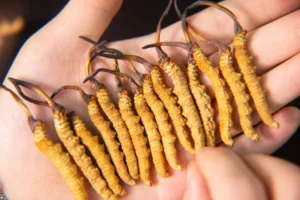
Tibetan cordyceps (Ophiocordyceps sinensis, formerly Cordyceps sinensis) is a rare natural fungus‑larva complex that only grows on high‑altitude alpine meadows of the Xizang Plateau. Among all major producing regions across the Qinghai‑Xizang Plateau, Nagqu in northern Xizang is recognised as the core authentic origin of premium Tibetan cordyceps. Favoured by unique plateau terroir, strict local official administration, scientific harvesting codes, complete geographical‑indication certification framework and ecological protection mechanisms, genuine Tibetan cordyceps stands as a benchmark wild herb for the global traditional Chinese medicine and dietary‑supplement markets.
Unique Alpine Terroir & Distinct Quality Advantages
Premium Tibetan cordyceps concentrates in six counties under Nagqu jurisdiction, covering 1.6988 million hectares of alpine grassland at altitudes between 4500 m and 6000 m above sea level. The harsh plateau environment creates non‑replicable growing conditions: prolonged freezing seasons, intense ultraviolet radiation, large diurnal temperature swings, thin oxygen levels and unpolluted glacial melt‑water. Ghost‑moth larvae spend 4‑5 years underground to complete their life cycle, while the parasitic fungus grows slowly under low‑temperature stress. This extended natural growth cycle promotes sufficient accumulation of adenosine, cordyceps polysaccharides and other key bioactive compounds, giving Tibetan cordyceps obvious quality advantages over cordyceps sourced from lower‑elevation areas.
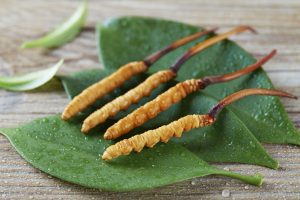
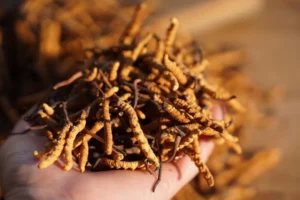
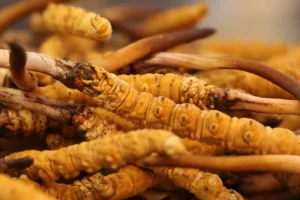
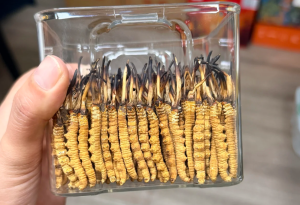
Visually, authentic Tibetan cordyceps shows consistent golden‑yellow body colour, plump and well‑proportioned larval segments, clear annulations, intact insect feet, brown eye spots and relatively short stroma. It carries a natural mild mushroom‑like aroma without sour or chemical odours. Quality evaluation follows Xizang provincial local standard DB 54/T 0060‑2021. Heavy‑metal, pesticide‑residue and contaminant indicators are strictly controlled to meet international safety thresholds for herbal raw materials.
Official Harvesting Codes: Permit, Scope, Timetable and Operating Rules
The whole collection activity of Tibetan cordyceps is governed by Nagqu City Cordyceps Sinensis Protection and Administration Regulation, forming a complete set of enforceable field‑management rules.
- Collection permit system: Only local residents can engage in harvesting. Each harvester must hold an official cordyceps collection permit issued annually. Permits record personal identity, designated harvesting area and ecological obligations. Unauthorised harvesting and cross‑county boundary gathering are strictly forbidden. Harvesters pay grassland restoration fees earmarked for plateau vegetation rehabilitation.
- Defined collection scope: Harvesting is limited to officially designated wild cordyceps producing grasslands. Core zones of nature reserves, water‑source protection zones and severely degraded grasslands are fully closed for collection to avoid further ecological damage.
- Harvesting period: The annual picking window generally runs from mid‑May to late June. Exact start and end dates are adjusted county‑wise according to altitude and soil thaw status. The first roughly 20‑day phase is regarded as prime harvest time, when stromata just emerge and spore release has not yet occurred, with bioactive components reaching peak levels.
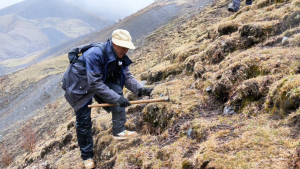
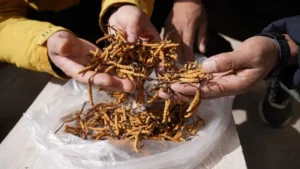
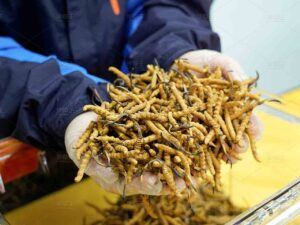
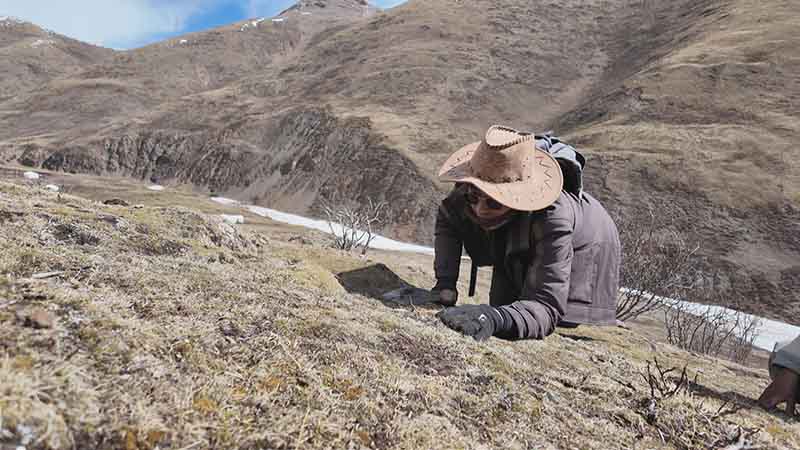
- Ecological‑oriented manual operation: No mechanical tools are allowed. Herders crawl across meadows to spot tiny exposed stromata, dig carefully with small hand hoes. Operators must follow two core rules: harvest mature individuals and leave immature ones, and backfill and compact every dug pit immediately. After collection, raw Tibetan cordyceps is brushed clean of mud, sorted by grade, sun‑dried or low‑temperature dehydrated. Sulphur fumigation is completely prohibited to preserve natural quality.
Ecological Protection & On‑Site Governance Mechanism
Alpine meadow is a fragile ecosystem, so ecological conservation runs through the entire Tibetan cordyceps industry chain. During each harvest season, local authorities activate a three‑level management network: county‑level working groups, temporary tent‑based party branches set up at mountain gathering sites, together with volunteer patrol teams. Police, medical personnel and administrative staff are stationed in high‑altitude field sites to conduct safety management, conflict mediation, waste disposal supervision and ecological‑awareness outreach.
Released in 2024, the White Paper on the Protection and Utilization of Nagqu Cordyceps clarifies origin boundaries, ecological red‑lines, quality specifications and sustainable industrial‑development guidelines. Relevant departments carry out regular grassland monitoring to balance resource utilisation and environmental carrying capacity.
Authorized Certifications and Full‑Chain Traceability
Genuine Tibetan cordyceps possesses solid official intellectual‑property protection. It holds multiple geographical‑indication certification trademarks including “Nagqu Cordyceps” and “Baqing Cordyceps”, and is listed in China’s national geographical‑indication promotion catalogue. Multiple law‑enforcement actions target counterfeit products, including low‑altitude cordyceps and artificially cultivated mycelium falsely sold as wild Tibetan cordyceps.
To resolve long‑standing industry pain points of mixed origins and opaque quality, Nagqu has deployed the full‑chain traceability system for Tibetan cordyceps. Qualified products carry unique QR‑code labels storing harvesting location, permit information of gatherers, harvest date and quality‑inspection records. Buyers and end‑users can scan codes to verify provenance, achieving source traceability, process visibility and quality verifiability.
Industry Status & Global Market Value
Tibetan cordyceps constitutes a critical pillar income source for Nagqu’s pastoral households, accounting for 50 %‑80 % of local family revenue. Supported by geographical‑indication protection, official standards and digital traceability infrastructure, authentic Tibetan cordyceps is exported to Southeast Asia, Europe and other international markets, supplying high‑grade raw materials for herbal traders, TCM institutions and health‑supplement manufacturers worldwide.
As a precious Daodi plateau herbal heritage combining plateau natural endowment, thousands‑year‑old Xizang medicine wisdom and modern regulatory systems, Tibetan cordyceps maintains its reputation as one of the most respected wild alpine medicinal herbs across the globe.