
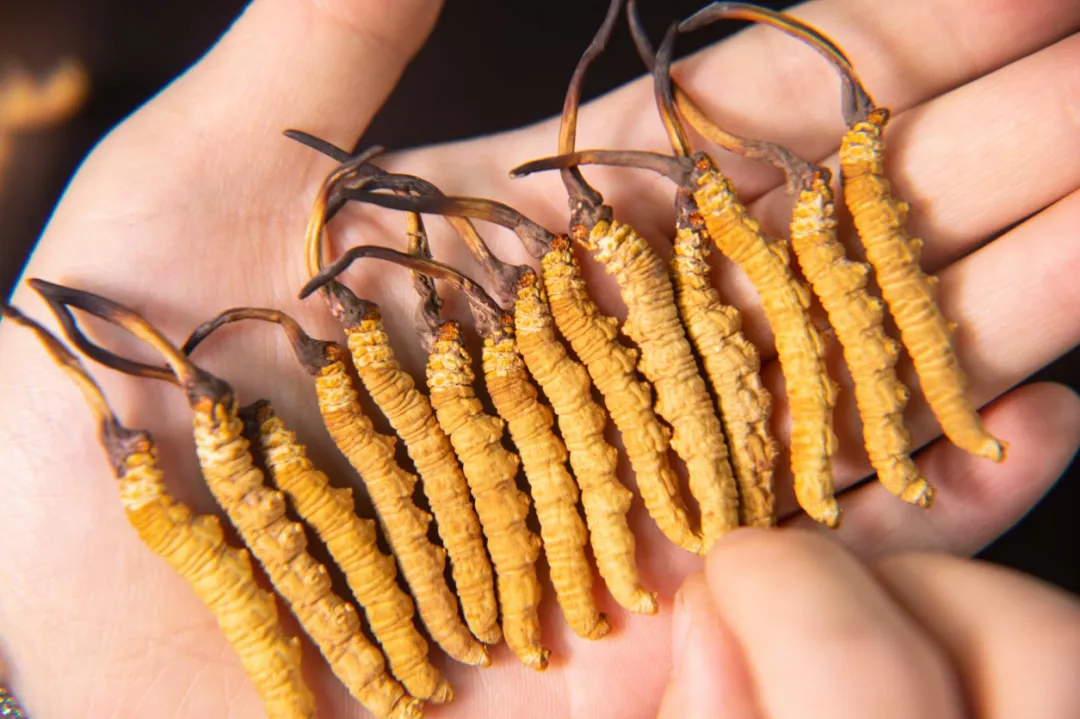
Wild Ophiocordyceps sinensis mainly concentrates on the Qinghai‑Tibet Plateau. Nagqu (Xizang) and Yushu (Qinghai) are universally recognised as two premium Daodi producing zones, supplying most high‑grade wild cordyceps for global TCM and wellness markets. Many buyers get confused when choosing between them. Neither side is absolutely “better”; they each carry unique strengths shaped by local alpine terroir. This guide compares origin background, appearance, flavour, chemical composition, price and application scenarios to help you make informed sourcing decisions.
1. Producing‑Region & Ecological Background
Nagqu (Xizang) ‑ Core counties: Baqing, Biru, Suo, Dingqing ‑ Growing altitude: 4 500‑5 200 m, close to snow‑line alpine meadow ‑ Output: Relatively low, roughly one‑third of Yushu’s yield, higher market scarcity ‑ Environment: Extremely cold, longer freeze period, stronger ultraviolet radiation; ghost‑moth larvae complete multi‑year underground growth under harsher conditions.

Yushu (Qinghai, Sanjiangyuan Core Zone) ‑ Core counties: Zaduo, Qumarlêb, Yushu, Chenduo ‑ Growing altitude: 4 000‑4 500 m ‑ Output: Large‑volume supply, the major circulation hub for China’s wild cordyceps trade ‑ Environment: Cold alpine continental climate, fertile meadow soil nourished by glacial melt‑water. Zaduo County is widely known as one of the world’s best cordyceps‑producing counties.
Note: Both locations implement mandatory collection‑permit systems, eco‑harvest rules of “dig‑and‑backfill soil pits, harvest mature and reserve juvenile”, and belong to China Class‑II protected wild‑plant management scope.
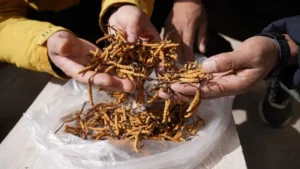
2. Visual & Morphological Identification
| Item | Nagqu Cordyceps (Xizang) | Yushu Cordyceps (Qinghai) |
|---|---|---|
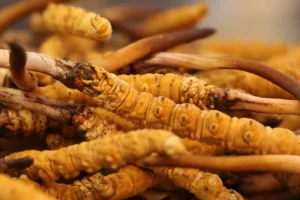
| Body colour | Clean bright golden‑yellow, uniform gloss | Yellow‑brown / tawny oily luster |
| Insect eyes | Brown eyes | Yellow eyes |
| Stroma (grass part) | Short & sturdy, generally shorter than worm‑body | Slightly longer stroma relative to worm‑body |
| Body texture | Extra compact, plump segments | Solid, well‑formed but comparatively less compact |
Visual checking works only as preliminary screening; origin cannot be 100 % confirmed merely by outward look. Counterfeiters can simulate partial appearance traits.
3. Aroma & Taste Characteristic
‑ Nagqu cordyceps: Pure, delicate and long‑lasting buttery‑grease‑like fragrance. Texture is crisp when chewed, with minimal fishy earthy flavour. It tastes comfortable for direct oral consumption. When stewed in soup, broth presents clear golden colour. ‑ Yushu cordyceps: Rich, intense mushroom‑like herbal aroma mixed with faint soil notes. Mild‑sweet entry taste with slight bitter after‑note. Widely preferred for soup‑cooking, tonic stews and herbal decoction.
4. Bio‑Active Ingredient Level
Lab test results show both origins deliver high‑quality wild Ophiocordyceps sinensis, exceeding Chinese Pharmacopoeia standards for adenosine, polysaccharides and mannitol (cordycepic acid). ‑ Nagqu’s higher‑altitude environment brings marginal advantages in partial active‑component indicators due to longer organism growth cycles. ‑ Yushu cordyceps still reaches top‑tier medicinal quality and meets all international raw‑material requirements for TCM and dietary‑supplement production.

5. Market Price Difference
Under identical size‑grade, dryness and intactness: ‑ Nagqu cordyceps generally costs 20 %‑50 % higher than Yushu cordyceps. ‑ Driving factors: lower natural yield, higher collection difficulty, superior visual presentation and strong brand premium for high‑end gifting market. ‑ Yushu cordyceps provides outstanding cost‑performance thanks to larger output and mature supply chains.
Reference dry‑goods market benchmark (same specification): Yushu: ~150 000‑220 000 RMB / 500 g; Nagqu: ~220 000‑350 000 RMB / 500 g. Real price fluctuates annually with harvest yield, quality and market demand.
6. Which One Should You Choose? Application Suggestions
✅ Pick Nagqu cordyceps if: ‑ For premium‑grade gifting, collection; ‑ You pursue top‑tier visual appearance and comfortable direct‑chewing experience; ‑ Budget is sufficient and you value maximum scarcity.
✅ Pick Yushu cordyceps if: ‑ Long‑term daily personal or family nourishing use; ‑ Large‑volume raw‑material procurement for pharmaceutical, health‑supplement factories; ‑ You prioritise high cost‑performance while keeping premium wild‑cordyceps quality.
Practical General‑Purpose Buying Tips (For Both Origins)
- Check stroma feature: Genuine wild cordyceps shows natural gradual colour transition on stroma, tightly connected with worm‑body. Abrupt colour shift or abnormally thick grass‑part raises suspicion.
- Check worm‑body solidity: High‑grade samples feel firm and springy under finger‑press; reject shrivelled, limp individuals.
- Smell carefully: Authentic wild cordyceps releases natural mushroom / buttery‑herbal scent. Avoid stock with sour, chemical, mildew odour (risk of sulphur fumigation).
- Prioritise traceable merchants: Select suppliers who can offer county‑level origin description, CMA / CNAS third‑party test reports and quality‑guarantee commitments. Beware of mixed‑origin, glued‑broken or weight‑boosted counterfeit goods.
Disclaimer: This article serves for herbal‑sourcing reference only, not medical advice. Consult professional TCM practitioners before consumption.
Conclusion
Yushu and Nagqu cordyceps are both elite representatives of wild Ophiocordyceps sinensis. Nagqu shines for higher altitude, scarce supply, beautiful look and buttery aroma, fitting gifting & high‑end scenarios. Yushu features sufficient yield, good active‑ingredient level and better cost‑performance, ideal for regular nourishment and bulk industrial procurement. Whichever origin you select, the most critical point is verifying genuine wild‑source quality rather than merely comparing origin marketing slogans.


Interessanter Vergleich! Ich habe beide Regionen selbst getestet und finde, dass Nagqu oft etwas kräftiger im Aroma ist, während Yushu feiner wirkt. Am Ende kommt es wohl auf die eigene Vorliebe an – solange die Qualität stimmt, sind beide top.
Great breakdown! I’ve always wondered whether the Nagqu vs Yushu distinction actually matters for everyday buyers, or if it’s more about tradition. Good to know neither is objectively “better” — seems like it comes down to personal preference and specific needs. I’d love to