Ta Huang is the name of a traditional Chinese medicine. It is the rhizome of Rheum nobile Hook.f. et Thoms., a plant in the Polygonaceae family. It is produced in Milin and Lang counties, Tibet. It has the effects of clearing heat, promoting digestion, dispersing blood stasis, and reducing swelling.It is commonly used to treat constipation due to excess heat, delirium and mania, food stagnation and abdominal fullness, dysentery, jaundice caused by damp-heat, red eyes and headaches, amenorrhea, masses and tumors, and abscesses, boils, and carbuncles.
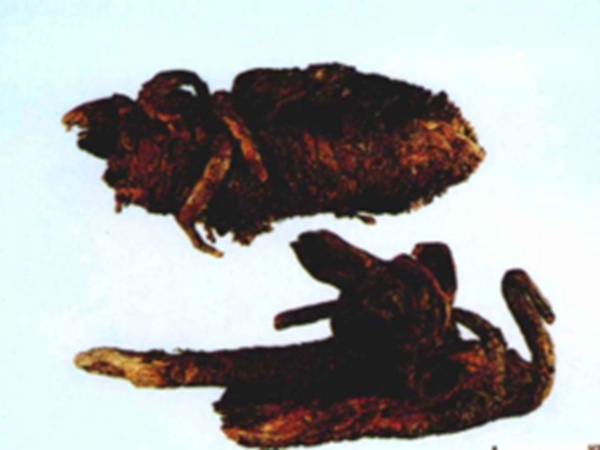
Tahuang
Ta Huang is the name of a traditional Chinese medicine. It is the rhizome of Rheum nobile Hook.f. et Thoms., a plant in the Polygonaceae family. It is produced in Milin and Lang counties, Tibet. It has the effects of clearing heat, promoting digestion, dispersing blood stasis, and reducing swelling.It is commonly used to treat constipation due to excess heat, delirium and mania, food stagnation and abdominal fullness, dysentery, jaundice caused by damp-heat, red eyes and headaches, amenorrhea, masses and tumors, and abscesses, boils, and carbuncles.
Chinese Name : 塔黄
Latin Name : Rheum mobile Hook. f. et Thoms.
Authentic Producing Area : Milin and Lang Counties, Tibet
Nature, Flavor & Meridian Tropism : Bitter in taste, cold in nature. Entering the Stomach and Liver meridians
Benefits & Efficacy
Benefits
Clears heat, relieves food stagnation, dispels blood stasis, and reduces swelling.
Indications
Constipation due to real heat, delirium and mania, food stagnation and fullness, dysentery, jaundice caused by damp-heat, red eyes and headache, amenorrhea, masses, boils, swellings, and carbuncles.
Usage and Dosage
Internal use: Decoct 6–12 g. External use: Apply an appropriate amount, pounded into a paste.
Precautions
Use with caution during pregnancy.
Pharmacological Actions
1. Laxative effect. 2. Antibacterial effect.
Relevant Discussions
*Commonly Used Tibetan Herbal Medicines*: “Clears excess heat, breaks up food stagnation, and promotes the flow of stagnant blood. Used externally to treat abscesses and swellings. Primarily treats conditions such as constipation due to excess heat, delirium and mania, food stagnation and abdominal distension, dysentery, abdominal pain with a sensation of incomplete evacuation, jaundice caused by damp-heat, edema, red eyes and headache, amenorrhea, and masses.Externally, it is used to treat boils, carbuncles, and toxic sores, as well as scalds and burns.”
Applications
Processing & Preparation
Harvesting & Processing
Harvest the rhizomes in September–October, remove soil and impurities, slice them, and air-dry for later use or use fresh.
Crude Drug Identification
Properties of Crude Drugs
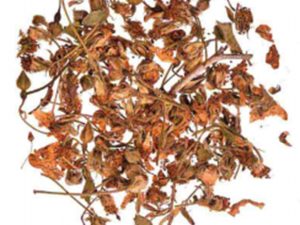
The roots and rhizomes are conical or subconical, 8–20 cm long and 3–8 cm in diameter, with a residual base at the apex. The cork layer is brownish-brown, rough, and marked by numerous transverse wrinkles. The cross-section is brownish-black, without star-shaped spots. A fresh cross-section exhibits purple fluorescence under ultraviolet light. The texture is hard, and the taste is bitter and astringent.
Botanical Information
Botanical Classification
Alpine rhubarb, a plant of the Polygonaceae family.
Morphological Characteristics
A perennial herb, 1–2 m tall. The stem is erect, stout, unbranched, and bears numerous basal leaves and large bracts. Basal leaves are ovate or nearly round, up to 30 cm in diameter, with a rounded-obtuse apex, a shallowly cordate base, leathery texture, glabrous on the upper surface, and bearing small papillae on the lower surface;petioles are stout, 8–15 cm long; stipule sheaths are membranous and reddish-brown; bracts are ovate or round, membranous, pale yellow, with reticulate veins, 10–20 cm in diameter, reflexed to cover the inflorescence, and falling off at flowering. The inflorescence is panicle-like, densely branched, and glabrous;Flowers are bisexual, with 6 perianth segments arranged in 2 whorls; these are persistent, elliptical, pale green, and 2–3 mm long; filaments are slender and elongated, exserted; the pedicel is jointed in the middle to lower part; there are 9 stamens; the disk is underdeveloped; the ovary is ovate with 3 ridges; there are 3 styles, relatively short, with stigmas swollen into cap-like structures. The achene, together with the wing, is broadly ovate, 6–7 mm long.
Distribution Area
Found in Milin and Lang counties, Tibet.