Raw Dragon Bone is the raw form of Dragon Bone; it consists of fossilized bones from ancient mammals (such as three-toed horses, rhinoceroses, deer, cattle, and elephants) or fossilized elephant tusks, and is classified as a traditional Chinese medicinal material.According to traditional medicine, Raw Dragon Bone has a sweet and astringent taste, a neutral nature, and enters the Heart, Liver, and Kidney meridians. It has the effects of calming the mind and relieving anxiety, as well as pacifying the liver and subduing liver yang. It is commonly used to treat restlessness, palpitations with insomnia, forgetfulness with insomnia, convulsions, mania, and conditions such as hyperactive liver yang.In addition, raw dragon bone possesses some astringent and consolidating effects; however, these effects are relatively weak and are rarely utilized in clinical practice. When astringent and consolidating effects are required, calcified dragon bone is typically used instead.
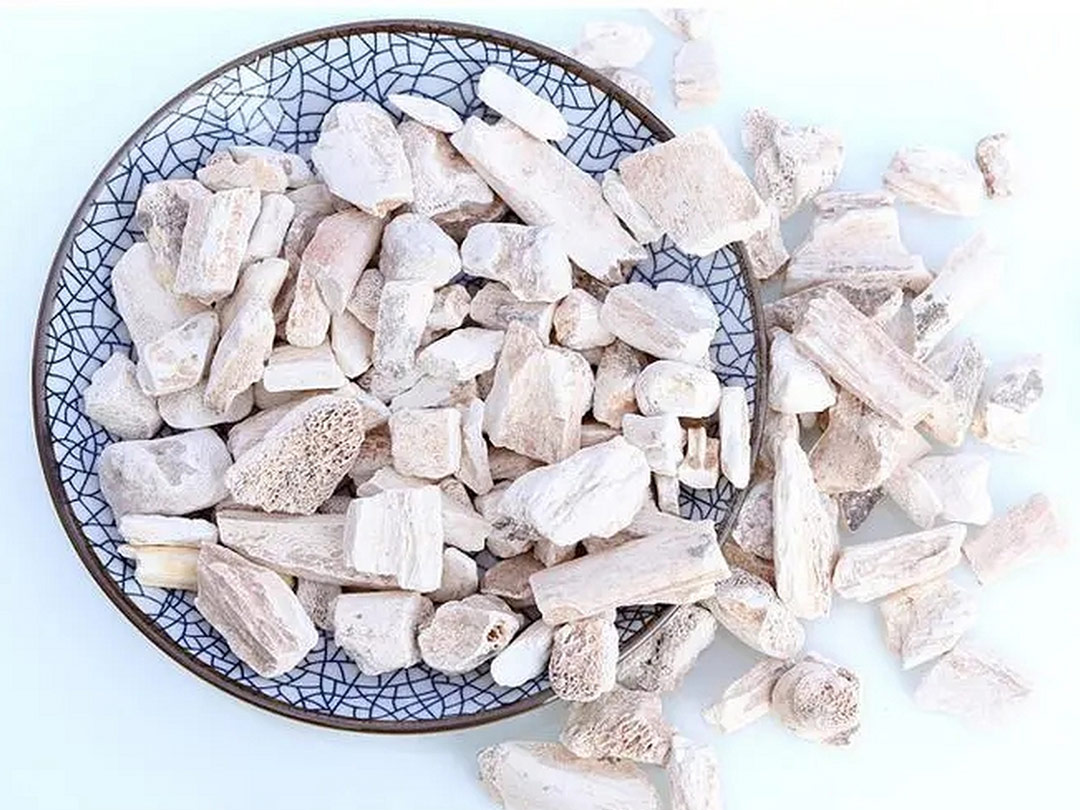
Raw Dragon Bone
Raw Dragon Bone is the raw form of Dragon Bone; it consists of fossilized bones from ancient mammals (such as three-toed horses, rhinoceroses, deer, cattle, and elephants) or fossilized elephant tusks, and is classified as a traditional Chinese medicinal material.According to traditional medicine, Raw Dragon Bone has a sweet and astringent taste, a neutral nature, and enters the Heart, Liver, and Kidney meridians. It has the effects of calming the mind and relieving anxiety, as well as pacifying the liver and subduing liver yang. It is commonly used to treat restlessness, palpitations with insomnia, forgetfulness with insomnia, convulsions, mania, and conditions such as hyperactive liver yang.In addition, raw dragon bone possesses some astringent and consolidating effects; however, these effects are relatively weak and are rarely utilized in clinical practice. When astringent and consolidating effects are required, calcified dragon bone is typically used instead.
Chinese Name : 生龙骨
Authentic Producing Area : Mainly produced in Shanxi, Inner Mongolia, and Shaanxi
Nature, Flavor & Meridian Tropism : Taste: sweet and astringent; Nature: neutral; Enters the Heart, Liver, and Kidney meridians
Benefits & Efficacy
Benefits
Raw Dragon Bone excels at calming the mind and soothing the spirit, as well as subduing liver yang; it also possesses certain astringent and consolidating effects.
Indications
Raw Dragon Bone is primarily used to treat conditions such as restlessness and liver yang hyperactivity. 1. Restlessness: Raw Dragon Bone can treat restlessness, palpitations, insomnia, forgetfulness, and frequent dreaming. 2. Excessive Liver Yang: Raw Dragon Bone can be used to treat excessive liver yang, alleviating symptoms such as dizziness, vertigo, irritability, and tinnitus or a sensation of fullness in the ears. 3. Other Conditions: Raw Dragon Bone can also be used as an adjunctive treatment for conditions such as convulsions and mania.
Usage and Dosage
Clinically, the most common method of using raw dragon bone is to decoct it into a herbal decoction for oral administration, with a standard dosage of 15–30 g. Due to its hard texture, if decocted simultaneously with other herbs, its active ingredients may not be released quickly enough; therefore, it must be decocted first to ensure its therapeutic efficacy. It is important to note that the specific dosage of raw dragon bone may vary from person to person due to differences in each patient’s condition and constitution; patients should strictly adhere to the dosage prescribed by their physician.
Precautions
1. Raw dragon bone contains various minerals. Individuals with renal dysfunction should avoid long-term use in large quantities to prevent mineral accumulation in the body, which could exacerbate their condition. 2. Raw dragon bone is a mineral-based medicine. It is heavy and dense in nature, and may easily obstruct the flow of qi in the spleen and stomach, thereby impairing their transport and transformation functions. Therefore, individuals with spleen and stomach deficiency should use it with caution under a physician’s guidance. 3. Before using Raw Dragon Bone, a TCM physician must conduct a pattern differentiation to avoid blind use without proper diagnosis. During treatment, follow the principle of “discontinuing treatment once the condition is resolved.” If symptoms improve, promptly schedule a follow-up visit so that the physician can assess the situation and adjust the dosage or discontinue the medication to ensure treatment safety and efficacy. 4. If you need to take other medications concurrently while using raw dragon bone, consult a doctor or pharmacist first. Do not take other medications on your own, as this may cause drug interactions that could affect efficacy or increase the risk of adverse reactions.
Chemical Constituents
Raw Dragon Bone primarily contains calcium carbonate, calcium phosphate, and magnesium oxide. Additionally, it contains various inorganic elements such as iron, potassium, sodium, chlorine, copper, and manganese, as well as amino acids.
Pharmacological Actions
Modern pharmacological research indicates that raw dragon bone has central nervous system depressant and skeletal muscle relaxant effects. It can regulate the body’s immune function, aid in healing ulcers and promoting wound recovery, and has sedative, hypnotic, anticonvulsant, blood-clotting, and vasoconstrictive effects.
Applications
Related Compatibility
Clinically, raw dragon bone can be combined with other Chinese herbal medicines, such as pearl shell and oyster shell, to treat related conditions.
1. Raw Dragon Bone Combined with Pearl Shell: Both raw dragon bone and pearl shell are heavy and sinking in nature and enter the Heart and Liver meridians.Pearl shell has a salty taste and a cold nature; it can both clear heat from the Heart and calm the mind and soothe the spirit, as well as clear Liver fire and subdue Liver yang. Raw dragon bone has a sweet and astringent taste and a neutral nature; its effects in calming fright and soothing the spirit are particularly pronounced, and it also serves to restrain rising Liver yang.When combined, these two herbs enhance both their effects of calming the heart and soothing the spirit, as well as pacifying the liver and subduing liver yang; they are particularly effective at soothing the spirit. They are used to treat palpitations, anxiety, mania, restlessness, insomnia, forgetfulness, mental confusion, and delirium caused by pathogenic factors overwhelming the heart and the spirit failing to remain within the heart. They can also be used for dizziness, red eyes, tinnitus, irritability, and short temper resulting from hyperactive liver yang.
2. Raw Dragon Bone combined with Oyster Shell: Raw Dragon Bone is sweet and astringent, capable of calming the mind and subduing panic, as well as pacifying the liver and subduing liver yang; Oyster Shell is salty and cold, capable of deeply calming the mind, consolidating yin and subduing liver yang, and softening hardness and dispersing nodules. Both possess the effects of deeply calming the mind and pacifying the liver to subdue liver yang, and are both essential herbs for deeply calming the mind.When combined, these two herbs synergistically enhance each other’s effects and are commonly used to treat conditions such as mental restlessness, irritability, insomnia, palpitations, and anxiety.
Medicinal Identification
Raw dragon bone must be distinguished from calcined dragon bone and cinnabar.
1. Raw dragon bone vs. calcined dragon bone: Both raw dragon bone and calcined dragon bone are different processed forms of dragon bone; due to differences in processing methods, their effects have distinct emphases.Raw Dragon Bone excels at calming the mind and subduing fright, as well as pacifying the liver and subduing liver yang; it is frequently used for restlessness, palpitations, insomnia, forgetfulness, frequent dreaming, convulsions, mania, and symptoms such as dizziness, vertigo, irritability, and short temper caused by excessive liver yang rising;Calcined Dragon Bone is characterized by its strong astringent and consolidating properties and is frequently used for conditions involving deficiency-induced leakage, such as seminal emission, premature ejaculation, enuresis, leukorrhea, spontaneous sweating, and night sweats, as well as for damp sores, itchy rashes, and chronic ulcers that fail to heal.
2. Raw Dragon Bone and Cinnabar: Both raw dragon bone and cinnabar are heavy, sedative herbs that calm the spirit and stabilize the mind, used to treat palpitations, insomnia, mental restlessness, and epilepsy. However, raw dragon bone is heavy in nature and also has the function of pacifying the liver and subduing Yang; it is primarily used to treat irritability and dizziness caused by Yin deficiency with excessive Yang.Cinnabar has a slightly cold nature and primarily enters the Heart Meridian; it can clear Heart fire and calm the mind, making it particularly suitable for conditions such as restlessness, palpitations, and insomnia caused by excessive Heart fire disturbing the mind. It also has the effect of clearing heat and detoxifying, and can be used to treat abscesses, swellings, oral ulcers, and sore throats.
Related Medicines
Formulas such as Liver-Draining and Spirit-Calming Pills and Dragon Bone and Oyster Shell Bone-Strengthening Granules.
Related Prescriptions
Cinnamon Twig, Dragon Bone, and Oyster Shell Decoction (*Jin Gui Yao Lue*), and Liver-Calming and Wind-Subduing Decoction (*Medicine: Integrating Chinese and Western Principles*) are among the formulas that incorporate cinnabar.
Medicinal Diet Therapy
Raw dragon bone can be incorporated into daily meals to promote health and wellness through medicinal cuisine. Dishes such as dragon bone glutinous rice porridge and wheat, dragon bone, and lily bulb soup are common examples of such therapeutic foods.
1. Dragon Bone Glutinous Rice Porridge
(1) Ingredients: 30 grams of raw dragon bone, 100 grams of glutinous rice, and brown sugar to taste.
(2) Preparation: Crush the raw dragon bone, place it in a clay pot, and simmer for 1 hour. Strain out the residue, retain the liquid, then add the glutinous rice and brown sugar to cook into porridge.
(3) Benefits: Calms the mind and soothes the spirit; suitable for those experiencing restlessness, palpitations, or insomnia.
2. Wheat, Dragon Bone, and Lily Bulb Soup
(1) Ingredients: 50 g wheat, 30 g raw dragon bone,10g each of lily bulbs, raw rehmannia root, and jujubes (pitted), and 5g of licorice.
(2) Preparation: Place the raw dragon bone in a pot, add an appropriate amount of water, bring to a boil over high heat, then reduce to low heat and simmer for 15–20 minutes; next, add the washed wheat, lily bulbs, raw rehmannia root, raw dragon bone, jujubes, and licorice to the pot and simmer together. After 1 hour, remove from heat, strain out the solids, and retain the liquid.Drink frequently as a tea substitute; one dose per day.
(3) Effects: Nourishes yin and tonifies qi, nourishes the heart and relieves restlessness, calms the mind and soothes the spirit. Suitable for conditions of both qi and yin deficiency, where the heart lacks nourishment, leading to restlessness and insomnia, frequent dreaming, easy awakening, palpitations, and anxiety.
Notes
1. Patients requiring treatment with Chinese herbal medicine should first consult a licensed Traditional Chinese Medicine (TCM) hospital, where a TCM practitioner will conduct a professional pattern differentiation and issue a herbal prescription. 2. Raw dragon bone that does not absorb moisture when cut and emits a foul odor when burned is unsuitable for medicinal use.
Processing & Preparation
Harvesting & Processing
It can be harvested year-round. After digging it up, remove soil and impurities, and store it in a dry place.
Processing Methods
Take the raw herbal material, remove impurities and dust, brush off the soil, and crush it.
Storage Methods
Store in a dry container in a dry place to prevent moisture absorption.
Crude Drug Identification
Properties of Crude Drugs
Raw Dragon Bone consists of fossilized skeletons of ancient mammals such as three-toed horses, rhinoceroses, deer, cattle, and elephants, or fossilized tusks of elephants; the former is commonly known as “Dragon Bone,” while the latter is commonly known as “Five-Pattern Dragon Bone.”
1. Dragon Bone: Bone-like in appearance.Long bones are long and tubular; short bones are generally cubic; flat bones are plate-like; and irregular bones have irregular shapes; or they may be broken into irregular chunks of varying sizes. The surface is white, grayish-white, or light brown; it is usually smooth and feels fine and powdery to the touch; some have longitudinal fissures or brown stripes, black spots, or patterns (commonly known as “dragon bone spots”).It is hard and not easily broken. The fracture surface is uneven, white or yellow in color; most contain “cancellous bone” with honeycomb-like pores, and the medullary cavity of long bones is cylindrical. Both the surface and fracture surface are highly hygroscopic; when licked, they feel sticky or cling to the tongue. This product is odorless and tasteless. Those that are hard, white in color, and highly hygroscopic are considered superior.
2. Five-Patterned Dragon Bone: Presents as irregular chunks of varying sizes; occasionally found in slightly curved or split truncated-cone shapes of varying lengths, with diameters ranging from 5 to 25 cm. The entire piece is pale grayish-white, pale yellowish-white, or pale yellowish-brown; some contain red, white, yellow, blue, brown, or black streaks, or patterns of varying depths, thicknesses, and intensities; occasionally, specimens without any patterns are found.The surface is smooth with a slight luster; some specimens have small fissures. It does not absorb moisture, and licking it does not cause stickiness on the tongue (the outer surface consists of enamel). The texture is hard, with a generally rough fracture surface. Most specimens with a crown length of approximately 20 cm or less are hollow (solid specimens with completely fossilized dental pulp are rare). They are relatively brittle and tend to flake off in sheets;Both the fracture surface and the pulp wall are highly hygroscopic; they feel sticky or cling to the tongue when licked. This product has a faint odor and a bland taste. The best specimens are those that are brittle, layered, exhibit patterns in colors such as blue-gray, red, or brown, and have fracture surfaces and pulp walls with strong hygroscopic properties.
Properties of Processed Slices
1. Dragon Bone: This product consists of irregular fragments. The surface of the fragments is white, grayish-white, or yellowish-white to pale brown, relatively smooth; some fragments exhibit a grainy texture, or brown streaks and spots, and are hard in texture. The broken surfaces are uneven, white or yellow in color. Some are hollow or contain honeycomb-like pores; they are hygroscopic and feel sticky or cling to the tongue when licked.
2. Five-Pattern Dragon Bone: This product consists of irregular fragments. The surface of the fragments features blue-gray and reddish-brown patterns of varying depths, thicknesses, and sizes. The surface is smooth; the texture is hard and relatively brittle, tending to flake off in sheets. The fracture surface and medullary walls are highly hygroscopic; when licked, they feel sticky or cling to the tongue.
Botanical Information
Distribution Area
It is distributed in regions such as Shanxi, Inner Mongolia, Henan, Hebei, Shaanxi, and Gansu.