Water chestnut is a name for a traditional Chinese medicine. It is derived from the plant Eleocharis dulcis (Burm. f.) Trin. ex Henschel [E. tuberosa Roem et Schudt.; E. plantaginea R. Brown.] of the genus Eleocharis in the Cyperaceae family. The corm and aerial parts are used medicinally. It has the effects of clearing heat, resolving phlegm, and eliminating food stagnation.It is primarily used to treat febrile diseases with excessive thirst, jaundice, heat-induced dysuria, abdominal distension and mass, red eyes, sore throat, and skin tags.
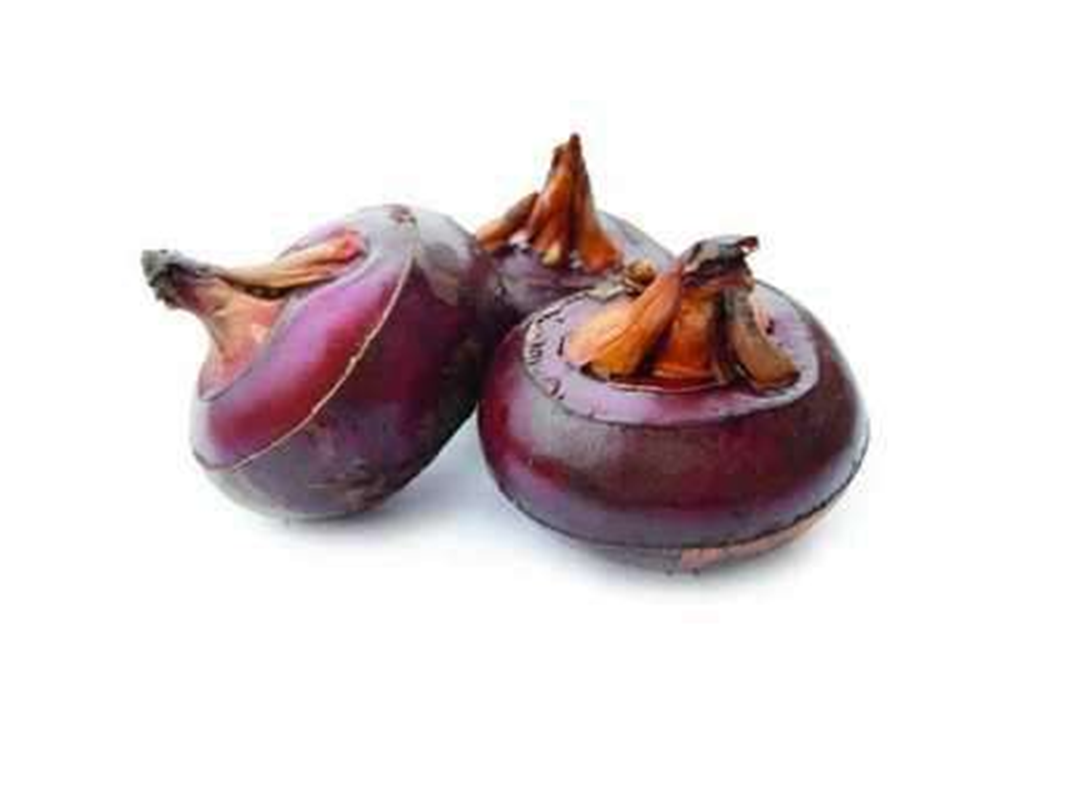
Water Chestnut
Water chestnut is a name for a traditional Chinese medicine. It is derived from the plant Eleocharis dulcis (Burm. f.) Trin. ex Henschel [E. tuberosa Roem et Schudt.; E. plantaginea R. Brown.] of the genus Eleocharis in the Cyperaceae family. The corm and aerial parts are used medicinally. It has the effects of clearing heat, resolving phlegm, and eliminating food stagnation.It is primarily used to treat febrile diseases with excessive thirst, jaundice, heat-induced dysuria, abdominal distension and mass, red eyes, sore throat, and skin tags.
Chinese Name : 荸荠
Latin Name : Eleocharis dulcis (Burm. f.) Trin. ex Henschel [E. tuberosa Roem et Schudt.; E. plantaginea R. Brown.
Aliases : Shào, Fúzǐ (Erya), Bāgū, Shuǐyù, Wūyù (Guangya), Wūcì (Táo Hóngjǐng), Fúcì (Mèng Shēn), Zhāqí (Bencao Yanyi),Black Mountain Ridge (Bo Ji Fang), Earth Chestnut (Tong Zhi), Iron Water Chestnut (Jiu Huang Ben Cao), Horse Hoof (Ben Cao Qiu Yuan), Red Water Chestnut (Compilation of Commonly Used Folk Herbs), Horse Potato (Quanzhou Ben Cao)
Nature, Flavor & Meridian Tropism : Taste: sweet; Nature: cold; Enters the Lung and Stomach meridians
Benefits & Efficacy
Benefits
Clears heat, resolves phlegm, and eliminates food stagnation.
Indications
Mainly used to treat warm diseases with excessive thirst, jaundice, heat-induced dysuria, abdominal mass, red eyes, sore throat, and skin tags. ① *Bielu*: “Treats excessive thirst, bi-heat, internal heat, and tonifies qi.” ② Meng Shen: “Dispels wind-toxin, removes real heat from the chest; can be made into a powder for consumption, sharpens hearing and vision, quenches thirst, and alleviates jaundice.” ③ *Rihua Zi Bencao*: “Stimulates the appetite and promotes digestion.” ④ *Riyong Bencao*: “Relieves the five types of dysuria and clears stomach heat.” ⑤ *Diannan Bencao*: “Treats heat phlegm in the abdomen and rectal bleeding.” ⑥ *Bencao Huibian*: “Treats the five types of diaphragmatic qi stagnation, eliminates undigested food, and is suitable for consumption after meals.” ⑦ *Compendium of Materia Medica*: “Treats bloody dysentery, rectal bleeding, and menorrhagia.” ⑧ *Benjing Fengyuan*: “Treats damp-heat in the lungs and stomach caused by excessive alcohol consumption, and hoarseness.” ⑨ *Beiyan Shigui*: “Water chestnut powder: clears the heart and dispels eye opacities.” ⑩ *Bencao Zaixin*: “Clears the heart and reduces fire; tonifies the lungs and cools the liver; aids digestion and resolves phlegm; breaks up food stagnation; and promotes the circulation of blood in the viscera.”
Usage and Dosage
Internal Use: Decocted as a soup, 60–120 g; or chewed; or pounded into juice; or steeped in wine; or processed into starch. External Use: Apply an appropriate amount; calcined until charred, ground into powder, and sprinkled on the affected area; or apply starch to the eyes; or apply raw as a poultice.
Precautions
Use with caution in cases of deficiency-cold and blood deficiency. ① Meng Shen: “It has a cold nature; it should not be consumed, as it causes abdominal distension and bloating.” ② *Introduction to Medicine*: “It is best combined with fresh ginger.” ③ *Benjing Fengyuan*: “Strictly contraindicated for coughs due to deficiency-cold. As it sharply depletes lung qi and simultaneously consumes nourishing blood, it is contraindicated for pregnant women and those with blood-related thirst.” ④ *Suixi Ju Dietary Spectrum*: “Contraindicated for those with deficiency-cold of the middle qi.”
Chemical Constituents
Contains an antibacterial compound—water chestnut flower extract—that is heat-sensitive. Its typical composition includes 68.52% moisture, 18.75% starch, 2.25% protein, 0.19% fat, and 1.58% ash.
Pharmacological Actions
Water chestnut seeds exhibit inhibitory effects against Staphylococcus aureus, Escherichia coli, and Aerobacter. They are heat-sensitive, insoluble in organic solvents, and not adsorbed by activated carbon. As measured by the Waber apparatus, they can inhibit E. coli respiration by up to 80% (after 10 hours).
Relevant Discussions
1. *Compendium of Materia Medica*: According to Wang’s *Formulas for Universal Relief*, which treats “five types of accumulation” and “cold qi attacking the heart”—conditions that develop into various diseases of the five diaphragms—the *Jin Suo Pills* use black Sanleng. The annotation states that this refers to dried *Fuzi*, and thus the theory of “dissolving hardness” is based on this.
2. *New Compilation of Materia Medica*: Black taro, sliced and sun-dried, is most effective in medicine for eliminating masses and accumulations; it is best used in combination with softshell turtle shell and does not deplete one’s vital energy. As modern practitioners are unaware of its medicinal use, I am specifically highlighting it here. There are cultivated and wild varieties of black taro; the wild variety is preferable for medicinal use.However, if wild-grown water chestnuts are unavailable, select mature cultivated ones, slice them with the skin intact, and sun-dry them for use. Not only do they dispel stagnation and accumulations, but they also ward off miasma. Some may ask: since people in Wu and Yue regions enjoy eating water chestnuts, yet suffer most from stagnation and accumulations, it seems water chestnuts are not a purgative agent; moreover, their sweet taste suggests a tonifying nature.What is not widely known is that when used alone, water chestnuts deplete kidney qi—they have a purgative effect without any tonifying action. However, when combined with ingredients such as soft turtle shell, Shenqu, Atractylodes macrocephala, Poria cocos, and Fructus Aurantii, they can strengthen the spleen and eliminate food stagnation, combining both tonifying and purgative effects. Therefore, they are ineffective when consumed alone but beneficial when used in combination.
3. *Seeking the Truth in Materia Medica*: Water chestnut is merely a fruit, yet every text attests to its ability to break up stagnation, resolve hard masses, stop bleeding, treat dysentery, halt metrorrhagia, treat skin sores, detoxify, induce smallpox eruptions, clear the voice, and sober one up from alcohol. Its effects are so numerous because its sweet taste and cold nature can eliminate real heat in the chest and resolve various forms of fullness and distension; its potent downward-moving action can eliminate blood-related dysentery and blood toxins.Therefore, it should not be consumed in cold weather; doing so may lead to frequent episodes of beriberi.
4. *The Supplementary Records*: It treats diabetes, arthralgia with heat, internal heat, and tonifies qi.
5. *The Materia Medica of Ri Hua Zi*: It stimulates the appetite and promotes digestion.
6. *The Materia Medica for Daily Use*: It treats the five types of dysuria and clears stomach heat.
7. *The Materia Medica of Southern Yunnan*: It treats heat phlegm in the abdomen and rectal bleeding.
8. *Compendium of Materia Medica*: Treats five types of diaphragmatic qi stagnation and eliminates undigested food; it is recommended to consume it after meals.
9. *Compendium of Materia Medica*: Treats bloody dysentery, rectal bleeding, and menorrhagia.
10. *Original Source of the Classic of Materia Medica*: Treats damp-heat in the lungs and stomach caused by excessive alcohol consumption, resulting in a hoarse voice.
11. *Dietary Guidelines of Beiyan*:Water Chestnut Powder: Clears the heart and dispels opacities from the eyes.
12. *Ben Cao Zai Xin*: Clears the heart and reduces fire; tonifies the lungs and cools the liver; aids digestion and resolves phlegm; breaks up stagnation; and promotes the discharge of pus and blood.
13. Meng Shen: Dispels wind-toxin and eliminates real heat in the chest; can be consumed as a powder to improve hearing and vision, quench thirst, and alleviate jaundice.
Applications
Related Compatibility
1. For Taiyin warm diseases characterized by severe thirst and the vomiting of sticky, white foam: Mix water chestnut juice, pear juice, fresh reed root juice, ophiopogon juice, and lotus root juice (or sugarcane juice). Adjust the quantities as needed, mix well, and serve chilled. For those who do not tolerate cold well, simmer in a double boiler until warm before serving. (*Treatise on Warm Diseases: Five-Juice Decoction*)
2. For jaundice caused by damp-heat with difficulty urinating: Crush water chestnuts and decoct them to make a tea substitute; use four liang per serving. (*Quanzhou Materia Medica*)
3. For dysentery with red and white stools: Take intact water chestnuts, wash and dry them thoroughly without damaging them. Place them in a jar, cover with high-quality liquor, and seal the jar tightly with yellow clay before storing.When a patient requires treatment, take two water chestnuts, chew them thoroughly, and swallow them on an empty stomach with the original liquor. (Tang Yao’s Experienced Formulas)
4. For treating abdominal masses: Soak water chestnuts in fire-distilled liquor and sun-dry them during the three hottest months of summer. Chew seven of them thoroughly on an empty stomach daily, and the abdominal masses will gradually dissipate. (Ben Jing Feng Yuan)
5. For abdominal distension and bloating: Peel a black taro root, stuff it into a male pig’s stomach, sew it shut with thread, and simmer it in an earthenware pot until soft; eat it without adding salt. (*Commentary on the Classic of Herbs*)
6. For bloody stools: Pound water chestnuts to extract about half a zhong of juice, mix with half a zhong of good-quality liquor, and drink it warm on an empty stomach. (*Mysterious Formulas*)
7. For menorrhagia in women:Take one one-year-old water chestnut, burn it until charred, grind into a powder, and take it with wine. (*Compendium of Materia Medica*)
8. To treat sore throat: Squeeze the juice from water chestnuts and drink it cold, four liang at a time. (*Quanzhou Materia Medica*)
9. To treat mouth sores in children: Burn water chestnuts until charred, grind into a powder, and apply it to the affected area. (*Simple and Convenient Single-Ingredient Formulas*)
10. For common warts: Split open a water chestnut and rub the white flesh directly onto the wart three to four times daily. Continue rubbing until the wart’s keratinized layer softens and peels off, accompanied by a slight stinging sensation and the appearance of pinpoint bleeding. Continue treatment for seven to ten consecutive days. [*Chinese Journal of Dermatology* 12(2): 74, 1966]
Related Prescriptions
1. For Taiyin warm disease with severe thirst and vomiting of sticky, unpleasant white foam: Water chestnut juice, pear juice, fresh reed root juice, Ophiopogon tuber juice, and lotus root juice (or sugarcane juice). Adjust the quantities as needed, mix well, and serve chilled. For those who do not tolerate cold well, simmer in a double boiler until warm and serve. (Five-Juice Decoction from *Treatise on the Differentiation of Warm Diseases*)
2.For heat-induced cold extremities in the Liver Meridian with throbbing pain in the lower abdomen: Four large water chestnuts and one liang of sea cucumber (soaked to remove lime and alum residues). Combine these two ingredients with two zhong of water, decoct until reduced to eight fen, and take the decoction. (From *Selected Annotated Ancient Formulas*: “Snow Soup”)
3. For jaundice caused by damp-heat with difficulty urinating: Crush water chestnuts, decoct them to make a tea substitute, taking four liang at a time.(*Quanzhou Bencao*)
4. For treating dysentery with red and white discharge: Take intact water chestnuts, wash and dry them thoroughly without damaging them. Place them in a jar, cover with high-quality liquor, and seal the jar tightly with yellow clay. When a patient requires treatment, take two water chestnuts, chew them thoroughly, and swallow them on an empty stomach with the original liquor. (*Tang Yao’s Experienced Formulas*)
5. To treat abdominal masses: Soak water chestnuts in fire-distilled liquor and sun-dry them during the three hottest months of summer. Chew seven of them thoroughly on an empty stomach daily, and the abdominal masses will gradually dissipate. (*Benjing Fengyuan*)
6. To treat abdominal distension and bloating: Peel the water chestnuts, stuff them into a male pig’s stomach, sew it shut with thread, and simmer in an earthenware pot until soft. Eat the mixture without adding salt. (*Bencao Jing Shu*)
7. For bloody stools: Pound water chestnuts to extract about half a zhong of juice, mix with half a zhong of fine wine, and drink warm on an empty stomach. (*Mystery Formulas*)
8. For menorrhagia in women: Take one one-year-old water chestnut, burn it until only the charred residue remains, grind into a powder, and take with wine. (*Compendium of Materia Medica*)
9. For sore and swollen throat: Extract the juice from water chestnuts and drink it cold, 4 liang at a time. (*Quanzhou Bencao*)
10. For mouth sores in children: Burn water chestnuts until only the charred residue remains, grind into a powder, and apply it to the affected area. (*Simple and Convenient Single-Ingredient Formulas*)
11. For common warts: Split open a water chestnut and rub the white flesh against the wart three to four times daily. Continue rubbing until the wart’s keratinized layer softens and peels off, accompanied by a slight stinging sensation and the appearance of pinpoint bleeding. Continue treatment for seven to ten consecutive days. (*Chinese Journal of Dermatology* 12(2): 74, 1966)
Medicinal Diet Therapy
Water Chestnut and Tofu Soup
1. Benefits: Suitable as a dietary remedy for those with spleen and stomach deficiency, or for post-cancer surgery recovery.
2. Ingredients: 60 grams of water chestnuts, 30 grams of shiitake mushrooms, 400 grams of soft tofu, 9 grams of chopped scallions, and oil, salt, ground pepper, and MSG to taste.
3. Preparation: Wash the shiitake mushrooms, soak them in warm water until softened, remove the stems, and slice them into strips (reserve the soaking liquid).Cut the tofu into small cubes and finely chop the scallions. Wash and peel the water chestnuts, then slice them into small pieces. Place the shiitake mushrooms, water chestnuts, and tofu in a pot to simmer. Once the soup comes to a boil, add oil, salt, ground pepper, and MSG, then stir in the chopped scallions and simmer for a short while.
4. Usage: Serve as a side dish with meals.
Processing & Preparation
Harvesting & Processing
Harvest from October to December, wash thoroughly, and air-dry or use fresh.
Processing Methods
Wash thoroughly and peel off the outer skin. Water chestnut powder: Take water chestnuts, wash them, remove the tender shoots, grind them into a paste, filter to extract the white juice, allow it to settle, and dry it to obtain the powder.
Crude Drug Identification
Properties of Crude Drugs
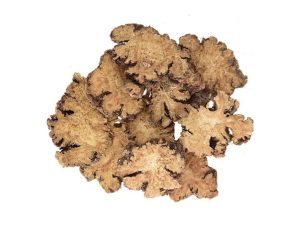
The tuber is spherical, slightly flattened, and varies in size; large ones can reach 3 cm in diameter. The lower end is concave in the center, and the upper end bears several clustered tender shoots, enveloped by dry, hard scales. The surface is purplish-brown or yellowish-brown, with distinct, annular nodes bearing remnants of yellow, membranous scale leaves; small lateral buds are sometimes present.The texture is tender and crisp; the cross-section is white and rich in starch and moisture. It has a faint odor and a sweet taste. Larger, plump, and tender specimens are considered the best.
Botanical Information
Botanical Classification
A plant of the genus Alisma in the Cyperaceae family.
Morphological Characteristics
Water chestnut is a perennial aquatic herb, 30–100 cm tall. The creeping rhizome is slender and elongated, with the apical portion swollen into a corm. Stems grow in clumps; they are cylindrical, 2–5 mm in diameter, smooth, and bear numerous transverse septa. There are no true leaves; the base of the stem bears 2–3 leaf sheaths.Spikelets are cylindrical, 1.5–3.5 cm long and 5–6 mm in diameter, pale green and bearing numerous flowers; scales are ovate-oblong and arranged spirally, approximately 5 mm long and 3 mm wide, with a single midrib and pale brown dots;There are 7 inferior bristles; the smaller nutlets are 1.5 times as long as the bristles and bear backward-pointing spines; there are 3 stigmas. The nutlets are broadly obovate, biconvex, with an unconstricted apex and a neck forming a collar-like ring; they are approximately 2.4 mm long and 1.8 mm wide, brown, and smooth; the style base is triangular, with a width equal to half that of the nutlet. Flowering and fruiting occur from May to September.
Distribution Area
It is cultivated in most regions of China.
Cultivation Techniques
Biological characteristics: Prefers a warm climate and humid environment. It is best cultivated in fertile, loose sandy loam paddy fields; planting in clay fields is not recommended.
Cultivation Techniques: Propagated by corms. From late June to late July, sow seeds at a row and plant spacing of 5 cm × 5 cm, cover with soil, and keep the soil consistently moist. After approximately 20 days, when seedlings reach a height of 20–25 cm, transplant them to the main field at a row and plant spacing of 50 cm × 35 cm, planting one seedling per hole. Each hole should contain one seedling.
Field Management: Before transplanting, apply manure as a base fertilizer to the field. Apply 2–3 top-dressings during the early growth stage, focusing primarily on nitrogen fertilizer. Maintain a water depth of 3–5 cm in the field until November, then drain the water completely in November.