Polygonatum, a plant belonging to the genus Polygonatum in the family Polygonaceae, has medicinal uses in its rhizomes and leaf petiole remnants (Polygonatum rhizome) as well as the downy hairs on tender shoots or young leaf petioles (Polygonatum shoots).Ziqi Guanzhong has the effects of clearing heat, detoxifying, stopping bleeding, and killing parasites. It is primarily used to treat epidemic colds, heat-toxin-induced diarrhea and dysentery, boils, sores, and swellings caused by toxins, hemoptysis, epistaxis, hematochezia, metrorrhagia, and abdominal pain caused by parasitic infestations. Ziqi Miao has the effect of stopping bleeding and is primarily used to treat bleeding from external injuries.
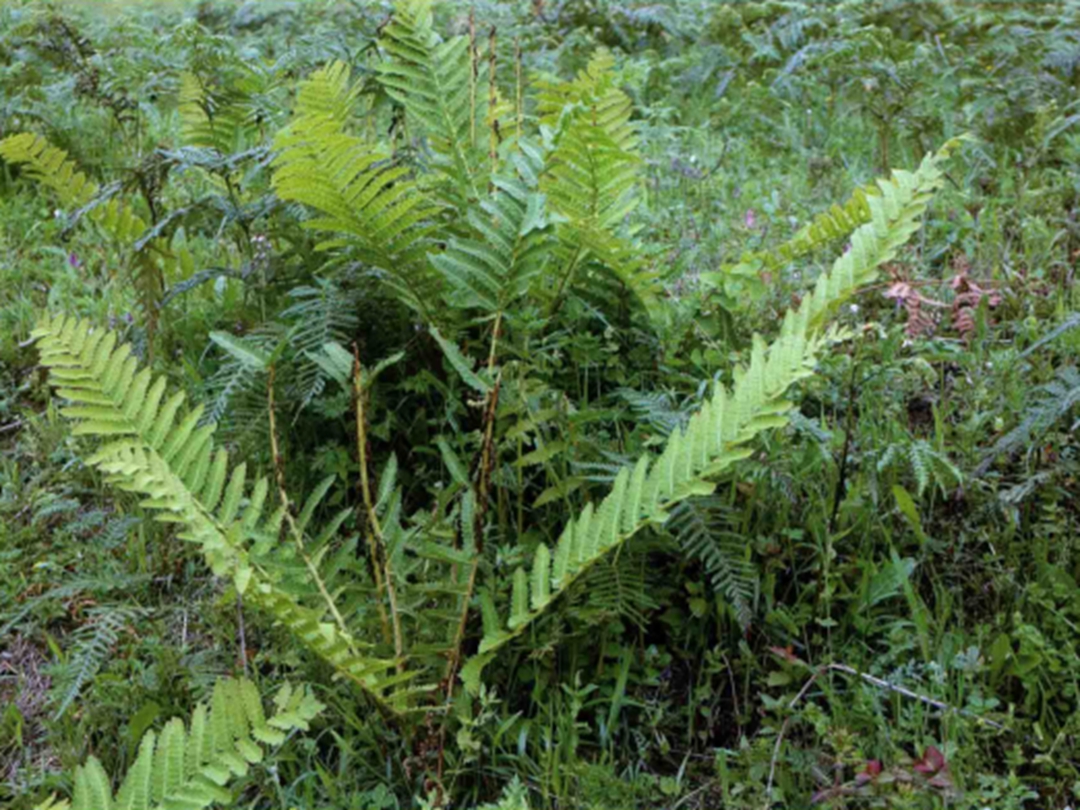
Purple-stemmed Polygonum
Polygonatum, a plant belonging to the genus Polygonatum in the family Polygonaceae, has medicinal uses in its rhizomes and leaf petiole remnants (Polygonatum rhizome) as well as the downy hairs on tender shoots or young leaf petioles (Polygonatum shoots).Ziqi Guanzhong has the effects of clearing heat, detoxifying, stopping bleeding, and killing parasites. It is primarily used to treat epidemic colds, heat-toxin-induced diarrhea and dysentery, boils, sores, and swellings caused by toxins, hemoptysis, epistaxis, hematochezia, metrorrhagia, and abdominal pain caused by parasitic infestations. Ziqi Miao has the effect of stopping bleeding and is primarily used to treat bleeding from external injuries.
Chinese Name : 紫萁
Latin Name : Osmunda japonica Thunb.
Aliases : Cat Fern, Moth Seven, Moon Leaf, Tiger’s Tooth, Water Bone Herb, Foot Fern, Foot Fern Orchid, Wild Chicken Feather, Large-leaved Wolf Fern, Hairy Polygonatum, Tall-stemmed Polygonatum, Iron-leaf Wolf Fern, Semen Leakage Herb, Cold Water Grass, Chicken-head Fern,Purple Polypodium, White-lined Chicken Tail, Polypodium, Golden Shell Grass, Wolf Fern, Large-leaved Wolf Fern, Polypodium-like Polypodium
Authentic Producing Area : Henan, Gansu, Shandong, Anhui, Jiangsu, Zhejiang, Hubei, Hunan, Sichuan, Yunnan, Guizhou
Nature, Flavor & Meridian Tropism : Purple Osmunda: Bitter in taste, slightly cold in nature; enters the Lung, Stomach, and Liver meridians. Purple Osmunda shoots: Bitter in taste, slightly cold in nature.
Benefits & Efficacy
Benefits
1. Purple-stemmed Osmunda: Clears heat and detoxifies; stops bleeding; kills parasites. 2. Purple-stemmed Osmunda shoots: Stops bleeding.
Indications
1. Osmunda japonica: Mainly used to treat epidemic colds, diarrhea and dysentery caused by heat toxins, abscesses, boils, and toxic swellings; hemoptysis, epistaxis, hematochezia; metrorrhagia and menorrhagia; and abdominal pain caused by parasitic infestations. 2. Young Osmunda japonica shoots: Mainly used to treat bleeding from external injuries.
Usage and Dosage
1. Polygonatum purpureum: For internal use, decoct 5–9 g. 2. Polygonatum purpureum shoots: For external use, apply an appropriate amount—either fresh shoots pounded and applied as a poultice, or dried shoots ground into powder and applied as a poultice.
Precautions
Patients requiring treatment with Chinese herbal medicine should first consult a licensed Traditional Chinese Medicine (TCM) hospital, where a TCM practitioner will conduct a professional pattern differentiation and prescribe an herbal formula.
Chemical Constituents
The rhizome contains northeasternerin and various lactone compounds, such as zici lactone, 5-hydroxy-2-hexenoic acid-4-lactone, 5-hydroxyhexanoic acid-4-lactone, 3-hydroxyhexanoic acid-5-lactone,glucosyl purpuric lactone, dihydroisoglucosyl purpuric lactone, and 2-deoxy-2-furanosyl lactone.It also contains sorbic acid glycosides, methyl 5-hydroxy-3-(β-D-glucopyranosyl)hexanoate, maltol-β-D-glucopyranoside,5-hydroxymethyl-2-furaldehyde, glycerol, succinic acid, Acanthopteris acuminata sterol A, ecdysterone, ecdysone, and polysaccharides.
Pharmacological Actions
Polygonatum odoratum possesses anthelmintic, antiviral, and anticoagulant properties.
Relevant Discussions
1. Polygonatum odoratum
(1) *Folk Medicinal Herbs of Guizhou*: “Removes blood stasis and promotes blood circulation; detoxifies. Treats blood stasis due to overwork and injuries, as well as bites from rabid dogs.”
(2) *Flora of Medicinal Plants of Tianmu Mountain*: “Traditionally used to treat abdominal distension and pain, constipation, jaundice with emaciation, and the presence of small, white worms (pinworms) in the anus.”
(3) *Jiangxi Herbal Medicine*: “Detoxifies and removes blood stasis. (Main indications) Unexplained swellings and abscesses, intercostal neuralgia.”
(4) *Shandong Handbook of Chinese Herbal Medicine*: “Clears heat, detoxifies, stops bleeding, and kills parasites.(Indications) Mumps, measles, and chickenpox that have not fully erupted; epistaxis; postpartum hemorrhage; metrorrhagia and menorrhagia; hematochezia; and expulsion of tapeworms, hookworms, and pinworms.”
(5) *Hunan Materia Medica*: “Dispels wind and drains dampness; expels parasites; promotes lactation. Prevents and treats encephalitis; (treats) pain in the tendons and bones; and chest pain.”
(6) *Compendium of Chinese Herbal Medicines*: “Mainly used to treat dysentery, metrorrhagia, and leukorrhea.”
(7) *Compendium of Medicinal Plants of Zhejiang*: “(Mainly used to treat) epidemic Japanese encephalitis and epidemic influenza.”
2. Polygonum cuspidatum Shoots
*Selected Compendium of Guangxi Materia Medica*: “Clears heat and stops bleeding.”
Applications
Clinical Applications
1. Prevention and treatment of encephalitis: 15–30 g of (Purple-stemmed Polygonum) root, 15 g of Isatis leaf. Decoct in water and take orally. (*Hunan Materia Medica*)
2. Treatment of leukorrhea: 5–6 tender rhizomes of (Purple-stemmed Polygonum) (scales removed), decocted in water and mixed with white sugar before consumption.For yellow, foul-smelling leukorrhea: 15 g each of Ziqi, Plantain Herb, and Phoenix Tail Grass; 30 g of Chuan Gu root; and 5–7 red dates. Decoct in water and drink. (*Commonly Used Folk Herbs of Zhejiang*)
3. For abdominal distension and pain, constipation, jaundice, emaciation, and the presence of tiny white worms (pinworms) in the anus:21–24 g of Polygonum cuspidatum rhizome, 21–24 g of *Eupatorium fortunei* (drunken fish grass), 12–15 g of *Eupatorium fortunei* (crane grass), and 15–18 g of *Euphorbia hirta* (June snow) root. Decoct in water and take once before breakfast and once before dinner. Avoid sour and spicy foods, mustard greens, radishes, etc. (*Flora of Medicinal Plants of Tianmu Mountain*)
4. Expelling hookworms: ① 30 g of Ziqi root, 18 g of Bai Bu, and 15 g of Langdu. Decoct in water and take orally; take 3 consecutive doses. For those in poor health, reduce Langdu to 6–9 g. ② 6 g of Ziqi, 3 g each of Langdu and Bai Bu. Grind into a powder and swallow; take one dose daily. (From *Commonly Used Folk Herbs of Zhejiang*)
5. Treatment for unexplained swellings and abscesses: An appropriate amount of fresh Ziqi and a small amount of white sugar. Pound into a paste and apply externally. (*Herbs of Jiangxi*)
6. Treatment for fistulas: Pound fresh Ziqi rhizomes with cooked rice into a paste and apply externally to the affected area. Alternatively, take 30 g of Ziqi rhizomes, steam with rice wine, and consume.
7. For plantar cellulitis: Take 15g of Ziqi rhizome (peeled), mix with salt, pound into a paste, and apply externally. If the lesion has already ruptured, add white sugar, pound into a paste, and apply externally. (Recipes 6–7 are from *Commonly Used Folk Herbs of Zhejiang*)
8. For bleeding from traumatic injuries: ① Pound fresh, tender shoots of (Ziqi) into a paste and apply externally to the wound. (*Selected Compendium of Guangxi Materia Medica*) ② Dry the downy hairs on the petioles of young Ziqi leaves, grind them into powder, and apply externally. (*Compendium of Chinese Herbal Medicines*)
Notes
References: 1. *Chinese Materia Medica* 2. *Clinical Guidelines for Medicinal Use of the Pharmacopoeia of the People’s Republic of China: Volume on Sliced Chinese Herbal Medicines. 2020 Edition* 3. *Pharmacopoeia of the People’s Republic of China. 2020 Edition*
Processing & Preparation
Harvesting & Processing
1. Ziqi Guanzhong: Harvest in spring and fall; wash thoroughly, remove fibrous roots, and sun-dry. 2. Ziqi Shoots: Harvest in spring; wash thoroughly; use fresh or sun-dry.
Processing Methods
1. *Ziqi Guanzhong*: Take the raw herb, remove impurities, wash thoroughly, moisten thoroughly, cut into thick slices or small pieces, and dry.
2. Charred *Ziqi Guanzhong*: Place *Ziqi Guanzhong* pieces (or slices) in a pan and stir-fry over high heat until the surface turns charred black and the interior turns dark brown. Then, spray a small amount of water to extinguish any embers, remove from heat, and allow to cool completely.
Storage Methods
Store in a dry container; spread out the charred Ziqi Guanzhong to dissipate heat and prevent reignition.
Crude Drug Identification
Properties of Crude Drugs
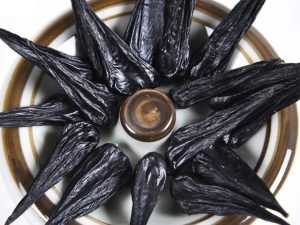
Polygonatum odoratum is conical or cylindrical in shape, slightly curved, 10–20 cm long, and 3–6 cm in diameter. The rhizome grows horizontally or obliquely, with black, hard, fine roots attached to its underside;the upper side is densely covered with leaf petiole remnants; the base of the petiole is flattened and round, slanting upward, 4–6 cm long and 0.2–0.5 cm in diameter; the surface is brown or brownish-black; the cross-section reveals “U”-shaped vascular patterns (vascular bundles), often separated from the cortex. It is hard in texture and difficult to break. It has a faint odor and a sweet, slightly astringent taste.
Properties of Processed Slices
1. Ziqi Guanzhong: See the “Characteristics of the Medicinal Material” section.
2. Charred Ziqi Guanzhong: Resembles Ziqi Guanzhong in appearance; the surface is charred black, the interior is brownish-black, and the texture is brittle and easily broken.
Botanical Information
Botanical Classification
Polygonum, a plant of the genus Polygonum in the Polygonaceae family.
Morphological Characteristics
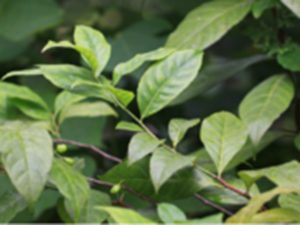
A perennial herb, 30–100 cm tall. The rhizome is stout, creeping or obliquely ascending, and lacks scales.Leaves are dimorphic and densely covered with tomentum when young; vegetative leaves have long petioles, with leaf blades that are triangular-broadly ovate, 30–50 cm long and 25–40 cm wide, bipinnately compound below the apex. The pinnae are oblong or oblong-lanceolate, with blunt or acute tips, rounded or broadly cuneate bases, and margins bearing uniform, dense, fine, blunt teeth.The spore-bearing leaves are strongly reduced; the pinnae are linear, 1.5–2 cm long, with sporangia densely arranged on both sides of the midrib, forming long, deep brown sporangial spikes that wither upon maturity.
Distribution Area
It is distributed in Gansu, Shandong, Jiangsu, Anhui, Zhejiang, Jiangxi, Fujian, Henan, Hubei, Hunan, Guangdong, Guangxi, Sichuan, Guizhou, Yunnan, and other areas.