Zoumaqin, a name in traditional Chinese medicine. It is the root of Archangelica decurrens Ledeb., a plant in the Apiaceae family. It is distributed in Inner Mongolia, Xinjiang, and other regions. It has the efficacy of dispelling wind and eliminating skin spots. It is primarily used to treat vitiligo.
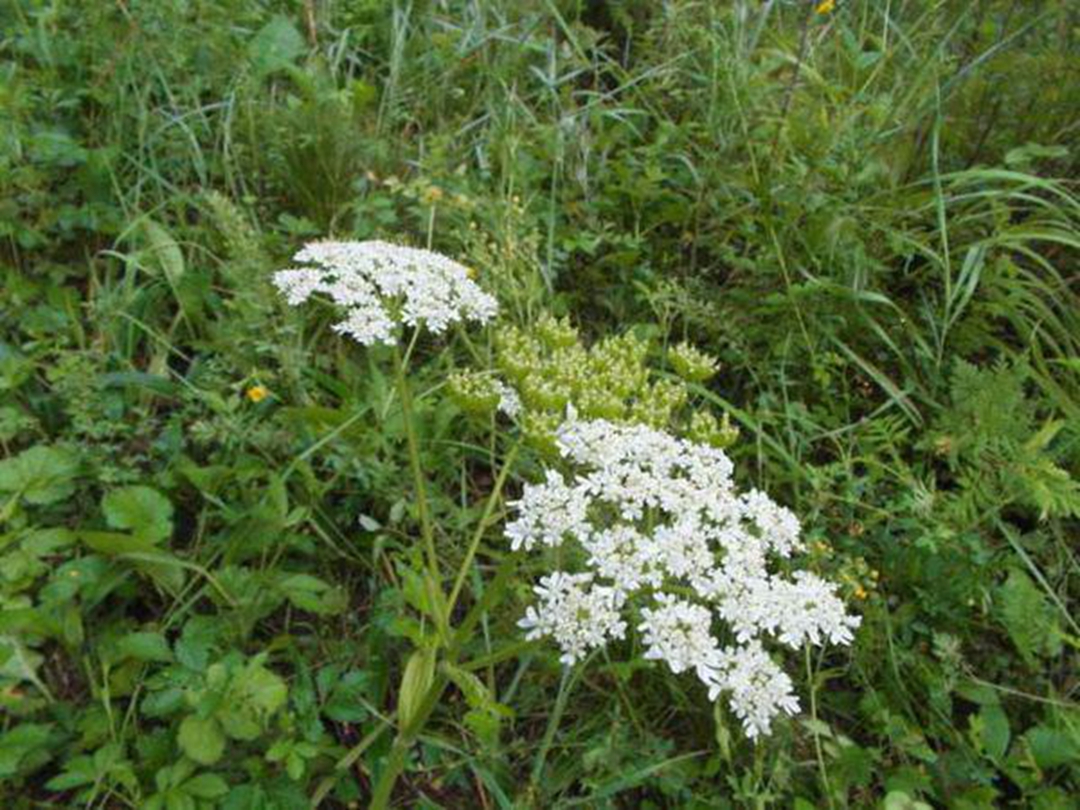
Zoumaqin
Zoumaqin, a name in traditional Chinese medicine. It is the root of Archangelica decurrens Ledeb., a plant in the Apiaceae family. It is distributed in Inner Mongolia, Xinjiang, and other regions. It has the efficacy of dispelling wind and eliminating skin spots. It is primarily used to treat vitiligo.
Chinese Name : 走马芹
Aliases : Wild Angelica
Nature, Flavor & Meridian Tropism : Pungent in taste, warm in nature
Benefits & Efficacy
Benefits
Dispels wind and eliminates skin spots.
Indications
Mainly used to treat vitiligo.
Usage and Dosage
1. External use: Apply an appropriate amount, pounded and applied as a poultice; or ground into a powder and mixed with a carrier for application. 2. Internal use: Decoct 9–15 g.
Precautions
Patients requiring treatment with Chinese herbal medicine should first consult a licensed Traditional Chinese Medicine (TCM) hospital, where a TCM practitioner will conduct a professional pattern differentiation and prescribe an herbal formula.
Chemical Constituents
The plant contains angelic lactone, isoangelic lactone, coralline lactone, angelic lactone oxide, bergapten, umbelliferone, and acacia ether.
Applications
Notes
References: [1] Editorial Committee of *Chinese Materia Medica*, State Administration of Traditional Chinese Medicine. *Chinese Materia Medica* [M]. Shanghai: Shanghai Science and Technology Press, 1999. [2] Huang Jianhang. *Pocket Illustrated Guide to the Identification of Chinese Medicinal Materials* [M]. Fuzhou: Fujian Science and Technology Press, 2001: 128.
Processing & Preparation
Harvesting & Processing
Harvested in summer and autumn; remove stems, leaves, and impurities; use fresh or sun-dried.
Crude Drug Identification
Properties of Crude Drugs
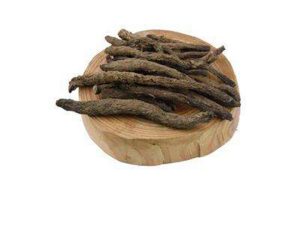
The root is slimmer than that of Angelica dahurica and conical in shape. The outer surface is brownish-gray; the upper part has numerous transverse wrinkles, while the lower part has longitudinal striations and scars where lateral roots were broken off. The cross-section is yellow in color and has an odor similar to celery.
Botanical Information
Botanical Classification
A plant of the Apiaceae family, Xia Yan Gu Danggui.
Morphological Characteristics
A perennial herb, 1–2 m tall. The root is cylindrical, stout, and brownish-red. The stem is hollow, with fine longitudinal ridges, smooth and glabrous. The leaves are twice or thrice pinnately compound; basal leaves have long petioles; the petioles of the stem leaves are 8–17 cm long, with the lower part of the petiole swollen into a pouch-like leaf sheath up to 6 cm wide, smooth and glabrous;the leaf blade is broadly triangular-ovate in outline, 11–15 (20) cm long and 11–17 cm wide; the terminal lobes of the final division extend downward; the margin is serrate or irregularly deeply toothed, with blunt tips at the tooth ends; the upper surface of the leaf blade is dark green, the lower surface is powdery green, and both surfaces are glabrous; the apical stem leaves are reduced to saccate sheaths.The compound umbel is nearly spherical, 7–15 cm in diameter; the rays number 20–50 and are covered with short, rough hairs; the involucral bracts number about 10 and are narrowly lanceolate; the calyx teeth are indistinct; the petals are white and broadly ovate; the style base is flattened, with wavy margins.The fruit is elliptical, 5–10 mm long and 3–5 mm wide, with prominent ridges that are thick and wing-like; the lateral ridges are narrower than the fruit body, and there are numerous oil tubes forming a ring. Flowering occurs from July to August, and fruiting from August to September.
Distribution Area
Distributed in Inner Mongolia, Xinjiang, and other areas.