Yunnan Chai Gui is the name of a traditional Chinese medicine. It consists of the leaves, branches, or bark of Neocinnamomum delavayi (Lec.) Liou, a plant belonging to the genus Neocinnamomum in the Lauraceae family. It is distributed in Sichuan, Yunnan, and Tibet. It has the therapeutic effects of dispelling wind and unblocking the meridians, dispelling cold and relieving pain, and stopping bleeding. It is used to treat wind-cold colds, stomach pain caused by cold, rheumatic arthralgia, pain from falls and blows, and bleeding from external injuries.
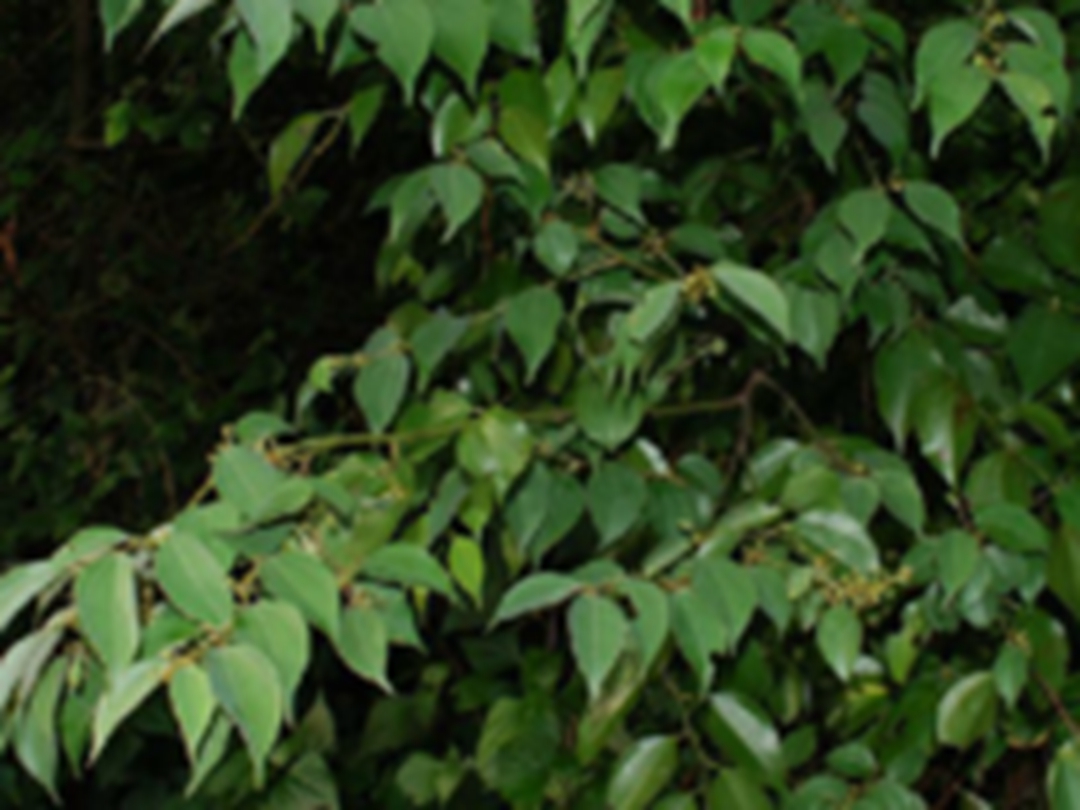
Yunnan Cinnamon
Yunnan Chai Gui is the name of a traditional Chinese medicine. It consists of the leaves, branches, or bark of Neocinnamomum delavayi (Lec.) Liou, a plant belonging to the genus Neocinnamomum in the Lauraceae family. It is distributed in Sichuan, Yunnan, and Tibet. It has the therapeutic effects of dispelling wind and unblocking the meridians, dispelling cold and relieving pain, and stopping bleeding. It is used to treat wind-cold colds, stomach pain caused by cold, rheumatic arthralgia, pain from falls and blows, and bleeding from external injuries.
Chinese Name : 云南柴桂
Nature, Flavor & Meridian Tropism : It has a pungent and astringent taste and a warm nature. It enters the Lung and Liver meridians.
Benefits & Efficacy
Benefits
It dispels wind and unblocks the meridians, dispels cold and relieves pain, and stops bleeding.
Indications
Used for wind-cold colds, stomach pain due to cold, rheumatic arthralgia, pain from falls and blows, and bleeding from external injuries.
Usage and Dosage
3–9 g; decocted in water or ground into powder and taken with wine; or steeped in wine and consumed. External use: Apply an appropriate amount of powdered dried leaves to the affected area.
Applications
Processing & Preparation
Harvesting & Processing
Can be harvested year-round; winter harvest is preferred. Use fresh or sun-dried.
Crude Drug Identification
Botanical Information
Botanical Classification
A species of the genus *Cinnamomum* in the family Lauraceae.
Morphological Characteristics
A shrub or small tree, (1.5)2–5 meters tall, sometimes reaching 10 meters; bark dark brown. Buds are small, with thick bud scales densely covered in rust-colored or white, silky, short soft hairs. Branches are slender, cylindrical, and striated; when young, they are covered in rust-colored or white, fine silky hairs, which gradually fall off as the branches mature.Leaves are alternate, elliptic-lanceolate to ovate or broadly ovate, (4)5–11 cm long, (1.5)2–6 cm wide, with an acuminate apex, an acute to cuneate base, and often unequal in width on both sides;nearly leathery; when young, densely covered on both surfaces with rust-colored or white fine silky hairs; as they mature, the upper surface becomes glabrous but the hairy covering on the lower surface remains clearly visible; the upper surface is green and slightly glossy,the underside pale grayish-white and dull; with a ternate venation, the midrib and basal lateral veins are often sunken on the upper surface but raised on the lower surface; the basal lateral veins ascend in an arc to 1/2–3/4 of the leaf blade, sometimes forming an indistinct depression at the junction with the midrib and slightly raised on the upper surface; the remaining lateral veins are all minute, forming a fine reticulate pattern with the minor veins;The petiole is 0.5–1 cm long, initially densely covered with short, appressed, silky pubescence, which gradually becomes sparser; it is concave on the ventral side and convex on the dorsal side. The corymb is axillary, bearing (1)4–6(10) flowers; the bracts are triangular-acicular, approximately 0.5 mm long, and densely covered with rust-colored, silky pubescence.Flowers are small and yellowish-green; pedicels are slender, 5–8 mm long, densely covered with rust-colored, silky pubescence. The perianth tube is extremely short; the perianth segments number 6, densely covered on both surfaces with rust-colored, silky pubescence, triangular-ovate, nearly equal in size, with the outer whorl 1.8 mm long and 1 mm wide, and the inner whorl 2.2 mm long and 1.4 mm wide; all apices are acuminate.There are 9 fertile stamens; the stamens of the first and second whorls are approximately 1.25 mm long, with filaments lacking glands; the anthers are rectangular or ovate-rectangular, blunt at the apex, and slightly shorter than the thickened filaments; the anther locules number 4, arranged almost transversely in a single row, with the upper 2 locules directed inward and the lower 2 locules directed laterally outward;the stamens of the third whorl have a pair of long-stalked, circular-reniform glands at the base of the filaments; the anthers are 4-celled, with the upper two cells small and directed laterally outward, and the lower two cells large and directed outward.The rudimentary stamens are nearly spatulate or ovoid, stalked, 0.6–0.8 mm long including the stalk, and the stalks are pubescent. The ovary is elliptic-ovoid, sessile, glabrous, approximately 1 mm long, tapering upward, with a short style and a disc-shaped stigma.The fruit is ovoid, 1–1 cm long, 0.7–1 cm in diameter, and red when ripe; the receptacle is goblet-shaped, 5–8 mm wide at the apex, with persistent perianth segments that are slightly enlarged and withered in appearance; the fruit stalk is slender, gradually enlarging upward, and 0.7–2 cm long. Flowering occurs from April to September, and fruiting from September to January of the following year.
Distribution Area
Mainly found in Sichuan, Yunnan, and Tibet.