Goat Brain: A name for a traditional Chinese medicinal material. It refers to the brain matter of the mountain goat (Capra hircus Linnaeus) or the sheep (Ovis aries Linnaeus) of the Bovidae family. It has the effects of tonifying deficiency, strengthening the brain, and moisturizing the skin. It is primarily used to treat physical weakness with dizziness, cracked skin, and injuries to tendons or fractures.
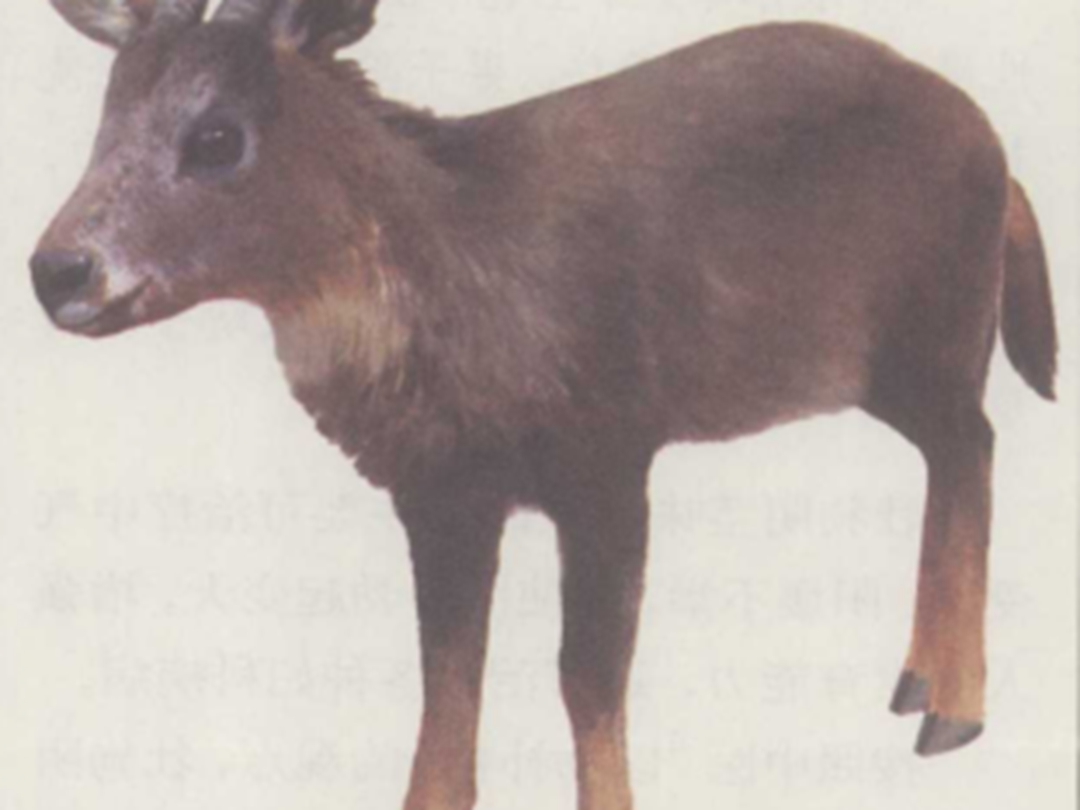
Goat Brain
Goat Brain: A name for a traditional Chinese medicinal material. It refers to the brain matter of the mountain goat (Capra hircus Linnaeus) or the sheep (Ovis aries Linnaeus) of the Bovidae family. It has the effects of tonifying deficiency, strengthening the brain, and moisturizing the skin. It is primarily used to treat physical weakness with dizziness, cracked skin, and injuries to tendons or fractures.
Chinese Name : 羊脑
Nature, Flavor & Meridian Tropism : Sweet in taste, warm in nature
Benefits & Efficacy
Benefits
Nourishes the body, strengthens the brain, and moisturizes the skin.
Indications
Physical weakness and dizziness, chapped skin, and injuries to tendons or fractures.
Usage and Dosage
Internal use: Boil and eat in appropriate amounts; or incorporate into pills. External use: Grind and apply in appropriate amounts; or incorporate into ointments.
Precautions
Should not be consumed in excess.
Chemical Constituents
Goat or sheep brain is rich in ascorbic acid, riboflavin, niacin, thiamine, lecithin, cerebrosides, protein, fat, as well as calcium, phosphorus, iron, and other nutrients.Per 100 g of sheep brain, there are approximately 76 g of water, 11 g of protein, 11.4 g of fat, 1.6 g of ash, 21 mg of calcium, 358 mg of phosphorus, 0.7 mg of iron, 0.14 mg of thiamine, 0.27 mg of riboflavin, and 3.5 mg of niacin. In addition, it contains various hormones, such as somatostatin.
Pharmacological Actions
Injecting cerebrospinal fluid from sleep-deprived goats into the ventricles of rats or rabbits significantly increases slow-wave sleep; nocturnal activity in rats decreases by 63% compared to normal levels, and the amplitude of low-frequency waves in their electroencephalograms is approximately 50% higher than during normal sleep. This sleep factor has a specific effect on slow-wave amplitude and induces sleep in cats, rats, and rabbits alike, indicating that it is not strongly species-specific.Other reports indicate that sleep-deprived goats’ cerebrospinal fluid contains a substance that reduces activity and increases sleep in rats; electroencephalography confirms that it promotes slow-wave sleep, and it has been named “S-factor.” This factor can also be extracted from the brainstems and brains of sleep-deprived animals such as sheep and goats; however, its sleep-promoting effect disappears after pretreatment with proteolytic enzymes or carboxypeptidases.S-factor takes effect slowly in vivo; when administered intracerebroventricularly, it becomes effective after 1 hour, and the effective duration of increased slow-wave sleep is 5–10 hours in rabbits and 24 hours in rats. The effective dose per rabbit is less than 150 pmol. In addition to the sleep factor, goat cerebrospinal fluid also contains a substance that excites animals; this substance, known as the excitation factor, can immediately induce sustained, prolonged excitatory behavior in rats, manifested as exploratory behavior, drooling, and excessive grooming movements; some rats may also experience seizures. Somatostatin (SS), isolated from the hypothalamus of sheep, not only inhibits growth hormone secretion but also exerts inhibitory effects on the endocrine and exocrine functions of the stomach, intestines, gallbladder, and pancreas, as well as on gastrointestinal motility; it is an important regulator of the body’s digestive function.SS binds to receptors on the surface of parietal cells to inhibit gastric acid secretion; it also counteracts the effects of histamine, acetylcholine, and bufotalin, which stimulate gastric acid secretion. SS not only reduces the volume of pancreatic juice secreted but also lowers the levels of bicarbonate and pancreatic enzymes.Intravenous injection of SS reduces the secretion of insulin and glucagon. Experiments on dogs indicate that SS acts directly on beta cells to inhibit insulin secretion and can also counteract the stimulatory effects of oxytocin and unsaturated fatty acids on insulin secretion. Lecithin (phosphatidylcholine) can also be extracted from sheep brain.
Relevant Discussions
1. *Jingzhu Bencao*: “Goat brain nourishes the tendons; sheep brain treats dizziness and mental confusion.”
2. *Suixi Ju Dietary Spectrum*: “Treats wind-cold invading the brain, resulting in persistent headaches.”
3. *Illustrated Compendium of Medicinal Plants of the Qinghai-Tibet Plateau*: “Treats physical weakness and dizziness.”
4. *Medicinal Animals of Inner Mongolia*: “Goat brain eliminates ‘nian’ (a type of pathogen) and kills parasites. It is primarily used to treat systemic rashes and boils caused by ‘nian’ syndrome. Sheep brain treats physical weakness, dizziness, blurred vision, and neurasthenia.”
Applications
Related Compatibility
1. For neurasthenia and dizziness: 90g each of asafoetida, Chinese angelica root, agarwood, nutmeg, Guangxi frankincense, cloves, and fennel; an appropriate amount of sheep brain. Decoct the seven herbs, grind them into a fine powder, mix with the sheep brain to form pills the size of a thumb, and stir-fry them in ghee until dry. Take one pill each morning and evening, washed down with wine.(From *Medicinal Animals of Inner Mongolia*: Sheep Brain Pills)
2. For fractures of the limbs and injuries to tendons caused by falls: 1 liang of sheep brain; half a liang each of walnut oil, potash, and lead white. Pound the four ingredients together into a paste, apply to the affected area, and wrap with unbleached cloth. (From *Essential Prescriptions Worth a Thousand Pieces of Gold*)
3. For skin tags: Scrape off the affected area with a sharp blade, then apply a mixture of fresh wine, vinegar, and sheep brain. Leave on overnight, wash off the next morning, and keep the area wrapped in cotton at all times. (From *Recorded Effective Prescriptions Through the Ages*)
4. For childhood tumors: Fresh sheep brain (used raw) and sodium nitrate. Mix these two ingredients evenly and apply the paste directly to the tumor. (From *Formulas of the Ruizhu Hall*)
Processing & Preparation
Harvesting & Processing
When slaughtering a sheep, split open the skull to extract the brain; use it fresh or refrigerate it.
Crude Drug Identification
Botanical Information
Morphological Characteristics
1. Mountain Goat: Body length 1–1.2 m; weight 10–35 kg. Long head, short neck, large ears, and a narrow, elongated muzzle. Both males and females have a pair of horns on the forehead, with males having larger horns; the base of the horns is slightly triangular, the tips curve slightly backward, and the horns are hollow with a horny texture, featuring ring-like patterns or tubercles on the front surface. Males have a long, tufted beard under the jaw.The limbs are slender, and the tail is short and does not hang down much. The entire body is covered with coarse, straight, short hair, and coat colors include white, black, gray, and various black-and-white patterns. 2. Sheep: Sheep were among the earliest domesticated livestock. Their body weight varies by breed, ranging from a minimum of 20 kg to a maximum of 150–200 kg. Physical characteristics also vary widely. In some breeds, both males and females have horns; in others, neither has horns;in others, only the males have horns. Horn shape and tail structure also vary by breed. The coat of breeds closer to their wild ancestors consists of two layers: an outer layer of coarse hair that repels rain, and an inner layer of fine undercoat that retains heat. However, improved breeds retain only the inner undercoat. There is a gland between the two toes of the front and hind limbs, opening toward the front. They also possess tear glands.
Distribution Area
1. Goats: Found throughout the country. 2. Sheep: Found almost everywhere in the country, with higher concentrations in the northern and northwestern regions.