Red Stone Ear is the name of a traditional Chinese medicine. It is the lichen thallus of Umbilicaria hypococcinea (Jatta) Liano, a plant in the family Umbilicariaceae. It is distributed in Shanxi, Shaanxi, and Tibet. It has the effects of regulating qi, strengthening the stomach, promoting diuresis, and relieving bloating. It is commonly used to treat indigestion, epigastric and abdominal distension and pain, dysentery, and malnutrition.
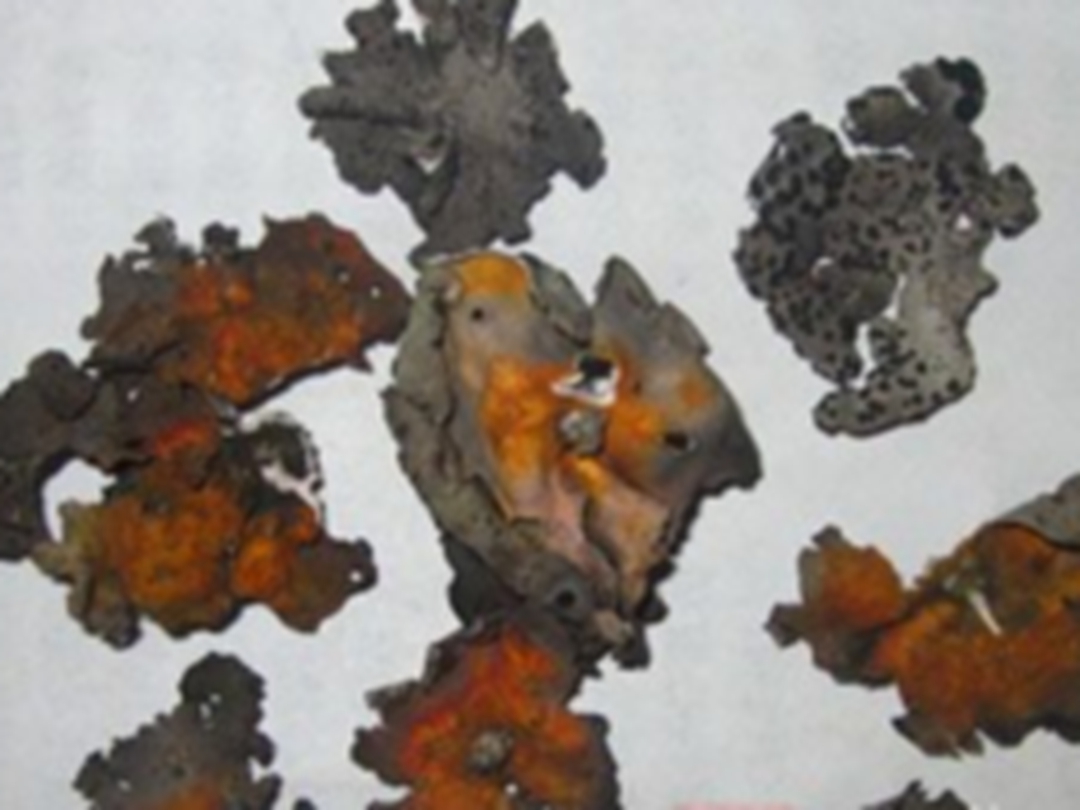
Red Stone Ear
Red Stone Ear is the name of a traditional Chinese medicine. It is the lichen thallus of Umbilicaria hypococcinea (Jatta) Liano, a plant in the family Umbilicariaceae. It is distributed in Shanxi, Shaanxi, and Tibet. It has the effects of regulating qi, strengthening the stomach, promoting diuresis, and relieving bloating. It is commonly used to treat indigestion, epigastric and abdominal distension and pain, dysentery, and malnutrition.
Chinese Name : 红石耳
Aliases : Red Stone Ear, Stone Ear
Authentic Producing Area : Shanxi, Shaanxi, Tibet
Nature, Flavor & Meridian Tropism : Slightly bitter in taste, neutral in nature; enters the Stomach Meridian
Benefits & Efficacy
Benefits
Regulates qi and strengthens the stomach; promotes diuresis and relieves bloating.
Indications
Indigestion, epigastric and abdominal distension and pain, dysentery, and malnutrition in children.
Usage and Dosage
Internal use: Decoct 9–15 g.
Precautions
Not yet established.
Relevant Discussions
1. *Shaanxi Chinese Herbal Medicine*: “Strengthens the stomach and aids digestion; promotes diuresis and relieves bloating; expels parasites. Primarily used to treat indigestion, abdominal pain, dysentery, childhood malnutrition, abdominal masses, ascariasis, and leukorrhea.”
2. *Compendium of Chinese Herbal Medicine*: “Regulates qi and relieves pain.”
3. *Medicinal Spore Plants of China*: “Dispels wind-dampness.”
Applications
Related Compatibility
1. For indigestion, stomach and abdominal distension and pain: 15 g of Red Stone Ear, 6 g each of Tai Bai Mi and Tai Qianghuo, and 2.4 g of Tao’erqi. Decoct in water and take orally. (《Shaanxi Chinese Herbal Medicine》)
2. For abdominal pain due to dysentery and malnutrition: 9 g of Red Stone Ear, 6 g of Zhushaqi, and 1.5 g of Tai Bai Mi. Decoct in water and take orally; add brown and white sugar as adjuvants.(*Shaanxi Chinese Herbal Medicine*)
3. For pediatric malnutrition, abdominal masses, and ascariasis: 6–15 g of red stone ear. Soak in boiling water until plump, stir-fry with rapeseed oil, then add boiling water and simmer; consume the decoction along with the liquid. (*Shaanxi Chinese Herbal Medicine*)
Notes
Black Stone Ear: Dark brown on the surface, blackish-brown on the inside. White Stone Ear: Grayish-white on the surface, yellowish-brown on the inside. Their medicinal effects are similar, and they are used interchangeably in herbal formulas.
Processing & Preparation
Harvesting & Processing
Harvest after summer rains or on days with light rain; sun-dry.
Crude Drug Identification
Properties of Crude Drugs
The lichen thallus is monophyllous, irregularly circular, 1–3 (–6.5) cm in diameter, with lobed margins and occasionally small perforations.The upper surface is grayish-brown or blackish-brown, with a darker margin; it is smooth or wrinkled, and the area just outside the central umbilicus is slightly raised. The lower surface is orange-red or rust-red near the umbilicus, with the margin nearly black; it has no or only a few pseudorhizae. The ascophores are circular, black, and densely clustered on the upper surface. The texture is brittle and easily broken.
Botanical Information
Botanical Classification
Red-bellied Stone Ear (Phellinus), family Phellinaceae, genus Phellinus.
Morphological Characteristics
The lichen thallus is monolithic and nearly circular, reaching a diameter of 2–3.6 cm. The margins of the lobes are torn or slightly curled upward; the upper surface is grayish-brown, blackish-brown to pale sooty black, and dull; the lower surface is smooth, bare, and bears a few pseudorhizae, which are cylindrical;near the central umbilicus, the color is deep red, scarlet, or orange-red, gradually fading from the center to the margin, which is a dull purplish-brown. The ascomata are scattered across the upper surface, with a diameter of about 2 mm.
Distribution Area
Found in Shanxi, Shaanxi, and Tibet.