Chinese Poppy, a name in traditional Chinese medicine. It refers to the fruit husks or the whole plant of Papaver nudicaule L. var. chinense (Regel) Fedde, a member of the Papaveraceae family. It has the effects of tonifying the lungs and relieving cough, astringing the intestines and stopping diarrhea, and relieving pain.It is used to treat chronic cough and wheezing, chronic diarrhea, chronic dysentery, headaches, stomach pain, pain in the chest and abdomen, rheumatic arthralgia, and injuries from falls or blows.
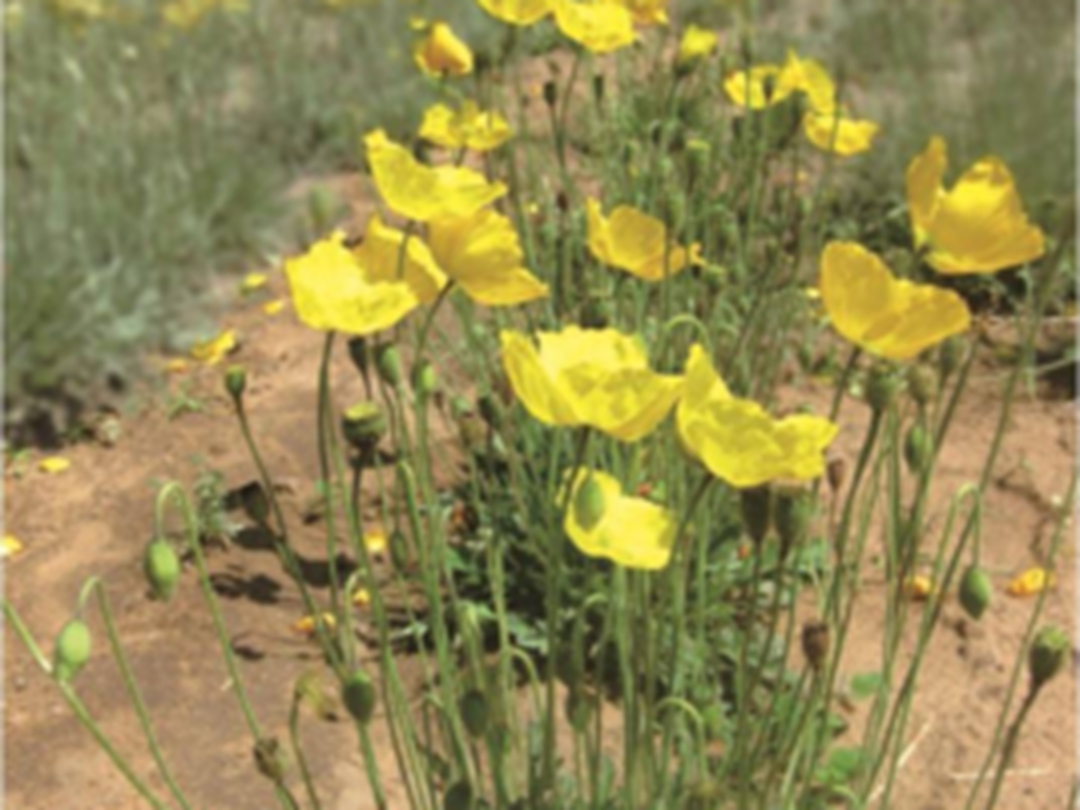
Chinese Poppy
Chinese Poppy, a name in traditional Chinese medicine. It refers to the fruit husks or the whole plant of Papaver nudicaule L. var. chinense (Regel) Fedde, a member of the Papaveraceae family. It has the effects of tonifying the lungs and relieving cough, astringing the intestines and stopping diarrhea, and relieving pain.It is used to treat chronic cough and wheezing, chronic diarrhea, chronic dysentery, headaches, stomach pain, pain in the chest and abdomen, rheumatic arthralgia, and injuries from falls or blows.
Chinese Name : 华罂粟
Aliases : Mountain Poppy, Wild Poppy, Tibetan Golden Lotus
Nature, Flavor & Meridian Tropism : Sour, slightly bitter, cool
Benefits & Efficacy
Benefits
Tones the lungs and relieves cough; astringes the intestines and stops diarrhea; relieves pain.
Indications
Used for chronic cough and wheezing, chronic diarrhea, chronic dysentery, headache, stomach pain, pain in the chest and abdomen, rheumatic arthralgia, and injuries from falls or blows.
Usage and Dosage
Oral use: Decoct 3–9 g. Take 2–3 g as a powder.
Precautions
Contraindicated for patients with phlegm-heat or excess pathogenic factors.
Pharmacological Actions
1. Cough-suppressing and antitussive effects. 2. Sedative and analgesic effects.
Relevant Discussions
1. *Medicinal Herbs of Inner Mongolia*: “Analgesic, antitussive, antispasmodic, and antidiarrheal. Primarily used to treat nervous headaches, diarrhea and dysentery, cough, wheezing, and stomach pain.”
2. *Compendium of Sichuan Chinese Medicinal Herbs* (1979 edition): “Tones the lungs, astringes the intestines, and relieves pain. Used for chronic cough, chronic diarrhea, headache, body aches, and pain in the chest and abdomen.”
Applications
Related Compatibility
1. For chronic cough and spontaneous sweating: 30 g of wild opium poppy (stir-fried with vinegar) and 15 g of black plum (stir-fried). Grind into a powder; take 9 g per dose with plain water before bedtime. (*Medicinal Herbs of Inner Mongolia*)
2. For chronic dysentery and chronic diarrhea: Equal parts of wild opium poppy seed pods and Coptis.Grind into a powder; take 6g per dose, washed down with black plum decoction.
3. For rheumatic pain, trauma, and stomach pain: Whole wild opium poppy plant, Clematis chinensis, and Pentas lanceolata, each in equal parts. Grind into a powder; take 9g per dose. (Formulas 2–3 are from *Chronicle of Sichuan Chinese Medicinal Herbs*, 1979)
Processing & Preparation
Harvesting & Processing
The whole plant is harvested in spring and summer and used fresh or sun-dried; the fruit is harvested in summer and autumn; collect the fruit shells, remove impurities, and sun-dry.
Crude Drug Identification
Properties of Crude Drugs
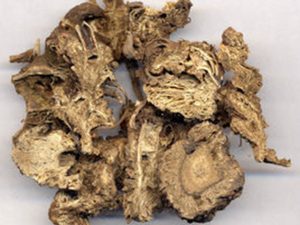
The entire plant is sparsely hairy; the stem is slender and straight; the leaves are brown with white soft hairs on the surface; the flowers are shriveled and pale yellow, with visible petals and fragmented sepals; when rehydrated, the sepals are covered with yellow hairs, the petals are obovate (4 in number), and the anthers are yellow; the ovary bears stiff hairs; the taste is bitter.
Botanical Information
Botanical Classification
Papaveraceae: Fissilate-leaved Wild Poppy
Morphological Characteristics
A perennial herb. The entire plant is sparsely covered with fine, stiff hairs and exudes white latex. The root is spindle-shaped. The rhizome is stout, solitary or multi-headed, straw-like in texture, and enclosed by overlapping, expanded leaf sheaths. There are more than 10 leaves, all basal;long-petiolate; leaf blades ovate or ovate-triangular, 7–20 cm long, up to 13 cm wide, pinnately deeply lobed, with 3–4 pairs of lobes, which are ovate and pinnately deeply or shallowly lobed; sometimes the basal lobes are further divided into a third order, with the ultimate lobes oblong, narrowly ovate, or lanceolate, with blunt or rounded apices; entire margins; both surfaces sparsely covered with fine, stiff hairs.Flowers are solitary on pedicels; pedicels number 1 to more than 10, 15–48 cm tall, sparsely covered with appressed, slightly stiff hairs; sepals about 1.5 cm long, externally covered with long soft hairs, falling off at flowering;There are 4 petals arranged in 2 whorls; the outer 2 are larger, obovate, 1.5–3 cm long, with irregularly rounded teeth along the margins, and orange-yellow in color; the stamens are numerous, 1.2–1.6 cm long, with awl-shaped filaments and oblong anthers approximately 2 mm long;The ovary is obovate, 0.7–1.5 cm long, sparsely covered with fine, stiff hairs; the stigma consists of 4–6 parts arranged in a radiate disk, with deeply notched, rounded teeth along the margins, and is flat. The capsule is oblong or obovate-globose, covered with fine, stiff hairs, and approximately 0.7–1.5 cm long. The seeds are small, striated, and brown.Flowering period: June–August; fruiting period: July–September.
Distribution Area
Hebei, Shanxi, Shaanxi, Gansu, Sichuan, Yunnan, and other areas; cultivated in Zhongdian, Yunnan.