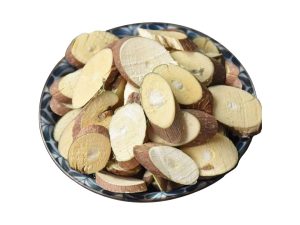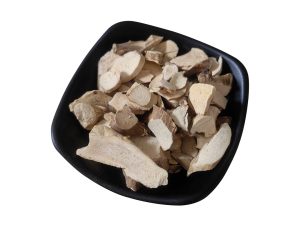
Kai Kou Jian is the name of a traditional Chinese medicine. It consists of the rhizomes of the Liliaceae plants Tupistrachinensis Baker [T. fargesii Baill.; T. watanabei (Hayata) Wang et Liang; Campylandra pachynema Wang et Tang] and Tupistraensifolia Wang et Tang.Tupistrachinensis is distributed in Central and Southern China, as well as in Shaanxi, Anhui, Zhejiang, Jiangxi, Fujian, Taiwan, Sichuan, and Yunnan; Tupistraensifolia is distributed in Yunnan. It has the therapeutic effects of clearing heat and detoxifying, dispelling wind and removing dampness, and dispersing blood stasis to relieve pain. It is commonly used for diphtheria, sore throat, rheumatic pain, trauma, stomach pain, abscesses, boils, and toxic sores, as well as venomous snake and rabid dog bites.
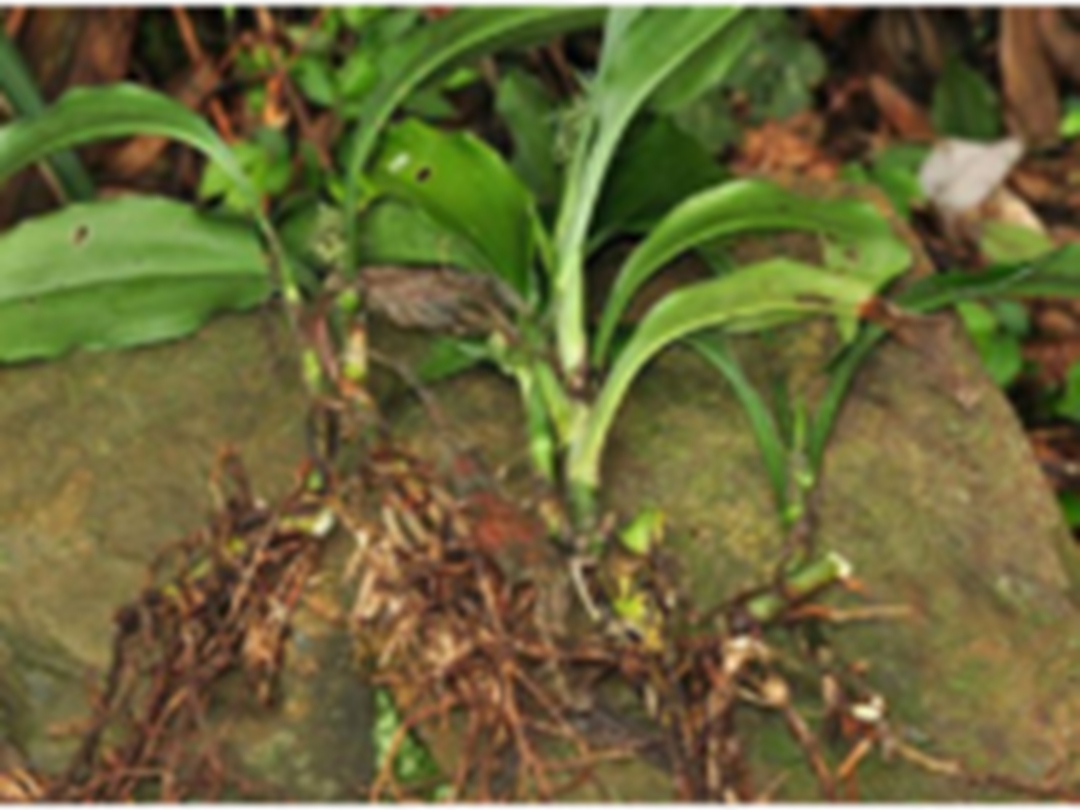
Open-Mouthed Arrow
Kai Kou Jian is the name of a traditional Chinese medicine. It consists of the rhizomes of the Liliaceae plants Tupistrachinensis Baker [T. fargesii Baill.; T. watanabei (Hayata) Wang et Liang; Campylandra pachynema Wang et Tang] and Tupistraensifolia Wang et Tang.Tupistrachinensis is distributed in Central and Southern China, as well as in Shaanxi, Anhui, Zhejiang, Jiangxi, Fujian, Taiwan, Sichuan, and Yunnan; Tupistraensifolia is distributed in Yunnan. It has the therapeutic effects of clearing heat and detoxifying, dispelling wind and removing dampness, and dispersing blood stasis to relieve pain. It is commonly used for diphtheria, sore throat, rheumatic pain, trauma, stomach pain, abscesses, boils, and toxic sores, as well as venomous snake and rabid dog bites.
Chinese Name : 开口箭
Aliases : Balinma, Xinbugan, Yanqi, Dahanyao, Wannianpan, Zhugenqi, Niweiqi, Zhugenshen, Baoguqi, Yanqi, Shifengdan, Sou Shanhu, Xiaowannianqing, Kaitoujian, Laoshelian, Qinglongdan, Luohanqi
Nature, Flavor & Meridian Tropism : Taste: bitter, pungent; nature: cold. Enters the Lung, Stomach, and Liver meridians
Benefits & Efficacy
Benefits
Clears heat and detoxifies; dispels wind and removes dampness; dissipates blood stasis and relieves pain.
Indications
Used for diphtheria, sore throat, rheumatic pain, trauma, stomach pain, abscesses, boils, and toxic sores, as well as venomous snake and rabid dog bites.
Usage and Dosage
Internal use: Decocted as a soup, 1.5–3 g; ground into powder, 0.6–0.9 g. External use: Apply an appropriate amount as a poultice.
Precautions
1. *Shaanxi Chinese Herbal Medicine*: “Avoid tobacco, chili peppers, vinegar, or acidic foods.” 2. *Compendium of Chinese Herbal Medicine*: “Contraindicated for pregnant women. This herb is toxic. Cases of poisoning have been reported at doses up to 9 g; therefore, the dosage must not exceed this limit. Symptoms of poisoning may include headache, dizziness, nausea, and vomiting.” 3. Patients requiring treatment with Chinese herbal medicine should first consult a licensed traditional Chinese medicine hospital and obtain a prescription following a professional TCM differential diagnosis.
Relevant Discussions
*Yunnan Chinese Herbal Medicine*: “Pungent, bitter, and warm in nature.”
*Shaanxi Chinese Herbal Medicine*: “Sweet in taste, slightly bitter, and cold in nature.”
*Selected Compendium of Guangxi Materia Medica*: “Pungent in taste, cool in nature. Toxic.”
*Yunnan Chinese Herbal Medicine*: “Warms the middle burner to dispel cold; regulates qi to relieve pain. Primarily used to treat stomach pain, gastric ulcers, and trauma.”
*Medicinal Herbs of Shaanxi*: “Relieves rheumatism, clears heat and purges fire, alleviates pain and stops bleeding, regulates menstruation and promotes blood circulation, nourishes yin and tonifies deficiency. Mainly used to treat rheumatoid arthritis, lower back and leg pain, trauma, overwork-induced injuries, irregular menstruation, and bone-consumptive fever.”*Selected Compendium of Guangxi Materia Medica*: “Clears heat and detoxifies; dispels blood stasis and relieves pain. Indicated for sore throat, tonsillitis, diphtheria, abdominal pain caused by summer heat, venomous snake bites, and unexplained swellings and abscesses.”
*Compendium of Chinese Herbal Medicines*: “Indicated for rabies bites; used externally to treat boils, abscesses, and swellings caused by toxins.”
Applications
Related Compatibility
1. For rheumatic joint pain and trauma: Grind the rhizome of *Kai Kou Jian* into a paste with alcohol and apply topically. Alternatively, grind into a powder and take orally with alcohol, 0.6–0.9 g per dose; do not exceed this amount. (*Hunan Materia Medica*)
2. For stomach pain, sore throat, and tonsillitis: Take 5 g of fresh Kaikoujian rhizome. Pound it into a paste, add warm water to extract the juice, and gargle with it in divided doses throughout the day. (*Hunan Materia Medica*)
3. For ascites due to liver cirrhosis: Take 3 g of Kaikoujian rhizome, 30 g each of Tianjihuang and Verbena. Decoct in water and take orally. (*Hunan Materia Medica*)
4. For stomach pain and biliary colic: 3 g of fresh Xīnbùgān root; chew and swallow raw; or 9 g of dried root and 6 g of Zhi Shi; grind into a powder and take in 3 divided doses with hot water.
5. For influenza, the common cold, bronchitis, and cough: 9 g of Xīnbùgān root.Decoct and drink, or grind into a powder; take 0.6g per dose with boiling water, three times daily. (From *Honghe Herbal Medicine*)
6. For boils, abscesses, and toxic sores; venomous snake bites: Pound the fresh rhizome of *Kai Kou Jian* into a paste and apply topically, or grind it into a paste with alcohol and apply. For snake bites, apply the paste around the wound. (From *Hunan Materia Medica*)
Notes
This herb is toxic; there have been reports of poisoning at doses up to 9 grams. Therefore, the dosage must not be excessive. Symptoms of poisoning may include headache, dizziness, nausea, and vomiting; in such cases, discontinue use immediately and seek prompt medical attention.
Processing & Preparation
Harvesting & Processing
Can be harvested year-round. Remove leaves and fibrous roots, wash thoroughly, and use fresh or slice and sun-dry.
Crude Drug Identification
Properties of Crude Drugs
The rhizome of *Kai Kou Jian* is flattened and cylindrical, slightly twisted. It is 10–15 cm long and approximately 1 cm in diameter. The nodes are distinct and slightly swollen, with buds and membranous, scale-like leaves at the nodes; the internodes are short. The surface is yellowish-brown to yellowish-green and wrinkled. The cross-section is pale yellowish-white and finely granular. It is odorless and has a bitter, astringent taste.
Botanical Information
Botanical Classification
Plants of the genus *Lilium* (Lily family), specifically *Lilium ophiopetalum* and *Lilium glabrifolium*.
Morphological Characteristics
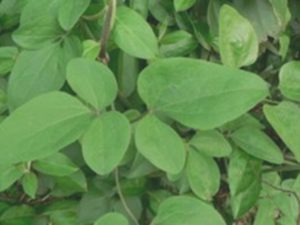
Open-arrow, also known as Coarse-fiber Open-arrow (*Yunnan Chinese Herbal Medicine*). A perennial herb. The rhizome is oblong-cylindrical, 1–1.5 cm in diameter, heavily jointed, and green to yellow.Leaves are basal, 4–8 in number; leaf blades are oblanceolate, linear-lanceolate, or linear, 15–65 cm long and 1.5–9.5 cm wide, with an acuminate apex and a gradually narrowing base; there are 2 sheathing leaves. The spike-like inflorescence is lateral, erect, densely bearing many flowers, and 2.5–9 cm long;bracts ovate-lanceolate to lanceolate, with several sterile bracts clustered at the apex of the inflorescence; perianth short campanulate, 5–7 mm long, with 6 lobes, ovate, 3–5 mm long, 2–4 mm wide, yellow or yellowish-green, fleshy; stamens 6, filaments expanded at the base, some fused to one another, separated in the upper part, incurved, anthers ovate;The ovary is globose, 3-chambered; the style is inconspicuous; the stigma is obtuse, trigonal, and 3-lobed at the apex. The berry is globose, 8–10 mm in diameter, purplish-red when ripe, containing 1–3 seeds. Flowering period: April–June; fruiting period: September–November. Sword-leaved Arrowhead: A perennial herb. The rhizome is cylindrical, brown or green; the stem is up to 10 cm long and highly jointed.Leaves are numerous, distinctly arranged in two rows; strap-shaped, 35–50 cm long and 5–12 mm wide, with a long, acuminate apex; the base is expanded and clasping the stem; when dry, the margins are slightly revolute. The spicate inflorescence is lateral, densely bearing many flowers, 4–5.5 cm long;bracts are lanceolate or triangular-lanceolate, longer than the flowers, with several sterile bracts clustered at the apex of the inflorescence; the perianth is tubular-campanulate, 5–5.5 mm long, with 6 ovate lobes that are spreading, 2–2.5 mm long and 1.5–2 mm wide, fleshy, brown or green, with white membranous margins that appear eroded;There are 6 stamens; the filaments are thick, expanded and wrinkled at the base, adnate to the perianth tube, and separated in the upper part; they are shorter than the anthers, which are ovate; the ovary is ovate, 3-chambered; the style is inconspicuous; the stigma is obtuse, trigonal, and 3-lobed at the apex. The berry is 5–8 mm in diameter, reddish-black, and contains 1–3 seeds. Flowering occurs in June, and fruiting in October.