Chestnut Bark, a name in traditional Chinese medicine. It is the bark of the Chinese chestnut (Castanea mollissima Bl.), a plant in the Fagaceae family. It is distributed throughout areas south of Liaoning and is cultivated everywhere except in Qinghai and Xinjiang. It has the effects of detoxifying, reducing swelling, and astringing to stop bleeding. It is commonly used to treat impetigo, erysipelas, oral thrush, lacquer dermatitis, bloody stools, nosebleeds, bleeding from wounds, and pain from falls or injuries.
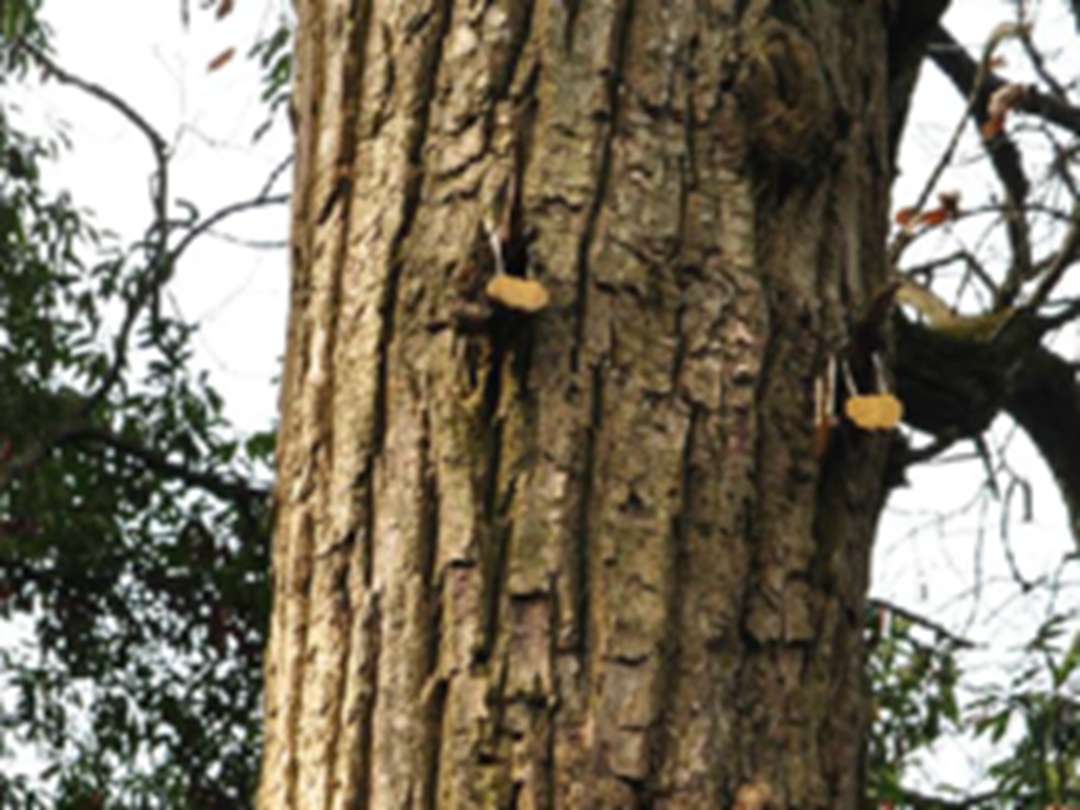
Chestnut Bark
Chestnut Bark, a name in traditional Chinese medicine. It is the bark of the Chinese chestnut (Castanea mollissima Bl.), a plant in the Fagaceae family. It is distributed throughout areas south of Liaoning and is cultivated everywhere except in Qinghai and Xinjiang. It has the effects of detoxifying, reducing swelling, and astringing to stop bleeding. It is commonly used to treat impetigo, erysipelas, oral thrush, lacquer dermatitis, bloody stools, nosebleeds, bleeding from wounds, and pain from falls or injuries.
Chinese Name : 栗树皮
Latin Name : Castanea mollissima Bl.
Aliases : White Bark of the Chestnut Tree
Authentic Producing Area : Northern China, Southwest China, and the Yangtze River Basin
Nature, Flavor & Meridian Tropism : Slightly bitter and astringent in taste; neutral in nature; enters the Heart, Liver, and Stomach meridians
Benefits & Efficacy
Benefits
Detoxifies, reduces swelling, and has astringent and hemostatic effects.
Indications
Leprosy, erysipelas, oral thrush, lacquer dermatitis, bloody stools, epistaxis, bleeding from wounds, and pain from falls or injuries.
Usage and Dosage
Internal use: Decoct 5–10 g in water. External use: Apply an appropriate amount; decoct in water for washing, or burn to ash and apply as a poultice.
Precautions
Not yet established.
Relevant Discussions
1. *Anhui Chinese Herbal Medicine*: “Treats lacquer dermatitis.”
2. *Fujian Materia Medica*: “Promotes the flow of qi, removes dampness, and relieves itching.”
Applications
Related Compatibility
1. For lacquer dermatitis: 2 parts chestnut tree bark or root bark, 1 part crab shell. Calcify each until charred but not completely burned, grind into a fine powder, and mix with sesame oil to apply to the affected area. (*Anhui Chinese Herbal Medicine*)
2. For trauma and contusions: Pound chestnut tree bark and apply the paste to the affected area. (*Sichuan Compendium of Chinese Medicinal Herbs*, 1982)
Processing & Preparation
Harvesting & Processing
The bark can be harvested year-round and used fresh or sun-dried.
Crude Drug Identification
Properties of Crude Drugs
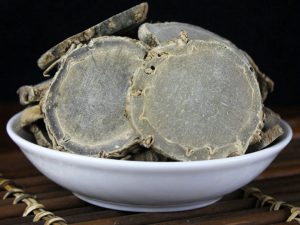
The outer surface of the bark is dark gray with irregular deep longitudinal fissures; the inner surface is yellowish-white or off-white. It has a faint odor and a slightly bitter, astringent taste.
Botanical Information
Botanical Classification
From the chestnut tree (a plant of the Fagaceae family).
Morphological Characteristics
Chestnut, also known as li, guili, kuili, maobanli, walizi tree, or fengli. A tree reaching 15–20 m in height. The bark is dark gray with irregular, deep vertical fissures. The branches are gray-brown with longitudinal grooves; the bark bears numerous yellowish-gray, circular lenticels, and young branches are covered with gray-brown downy hairs.Winter buds are short, broadly ovate, and covered with downy hairs. Simple leaves are alternate; petioles are 0.5–2 cm long, covered with fine downy hairs or nearly glabrous;leaves are oblong or oblong-lanceolate, 8–18 cm long and 5.5–7 cm wide, with an acuminate or shortly acute apex, a rounded or broadly cuneate base, unequal sides, serrate margins with a bristle-like tip at each tooth, dark green and glossy above, with 10–17 pairs of pinnate lateral veins,hairy along the midrib; the underside is pale green with white tomentum. Flowers are unisexual, with male and female flowers on the same plant; male inflorescences are spicate, arising from the leaf axils on the lower parts of new branches, 9–20 cm long, tomentose, and pale yellowish-brown; male flowers are borne in the upper and middle parts of the inflorescence, with 3–5 flowers per cluster and 8–10 stamens;Female flowers are sessile, usually borne below the male inflorescences; they are enclosed by a cupule-like involucre, with 2–3 (–5) flowers within the involucre; the ovary is inferior; there are 5–9 styles, the lower parts of which are hairy.The cupule, including spines, is 4–6.5 cm in diameter, densely covered with appressed stellate pubescence, and densely spined; each cupule contains 2–3 nuts and splits into 4 valves when mature; the nuts are 1.5–3 cm in diameter, dark brown, and velvety at the apex. Flowering occurs from April to June, and fruiting from September to October.
Distribution Area
It is distributed throughout areas south of Liaoning and is cultivated everywhere except Qinghai and Xinjiang. Cultivation is most concentrated in North China, Southwest China, and the Yangtze River Basin, where yields are highest.