
Introduction to Medicinal Diet
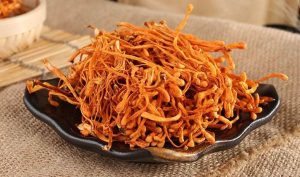
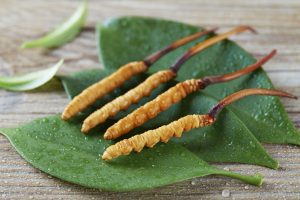
Cordyceps and Reishi Calmness & Immune Support Tea is a modern wellness tea that integrates the traditional Chinese food-medicine concept. This formula features two precious medicinal herbs—Cordyceps sinensis (Dongchongxiacao) and Ganoderma lucidum (Lingzhi)—as the core, supplemented with Ziziphus spinosa (Suanzaoren), Poria cocos (Fuling), and Longan (Longyanrou) to support calmness and vitality, all scientifically combined. The tea has an amber-colored infusion, a rich, mellow, and slightly sweet taste, carrying the distinctive aroma of fungi along with the gentle warmth of herbal ingredients. Regular consumption of this tea allows for gentle nurturing of body functions during daily tea enjoyment, making it especially suitable for urban individuals with fast-paced lifestyles and high mental stress as a daily health beverage.
This formula is derived from the integration of traditional calming (anshen) formulas and immune-supporting theory. Rather than a simple mixture of herbs, it follows the principle of “sovereign, minister, assistant, and courier” (Jun-Chen-Zuo-Shi). Cordyceps (Dongchongxiacao) enters the Lung and Kidney meridians; Reishi (Lingzhi) enters the Heart and Liver meridians. Together, they establish an upper-lower, interior-exterior synergy to reinforce the body’s righteous Qi (Zheng Qi). The addition of Suanzaoren (Ziziphus spinosa) and Fuling (Poria cocos) further support a tranquil spirit and settled mind, helping the formula not only support the body’s normal defenses but also promote mental calmness and restful sleep—nurturing both the physical form and the spirit (Xing-Shen). This herbal tea is designed to allow individuals to easily receive the nourishing benefits of traditional Chinese medicinal cuisine (yaoshan) amid a busy lifestyle, making health maintenance simple and sustainable.
Benefits of Medicinal Diet
Chongcao Lingzhi Anshen Mianyi Tea (Cordyceps and Reishi Calming Immunity Tea) supports a balanced interaction between the immune and nervous systems. Modern pharmacological studies indicate that cordyceps polysaccharides from Cordyceps sinensis (Dongchongxiacao) and ganoderic triterpenoids from Ganoderma lucidum (Lingzhi) help activate immune cells such as macrophages and natural killer cells, supporting the body’s natural defense mechanisms. In addition, jujuboside from Ziziphus spinosa (Suanzaoren) and pachyman from Poria cocos (Fuling) in the tea formula have calming properties that help promote restful sleep, extend the duration of deep sleep, and support the nightly recovery and restoration of the brain and body.
With prolonged consumption, this tea may support three areas of well-being: first, an uplifted mental state with reduced daytime drowsiness and improved mental clarity; second, optimized sleep quality, helping with occasional difficulties falling asleep, excessive dreaming, and frequent waking; third, enhanced natural defenses, supporting the body’s resilience during seasonal changes and promoting comfort for individuals with sensitivities. In particular, for those experiencing occasional fatigue related to work‑related stress, this tea works from the perspectives of nourishing vitality and calming the mind, helping the body gradually transition toward a state of balance and overall wellness.
Detailed Breakdown of Key Functions
In terms of antioxidant and anti-aging support, the antioxidant enzymes in Lingzhi (Reishi) help scavenge free radicals in the body, reducing oxidative damage to cells. Cordyceps supports balanced endocrine function, helping to maintain comfort during women’s menopausal transition and supporting male vitality. The synergistic effect of these two herbs gives this tea a unique value in supporting the natural aging process, making it suitable as a daily beverage for long-term anti-aging support.
The Role of Traditional Chinese Medicine
From the perspective of traditional Chinese medical theory, the formulation of Cordyceps-Ganoderma Sleep & Immune Support Tea embodies the academic concept of “harmonizing the Lung, Spleen, and Kidney simultaneously, while tonifying both Qi, Blood, Yin, and Yang.” In this formula, Cordyceps sinensis (Dongchongxiacao) is sweet in flavor and warm in nature, entering the Lung Meridian (LU) and Kidney Meridian (KI), and supports healthy Lung and Kidney function, helps maintain normal blood condition, and serves as a balanced tonic for both Yin and Yang. Ganoderma lucidum (Lingzhi) is sweet in flavor and neutral in nature, entering the Heart Meridian (HT), Lung Meridian (LU), Liver Meridian (LR), and Kidney Meridian (KI), and supports Qi, calmness, and respiratory helps with occasional, with particular benefit for soothing the mind and supporting Heart health. When used together, these two herbs support the Lung and Kidney, promote mental tranquility, and simultaneously strengthen the constitutional foundation (Kidney) and the acquired foundation (Spleen).
The assistant herb, Suanzaoren (Ziziphus spinosa, Sour Jujube Seed), is sweet, sour, and neutral in nature. It enters the Liver, Gallbladder, and Heart Meridians and is a key herb for nourishing the Heart and calming the spirit, supporting the body in cases of Liver blood deficiency and occasional restlessness. Fuling (Poria cocos, Poria) is sweet, bland, and neutral, entering the Heart, Spleen, and Kidney Meridians. It helps maintain healthy fluid metabolism and supports the Spleen and Heart, assisting Lingzhi (Ganoderma lucidum, Reishi) in its calming effects. Longyanrou (Dimocarpus longan, Longan Aril) is sweet and warm, entering the Heart and Spleen Meridians. It helps nourish the Heart and Spleen, supports blood nourishment, and promotes a calm mind, ensuring the formula is nourishing without causing stagnation. The overall formulation is exquisitely balanced, with an orderly regulation of ascending and descending movements, allowing the body’s vital energy (Zheng Qi) to remain strong so that pathogenic factors (Xie) have no chance to interfere. This approach both supports mental tranquility and emotional balance as a symptomatic strategy, and strengthens vitality and foundational health as a root supports, embodying the deep wisdom of TCM’s principle of “seeking the root cause in supports.”
Suitable Individuals
Cordyceps and Reishi Calming and Immune Support Tea is most appropriate for the following five groups of individuals: first, those under long-term high-pressure work environments who seek support for mental calmness and healthy sleep patterns, such as individuals who experience mental tension, occasional difficulty falling asleep, and restless sleep with vivid dreams; second, individuals with a constitution that may benefit from immune support, particularly those prone to occasional seasonal discomfort, occasional mouth sores, and fatigue that is slow to resolve; third, middle-aged and older adults who wish to support memory function, normal urinary frequency during the night, and overall vitality, especially when experiencing signs associated with aging; fourth, individuals in a state of suboptimal health who, despite no identified organic conditions upon medical examination, experience occasional fatigue, low mood, and reduced work efficiency; fifth, individuals recovering from wellness or surgery who need to support the body’s natural recovery process and maintain healthy energy (Zheng Qi).
Modern research suggests that this tea supports overall well-being and helps maintain a balanced internal environment. For individuals managing long-term health conditions, drinking this tea in moderation, under the guidance of a healthcare provider, may help support normal Liver and Kidney function and promote the body’s natural resilience to daily stress. In particular, for those who need to stay up late due to work demands, this tea can serve as a daily wellness drink to help maintain vitality and support the body’s natural recovery processes.
Contraindicated Populations
Despite the relatively balanced nature of the Cordyceps and Reishi Calm-Spirit Immune-Support Tea, there are still specific groups for whom caution is essential. First, pregnant and breastfeeding women should avoid consumption, as the active components of Cordyceps (Ophiocordyceps sinensis) and Reishi (Ganoderma lucidum) may affect fetal or infant development via the placenta or breast milk. Second, children under twelve are not recommended to drink this tea, as their viscera and bowels are delicate and their physical constitution and Qi are not yet fully developed; premature tonic supplementation may disrupt normal growth and development rhythms. Third, during episodes of common cold with fever—especially when an external pathogen pattern has not yet resolved—consumption should be suspended to avoid trapping pathogenic factors internally.
Additionally, individuals with a Yin Deficiency and Internal Heat constitution—characterized by warm palms and soles, dry mouth and tongue, night sweats, and flushed cheeks—should use with caution, or consider adding moistening and cooling herbs such as Ophiopogon japonicus (Maidong) and Anemarrhena asphodeloides (Zhimu) to moderate the formula’s warming nature. Those with a constitution of exuberant Damp-Heat—manifesting as a bitter, sticky mouth sensation, unsmooth bowel movements, and a thick, yellow, greasy tongue coating—should also avoid drinking it alone, as it may contribute to internal dampness and heat. Individuals with a history of allergic reactions to mushroom-type ingredients should undergo an allergy test before deciding to consume it. Patients taking anticoagulant medications such as warfarin should use this product under the guidance of a physician, as Lingzhi (Reishi, Ganoderma lucidum) may enhance the anticoagulant effect. Those with severe Liver or Kidney dysfunction should also avoid long-term unsupervised use.
Ingredient Formula Ratio
The precise formula and daily dosage of the Cordyceps-Lingzhi Calming and Immune Support Tea are as follows: Ophiocordyceps sinensis (Dongchongxiacao) 2 g (approximately 3–4 medium-sized specimens), Ganoderma lucidum (Lingzhi) spore powder (broken wall) 3 g, or Ganoderma lucidum slices 5 g, Ziziphus jujuba var. spinosa (Suanzaoren, stir-fried) 10 g, Poria cocos (Fuling, cut into small pieces) 10 g, Dimocarpus longan (Longyan, dried) 6 g, Ziziphus jujuba (Dazao, pitted) 3 pieces (approx. 6 g), and Lycium barbarum (Gouqizi) 5 g. This formula balances taste and supports overall wellness, as the ingredients work synergistically to promote a gentle and harmonizing effect on the body.
In practice, adjustments can be made according to individual conditions: for those with frequent sleep difficulties, add 10 grams of Lilium brownii (Baihe) to enhance its action of calming the mind and supporting restful sleep; for those with noticeable fatigue, add 5 grams of Astragalus membranaceus (Huangqi) and 5 grams of Codonopsis pilosula (Dangshen) to help support vitality; for those who prefer a sweet taste, a small amount of honey or rock sugar may be added, but this is not recommended for individuals with elevated blood sugar levels. All medicinal herbs should be of authentic origin: Ophiocordyceps sinensis (Dongchongxiacao) is best sourced from Naqu, Tibet, or Yushu, Qinghai; for Ganoderma lucidum (Lingzhi), log-cultivated red Reishi is recommended for its higher content of active compounds. Precise proportions of ingredients are fundamental to ensure the desired effects of the herbal dietary tonic and should not be arbitrarily adjusted.
Cooking methods
Step 1: Preparation. Quickly rinse all ingredients in clean water to remove surface dust. Note that Cordyceps should not be soaked for too long to avoid loss of active constituents. Slightly crush Ziziphus spinosa seeds (Suanzaoren) in a mortar to facilitate the release of active constituents. Ganoderma lucidum slices (Lingzhi) can be cut into small strips to increase the surface area. Remove the pits from jujube dates and cut them in half. Place all prepared ingredients (except Ganoderma lucidum spore powder) into a teapot or health pot.
Step 2: Decoction and Extraction. Add 800 ml of room-temperature water into the pot. Soak for 20 minutes, then begin heating. Bring to a boil over high heat, then immediately reduce to low heat, cover, and simmer gently for 30 minutes. Five minutes before turning off the heat, mix the broken Ganoderma lucidum (Lingzhi) spore powder with a small amount of warm water to form a paste, pour it into the pot, and continue stirring while cooking for 5 minutes. This method helps maximize the retention of active components in the Ganoderma lucidum spore powder, avoiding prolonged high-temperature heating that could compromise its beneficial properties.
Step 3: Filtering and Consuming. After boiling, strain the tea through a fine mesh filter to remove the herbal residue, collecting the clear tea liquid. The color should be a deep amber, clear and bright. It can be consumed in two portions, once in the morning and once in the evening. Before each serving, warm the tea to a suitable temperature by placing the container in hot water (double-boil method). The remaining herbal residue can be steeped once more with boiling water, but the active ingredients will be significantly reduced. It is recommended to prepare a fresh batch daily. Throughout the entire preparation process, it is preferable to use ceramic or glass utensils, avoiding metal containers.
Consumption Tips
First, there is an emphasis on the optimal timing of consumption. The best times to drink are between 3–5 PM (Shen Shi) and 8–9 PM (Xu Shi). During Shen Shi, the Bladder Meridian (BL) is most active, which supports the body’s metabolic processes and natural cleansing functions. During Xu Shi, the Pericardium Meridian (PC) is active, and taking the beverage at this time can help promote a sense of calmness, contributing to restful sleep at night. It is not recommended to consume the beverage on an empty stomach, as this may cause occasional digestive discomfort. Additionally, avoid drinking large amounts within one hour before bedtime to minimize frequent urination during the night, which may affect sleep quality.
Second, recommendations for the drinking cycle. This tea follows a 28-day wellness cycle. After consuming continuously for 4 weeks, it is recommended to take a 7–10 day break to allow the body a period of self-regulation. Thereafter, you may decide whether to continue with the next cycle based on your own experience. Long-term consistent consumption is more beneficial than short-term large amounts. Generally, after 2–3 cycles, you may notice that it supports restful sleep and a balanced mental state.
Third, coordinate with proper self-care. While drinking this tea, maintain a light diet and avoid simultaneously consuming raw, cold, greasy, spicy, or other stimulating foods, so as to support optimal absorption of the herbal constituents. Keep a regular daily routine and try to fall asleep before 11:00 PM for enhanced benefits. It is also recommended to appropriately combine relaxation practices such as walking, meditation, and deep breathing—cultivating both internal and external harmony to achieve the best tone-up results. If you are taking other medications, it is advised to allow an interval of at least one hour between drinking this tea and taking the medication.
This sounds like a lovely blend! I’ve been looking for natural ways to support both calmness and immunity, and the combination of cordyceps, reishi, and jujube seeds is intriguing. Do you find the taste mild enough to drink daily? I might try adding a bit of honey. Thanks for sharing this!
Love the idea of combining cordyceps and reishi for both calm and immunity! I’ve been experimenting with medicinal teas lately, and this blend sounds perfect for winding down after a stressful day. Adding longan for sweetness is a nice touch too. Definitely trying this!
This sounds like a wonderful blend for both relaxation and immunity! I’ve been looking for a natural way to support my health without relying on coffee or harsh supplements. Love that it’s rooted in traditional Chinese medicine too—definitely going to try this for my evening wind-down routine. Thanks for sharing!
This sounds like such a comforting blend! I’ve been looking for natural ways to support my immune system and calm my mind. The combination of reishi and cordyceps seems powerful, and adding longan sounds like a nice touch for flavor. Have you tried it yet? I’m curious about the taste!