The sunflower is a plant of the genus Helianthus in the Asteraceae family; its fruits, flowers, flower heads, leaves, stem pith, and roots are used medicinally.Sunflower seeds (fruit) have a sweet taste and neutral nature; they are effective in promoting the eruption of rashes, stopping dysentery, and draining pus from abscesses. They are primarily used to treat rashes that fail to erupt, bloody dysentery, and chronic osteomyelitis. Sunflower flowers have a slightly sweet taste and neutral nature; they are effective in dispelling wind, calming the liver, and draining dampness. They are primarily used to treat dizziness, tinnitus, and painful urination.Sunflower flower heads have a sweet taste and a cold nature; they enter the Liver meridian and have the effects of clearing heat, calming the liver, relieving pain, and stopping bleeding. They are primarily used to treat hypertension, headaches, dizziness, tinnitus, epigastric and abdominal pain, dysmenorrhea, uterine bleeding, and skin rashes;Sunflower leaves have a bitter taste and a cool nature; they lower blood pressure, arrest malaria, and detoxify. They are primarily used to treat hypertension, malaria, and boils; Sunflower stem pith has a sweet taste and a neutral nature; it enters the Bladder Meridian and has the effects of clearing heat, promoting urination, and relieving cough. It is primarily used to treat turbid urine, leukorrhea, chyluria, whooping cough, and rubella;Sunflower roots have a sweet and bland taste, a slightly cold nature, and enter the Stomach and Bladder meridians. They clear heat, drain dampness, regulate qi, and relieve pain, and are primarily used to treat dysuria with turbid discharge, edema, leukorrhea, hernias, epigastric and abdominal distension and pain, and trauma.
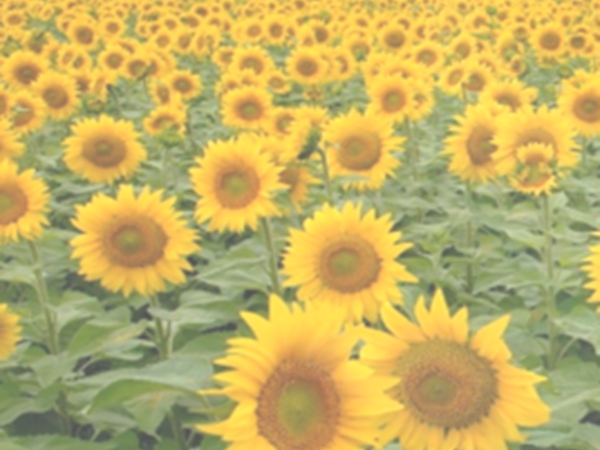
Sunflower
The sunflower is a plant of the genus Helianthus in the Asteraceae family; its fruits, flowers, flower heads, leaves, stem pith, and roots are used medicinally.Sunflower seeds (fruit) have a sweet taste and neutral nature; they are effective in promoting the eruption of rashes, stopping dysentery, and draining pus from abscesses. They are primarily used to treat rashes that fail to erupt, bloody dysentery, and chronic osteomyelitis. Sunflower flowers have a slightly sweet taste and neutral nature; they are effective in dispelling wind, calming the liver, and draining dampness. They are primarily used to treat dizziness, tinnitus, and painful urination.Sunflower flower heads have a sweet taste and a cold nature; they enter the Liver meridian and have the effects of clearing heat, calming the liver, relieving pain, and stopping bleeding. They are primarily used to treat hypertension, headaches, dizziness, tinnitus, epigastric and abdominal pain, dysmenorrhea, uterine bleeding, and skin rashes;Sunflower leaves have a bitter taste and a cool nature; they lower blood pressure, arrest malaria, and detoxify. They are primarily used to treat hypertension, malaria, and boils; Sunflower stem pith has a sweet taste and a neutral nature; it enters the Bladder Meridian and has the effects of clearing heat, promoting urination, and relieving cough. It is primarily used to treat turbid urine, leukorrhea, chyluria, whooping cough, and rubella;Sunflower roots have a sweet and bland taste, a slightly cold nature, and enter the Stomach and Bladder meridians. They clear heat, drain dampness, regulate qi, and relieve pain, and are primarily used to treat dysuria with turbid discharge, edema, leukorrhea, hernias, epigastric and abdominal distension and pain, and trauma.
Chinese Name : 向日葵
Aliases : Sunflower, Sun-facing Flower, Sun-gazing Sunflower, Sunrise Flower, Sun-tracking Lotus
Authentic Producing Area : Cultivated throughout China
Nature, Flavor & Meridian Tropism : Sunflower seeds (fruit) have a sweet taste and neutral nature; sunflower blossoms have a slightly sweet taste and neutral nature; sunflower flower heads have a sweet taste, a cold nature, and enter the Liver Meridian; sunflower leaves have a bitter taste and a cool nature; sunflower stem pith has a sweet taste, a neutral nature, and enters the Bladder Meridian; sunflower roots have a sweet and bland taste, a slightly cold nature, and enter the Stomach and Bladder Meridians
Benefits & Efficacy
Benefits
1. Sunflower seeds are effective in promoting the eruption of rashes, stopping dysentery, and promoting the discharge of pus from abscesses. 2. Sunflower blossoms are effective in dispelling wind, calming the liver, and draining dampness. 3. Sunflower flower heads have the effects of clearing heat, calming the liver, relieving pain, and stopping bleeding. 4. Sunflower leaves have the effects of lowering blood pressure, arresting malaria, and detoxifying. 5. Sunflower stem pith has the effects of clearing heat, promoting urination, and relieving coughs. 6. Sunflower roots have the effects of clearing heat, draining dampness, regulating qi, and relieving pain.
Indications
1. Sunflower seeds are primarily used to treat rashes that fail to break through the skin, bloody dysentery, and chronic osteomyelitis. 2. Sunflower flowers are primarily used to treat dizziness, tinnitus, and painful, dribbling urination. 3. Sunflower flower heads are primarily used to treat hypertension, headaches, dizziness, tinnitus, epigastric and abdominal pain, dysmenorrhea, uterine bleeding, and skin rashes. 4. Sunflower leaves are primarily used to treat hypertension, malaria, and boils. 5. Sunflower stem pith is primarily used to treat gonorrhea, leukorrhea, chyluria, whooping cough, and rubella. 6. Sunflower roots are primarily used to treat gonorrhea, edema, leukorrhea, hernias, epigastric and abdominal distension and pain, and trauma from falls or blows.
Usage and Dosage
1. Sunflower seeds: Can be taken internally or used externally. For internal use, the dosage is typically 15–30 g; they should be crushed or simmered in boiling water. For external use, apply an appropriate amount by crushing them into a paste and applying to the affected area, or by extracting the oil and applying it topically. 2. Sunflower Flowers: Decoct and take orally. The common dosage is 15–30 g. 3. Sunflower Flower Heads: Can be taken internally or used externally. For internal use, the dosage is typically 15–60 g, prepared as a decoction; for external use, apply an appropriate amount by crushing or grinding into a powder and applying to the affected area. 4. Sunflower leaves: May be taken internally or used externally. For internal use, the dosage is typically 25–30 g (increase the amount for fresh leaves), prepared as a decoction; for external use, apply an appropriate amount by mashing the leaves into a paste and applying to the affected area. 5. Sunflower stem pith: Prepare as a decoction for internal use. The common dosage is 9–15 g. 6. Sunflower roots: Can be taken internally or used externally. For internal use, the dosage is typically 25–30 g (double the amount for fresh roots); prepare as a decoction or grind into a powder. For external use, apply an appropriate amount by mashing it and applying it to the affected area.
Precautions
Not yet established.
Applications
Notes
Patients requiring treatment with traditional Chinese medicine should first consult a licensed TCM hospital, where a TCM practitioner will conduct a professional pattern differentiation and issue a prescription.
Processing & Preparation
Harvesting & Processing
1. Sunflower seeds: After the fruits ripen in the fall, cut off the flower heads, sun-dry them, thresh out the seeds, and then sun-dry the seeds again. 2. Sunflower flowers: Harvest during the summer when in bloom; use fresh or sun-dry. 3. Sunflower flower heads: Harvest in the fall; remove all seeds; use fresh or sun-dry. 4. Sunflower leaves: Harvest in summer and fall; use fresh or dry in the sun. 5. Sunflower stem pith: Harvest in the fall; use fresh or dry in the sun. 6. Sunflower roots: Dig up in summer and fall; wash thoroughly; use fresh or dry in the sun.
Storage Methods
Store in a dry container, tightly sealed, in a cool, dry place. Protect from mold.
Crude Drug Identification
Properties of Crude Drugs
1. Sunflower Seeds: Achenes are light gray or black, flattened-ovate or elliptical, containing a single pale yellow seed.
2. Sunflower Receptacle: This part is disc-shaped, with a diameter of 15–30 cm. The underside is brownish-gray, rough, and covered with grayish-white coarse hairs; it is slightly concave, but the central portion is often convex and extends to form a peduncle;the upper surface resembles a honeycomb, consisting of numerous bracts that are trilobed at the tips; shriveled seeds (underdeveloped achenes) are sometimes visible within the central honeycomb-like cavities; several layers of ovate-lanceolate involucral bracts are visible along the periphery. It is light in weight, brittle, and easily broken; the fracture surface is off-white or yellowish-white and spongy. It has a faint odor and a bland taste.
3. Sunflower Leaves: The leaves are mostly shriveled; intact leaves are broadly ovate, 10–20 cm long and 8–25 cm wide, with an acute or acuminate apex, serrated margins, and a rough surface on both sides. Slight odor, bland taste.
4. Sunflower Stem Pith: This product is oblong-cylindrical. It is light in weight, white in color, and spongy in texture.
Properties of Processed Slices
See “Characteristics of the Medicinal Material.”
Botanical Information
Botanical Classification
A plant of the genus Helianthus in the Asteraceae family.
Morphological Characteristics
An annual herb, 1–3 m tall. The stem is erect, stout, with a well-developed central pith, and covered with coarse, stiff bristles.Leaves are alternate; long-petiolate; leaf blades are broadly ovate or cordate-ovate, 10–30 cm long or longer, 8–25 cm wide, with an acuminate or acute apex, a cordate or truncate base, coarsely serrated margins, rough hairs on both surfaces, and three veins.A solitary capitulum is borne at the stem apex, reaching up to 35 cm in diameter; involucral bracts are ovate or ovate-lanceolate, with a caudate, acuminate apex, and covered with long, stiff bristles; female flowers are ligulate, golden yellow, and sterile;hermaphroditic flowers are tubular, with brown or purple corollas, and are fertile; the receptacle is flat, with membranous bracts. Achenes are obovate or ovate-oblong, slightly flattened, light gray or black; the pappus consists of two scale-like, awn-like structures. The pappus is deciduous. Flowering period: June–July.
Distribution Area
Cultivated throughout China. Native to North America.
Growth Habits
The period from seedling emergence to maturity is 80–130 days; seeds germinate at 4–5°C.Seedlings can tolerate brief periods of temperatures as low as -6°C and, in the tropics, temperatures exceeding 40°C. The plant is drought-tolerant and sun-loving. It is not particular about soil type and can be cultivated in most soils, except for low-lying areas prone to waterlogging or standing water. It is relatively tolerant of saline-alkali conditions and can grow and set seed in soils with a total salt content of less than 0.4%.
Propagation Methods
Propagated by seed.
Cultivation Techniques
1. The optimal sowing period is generally when the soil temperature at a depth of 6 cm stabilizes at 8–10°C. In northern regions, sowing typically takes place from late March to mid-April. Mechanical spot sowing, row sowing, or manual hole sowing may be used, with 3–4 seeds sown per hole and covered with 3–5 cm of soil (not less than 3 cm). Apply a generous amount of seed fertilizer at the time of sowing, primarily phosphorus fertilizer supplemented with nitrogen fertilizer.In the Northeast, plant 20,000–30,000 plants per hectare; in Inner Mongolia, plant 36,000–42,000 plants per hectare.
2. Sunflower flower heads differentiate and develop relatively early; flowering, grain filling, and oil formation occur simultaneously within a single flower head. The plants have lush foliage and a well-developed root system, enabling strong absorption of water and nutrients. If management is not timely, the flower centers will fail to fill properly, leading to reduced yields. Therefore, field management must be carried out at the appropriate times according to the characteristics of each growth and development stage.
Pest and Disease Control
1. Major diseases include sclerotinia rot, black spot, rust, brown spot, and downy mildew. Control measures primarily involve crop rotation, selecting disease-resistant varieties, and chemical control.
2. Major insect pests include wireworms, small cutworms, and yellow cutworms, which mostly occur during the seedling stage and can be controlled by treating seeds with pesticides. Pests affecting mature plants include grass borers and the ancient poison moth; these should be controlled with pyrethroid pesticides before the larvae reach the third instar.