Peach Blossom, a name in traditional Chinese medicine. It refers to the flowers of the peach (Amygdalus persica L.) or mountain peach (Amygdalus davidiana (Carr.) C. de Vos ex Henry), plants belonging to the genus Amygdalus in the Rosaceae family. It has the effects of promoting diuresis and relieving constipation, as well as invigorating blood circulation and resolving blood stasis.It is primarily used to treat difficulty urinating, edema, phlegm-fluid retention, beriberi, gravel dysuria, constipation, masses and masses, amenorrhea, mania and madness, skin rashes, and facial warts.
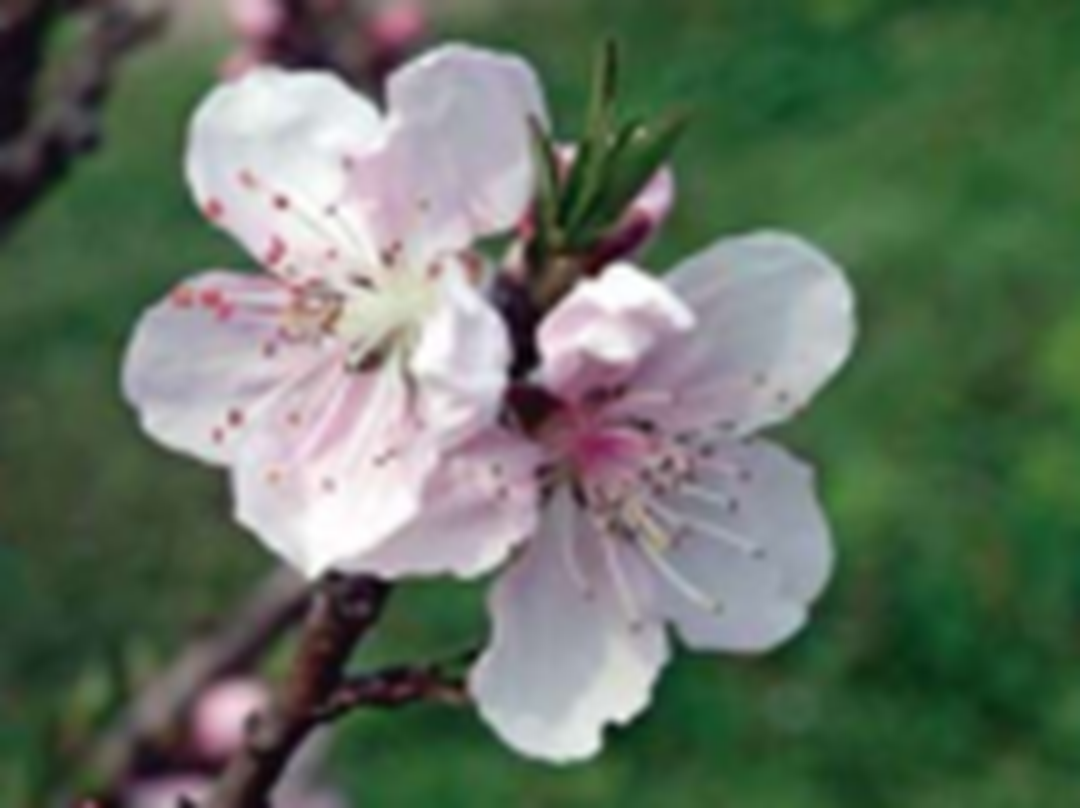
Peach Blossom
Peach Blossom, a name in traditional Chinese medicine. It refers to the flowers of the peach (Amygdalus persica L.) or mountain peach (Amygdalus davidiana (Carr.) C. de Vos ex Henry), plants belonging to the genus Amygdalus in the Rosaceae family. It has the effects of promoting diuresis and relieving constipation, as well as invigorating blood circulation and resolving blood stasis.It is primarily used to treat difficulty urinating, edema, phlegm-fluid retention, beriberi, gravel dysuria, constipation, masses and masses, amenorrhea, mania and madness, skin rashes, and facial warts.
Chinese Name : 桃花
Nature, Flavor & Meridian Tropism : Taste: bitter; Nature: neutral; Enters the Heart, Liver, and Large Intestine meridians
Benefits & Efficacy
Benefits
Promotes diuresis and relieves constipation; invigorates blood circulation and dispels blood stasis.
Indications
Difficulty urinating, edema, phlegm-fluid retention, beriberi, gravel dysuria, constipation, masses and masses, amenorrhea, mania, skin rashes, and facial warts.
Usage and Dosage
1. Internal use: Decocted as a soup, 3–6 g; ground into powder, 1.5 g. 2. External use: Apply an appropriate amount, pounded and applied as a poultice; or ground into powder and mixed with a carrier for application.
Precautions
Not suitable for long-term use; prolonged use may deplete yin and blood and damage vital energy.
Chemical Constituents
The flowers contain kaempferol-3-rhamnoside, quercetin, rosagallic acid A and B, wild rose glycoside A, chlorogenic acid, astragaloside, waxflower glycoside, kaempferol-3-diglucoside,peach bark flavonoid, naringin, neohesperidin, hesperidin, peach bark flavonoid-5-β-D-glucopyranoside,naringin-5-β-D-glucopyranoside, hesperidin-5-O-β-D-glucopyranoside, (R)-catechin, (S)-epicatechin gallate, chlorogenic acid, and cyanosin, kaempferol, and coumarin.White peach blossoms contain trifolirhin.
Pharmacological Actions
This product promotes skin metabolism, acts as a diuretic to reduce swelling, and improves gastrointestinal motility.
Relevant Discussions
1. *Shennong Bencao Jing*: “Improves one’s complexion.”
2. *Mingyi Bielu*: “Eliminates water retention, treats calculous dysuria, promotes urination and defecation, expels the three types of parasites, and enhances the radiance of the face.”
3. *Newly Revised Materia Medica*: “Expels pathogenic qi, reduces swelling and distension, and promotes bowel and bladder function.”
4. *Dietary Therapy Materia Medica*: “Treats pain in the chest and abdomen, as well as alopecia.”
5. *Compendium of Materia Medica*: “Promotes the elimination of stagnant water, phlegm, and fluid retention; treats mania; when ground into a powder, it is applied to fatty sores on the head and leprous sores on the hands and feet.”
6. *Compendium of Materia Medica*: “Relieves amenorrhea and blood masses in women, as well as blood-induced mania and madness.”
7. *Feng’s Treasure Trove: Medicinal Properties*: “Exposed peach blossoms eliminate the toxic energy of smallpox and treat skin rashes.”
8. *Compendium of Medical Essentials: Properties of Medicinal Herbs*: “Dries dampness, removes phlegm, and relieves lung counterflow.”
9. *Seeking the Origins of Materia Medica*: “Treats diarrhea caused by fluid accumulation; mania resulting from liver injury due to shock or anger, leading to phlegm, fluid retention, and blood stasis; and obstruction of urination and defecation after childbirth.”
10. *Record of Medicinal Herb Collection in Lingnan*: “Cools the blood and detoxifies; universally applicable for smallpox and rashes.”
Applications
Clinical Applications
1. For treating beriberi, chronic fluid retention in the lower back, kidneys, and bladder, as well as phlegm-fluid accumulation: Take one da sheng of peach blossoms (air-dried) and pound into a powder. Mix with warm, clear wine; take the entire dose at once until bowel movements are restored. Take on an empty stomach; relief should occur shortly thereafter, with six or seven bowel movements. All undigested food and other residues will be completely expelled. If you feel hungry or weak during this process, consume a small amount of soft rice or porridge.(Peach Blossom Powder, a formula by Cui Shi, cited in *Wai Tai*)
2. For difficult bowel movements: Take one fangcun bi of peach blossoms with water. (*Qian Jin Yao Fang*)
3. For facial sores with yellow discharge and eye sores: Grind peach blossoms (any amount) into a fine powder. After meals, mix one fangcun bi of the powder with half a zhan of water and take it three times daily. (*Hai Shang Ji Yan Fang*)
4. For postpartum constipation and difficulty passing both urine and stool: Peach blossoms, mallow seeds, talc, and areca nut, each one liang. Pound the ingredients finely and sift into a powder. Take two qian mixed with scallion white broth before each meal. (Peach Blossom Powder from *Shenghui Fang*)
5. For pain in the chest and abdomen: Peach blossoms (sun-dried and ground into a fine powder). Take two qian with water; for children, half a qian. (*Dietary Therapy Materia Medica*)
6. For pain and paralysis in the lower back and spine: One dou and one sheng of peach blossoms, three dou of well water, six sheng of rice malt, and six dou of rice. Cook for one shi, ferment until fully matured, then strain out the lees.Take one sheng per dose, three times daily. If preparing as food or drink, use river water; follow the same precautions as for medicinal use. (*Qianjin Yaofang*)
7. For female infertility: Peach blossoms and apricot blossoms, dried in the shade and ground into a powder. Mix with well water and take one fangcun bi. (*Weisheng Yijian Fang*)
8. For treating back sores, boils, and abscesses: Pick peach blossoms at dawn while they are still covered in dew; grind them with strong vinegar, strain to remove the residue, and collect the juice. Apply the juice to the affected area. (From *Shengji Zonglu*: Peach Blossom Juice Formula)
9. For treating pus-filled fistulas: Mix peach blossom powder with lard and apply it as a poultice. (From *Qianjin Yaofang*)
Notes
Patients requiring treatment with Chinese herbal medicine should first consult a licensed Traditional Chinese Medicine (TCM) hospital to receive a prescription following a professional TCM differential diagnosis.
Processing & Preparation
Harvesting & Processing
Harvest peach blossoms in March–April just before they bloom, air-dry them, and store in a dry place.
Crude Drug Identification
Botanical Information
Botanical Classification
Species of the genus Prunus in the Rosaceae family, including the common peach and the wild peach.
Morphological Characteristics
1. Peach: A deciduous small tree, 3–8 m tall, with green or partially reddish-brown twigs that are glabrous. Leaves are alternate and clustered on short branches; petioles are 1–2 cm long and usually bear one to several glands; leaf blades are elliptic-lanceolate to obovate-lanceolate, with finely serrated margins, and glabrous on both surfaces.Flowers are usually solitary, blooming before the leaves, approximately 2.5–3.5 cm in diameter, and borne on short pedicels; there are 5 sepals, fused at the base into a short calyx tube and covered with tomentum; there are 5 petals, obovate and pink, rarely white; there are numerous stamens, and the ovary is unilocular. The style is slender and long, with a small, rounded stigma.The drupe is nearly spherical, 5–7 cm in diameter, with short tomentum on the surface; the flesh is white or yellow, and the seed may be free or adherent to the stone. There is a single seed, which is flattened, ovate, and heart-shaped. Flowering occurs from March to April, and the fruit ripens from June to July.
2. Mountain Peach: A deciduous small tree, 5–9 m tall. Leaves are alternate, with early-deciduous stipules; petioles are 1.5–3 cm long;leaf blades are ovate-lanceolate, 4–8 cm long and 2–3.5 cm wide. Flowers are solitary, with 5 sepals and 5 petals that are broadly obovate, ranging in color from pink to white. The drupe is nearly round, yellowish-green, and covered with yellowish-brown soft hairs on the surface. The flesh is free from the stone; the stone is small and hard. There is one seed, which is brownish-red. Flowering occurs from March to April, and fruiting from June to July.
Distribution Area
1. Peach: Native to China and widely cultivated throughout the country. 2. Wild Peach: Distributed in Hebei, Shanxi, Shaanxi, Gansu, Shandong, Henan, Sichuan, Yunnan, and other regions.
Growth Habits
1. Peach: Prefers sunlight and a warm climate; grows best in fertile, well-drained sandy loam. Intolerant of waterlogging; grows poorly in low-lying alkaline soils. Young trees have low cold hardiness and are prone to frost damage on shoots. Tolerates pruning but has a relatively short lifespan. 2. Wild Peach: Sun-loving, though it can also grow in partial shade; cold-hardy and drought-tolerant. Not particular about soil type; can be planted on barren, uncultivated hillsides.
Propagation Methods
1. Peach: Propagated primarily by grafting. 2. Wild Peach: Propagated by seed.
Cultivation Techniques
1. Peach: Using wild peach or hairy peach as rootstocks can enhance its resistance to waterlogging and cold. For rootstock use, peach pits undergo vernalization in moist sand to soften the hard shell and facilitate germination; when sown in March, they will sprout by early April.Seeds that have not undergone sand stratification can be sown in the fall. Select a nursery site on high, dry ground to cultivate peach seedlings; the seedlings grow rapidly and can reach 20–30 cm in height by that fall. Bud grafting is generally best performed in early to mid-August, typically using the T-bud grafting method. Alternatively, branch grafting can be performed in early April, primarily using cleft, side, and split grafting methods.
2. Wild Peach: Harvest ripe fruits from June to September, remove the pulp, rinse the seeds thoroughly in water, drain, air-dry, and store in sand. For spring sowing, from late March to early April, remove the sand-stored seeds and sow them in holes 5–6 cm deep, spaced 35 cm between rows and (20–30) cm between plants. Cover with soil and water; seedlings will emerge in about 15 days.Seedlings are grown in a nursery for 1–2 years before being transplanted to their final location. For fall sowing (mid-October to early November), seeds harvested that year can be sown directly without sand stratification; seedlings will emerge the following spring. Wild peach seedlings are commonly used as rootstocks for peach varieties.
Pest and Disease Control
1. Peach
Peaches have low disease resistance and are highly susceptible to insect pests.
(1) Peach Anthracnose: Primarily affects fruit, but also damages leaves and new shoots. Spray a 3° Baumé lime-sulfur solution before budbreak, and apply a 65% zinc mancozeb solution diluted 500-fold 2–3 times after budbreak.
(2) Gummosis: Occurs on branches and trunks. Strengthen cultivation management; whitewash branches and trunks to prevent frost damage and sunscald; control insects that bore into branches and trunks.
(3) Peach Aphids: Damage leaves. Spray a 3° Baumé lime-sulfur solution before budbreak; during the growing season, apply a 2.5% cypermethrin solution diluted 5,000 times.
2. Wild Peach
Peach leaf curl disease affects leaves, new shoots, and fruit; in severe cases, it causes leaf drop and even branch dieback. Spray a 5° Baumé lime-sulfur solution before bud break. Pests include peach bud moths and peach aphids.