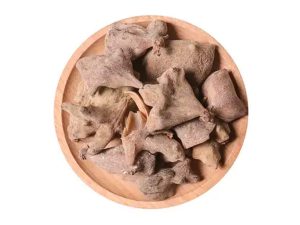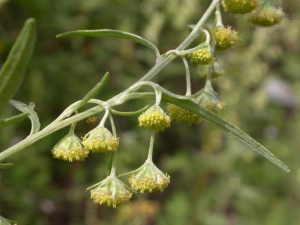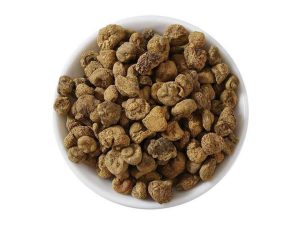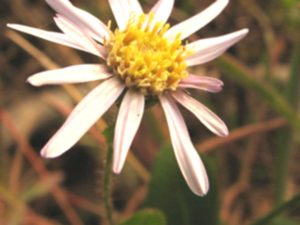
Evergreen Cypress is a name used in traditional Chinese medicine. It refers to the dried whole plant of Asplenium incisum Thunb., a species belonging to the genus Asplenium in the family Aspleniaceae.The plant Asplenium incisum is distributed throughout areas south of the Yangtze River in China, including Henan, Hebei, Liaoning, and as far east as Taiwan. It is also found in North Korea, Japan, and the Russian Far East (Vladivostok). It has the therapeutic effects of clearing heat and detoxifying, calming the liver and alleviating convulsions, and relieving pain. It is primarily used to treat hepatitis, infantile convulsions, toothache, and venomous snake bites.
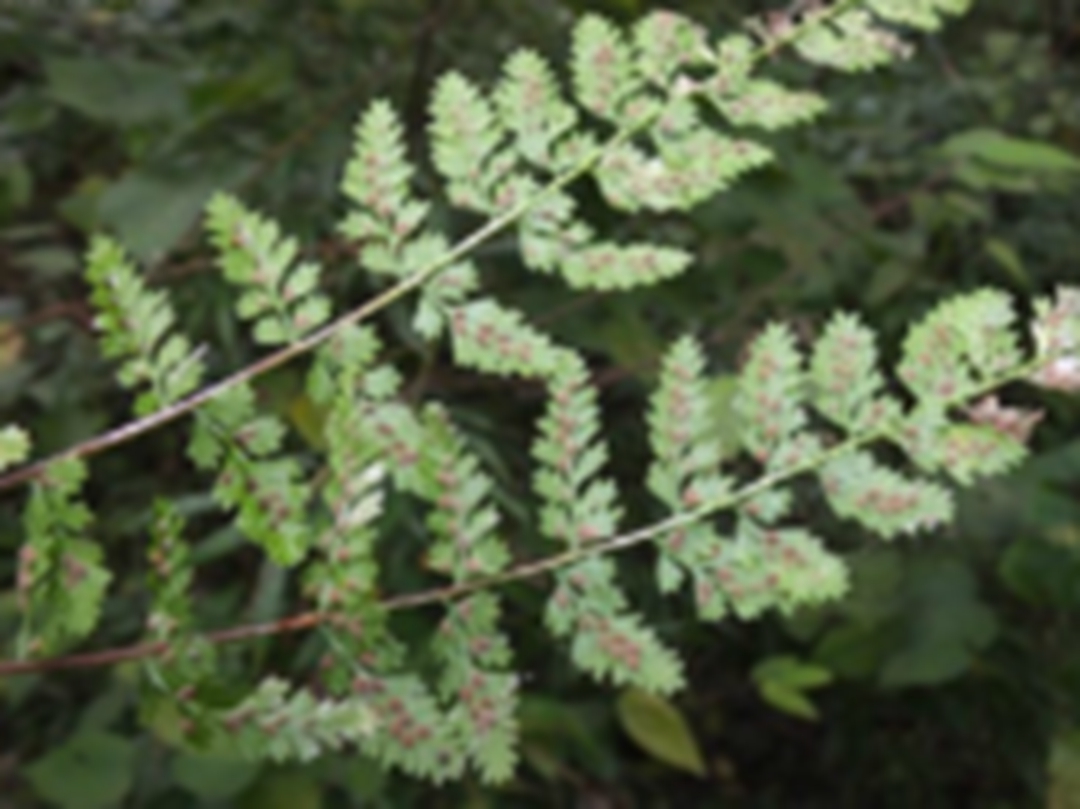
Evergreen Cypress
Evergreen Cypress is a name used in traditional Chinese medicine. It refers to the dried whole plant of Asplenium incisum Thunb., a species belonging to the genus Asplenium in the family Aspleniaceae.The plant Asplenium incisum is distributed throughout areas south of the Yangtze River in China, including Henan, Hebei, Liaoning, and as far east as Taiwan. It is also found in North Korea, Japan, and the Russian Far East (Vladivostok). It has the therapeutic effects of clearing heat and detoxifying, calming the liver and alleviating convulsions, and relieving pain. It is primarily used to treat hepatitis, infantile convulsions, toothache, and venomous snake bites.
Chinese Name : 万年柏
Aliases : Tiger-tail Fern, Deeply-lobed Iron-horn Fern, Ground Cypress Branch, Cave Immortal *Compendium of Chinese Herbal Medicines*
Nature, Flavor & Meridian Tropism : Taste: bitter, sweet; Nature: cool. Enters the Lung, Liver, and Stomach meridians
Benefits & Efficacy
Benefits
Clears heat and detoxifies; calms the liver and alleviates convulsions; relieves pain.
Indications
Hepatitis, infantile convulsions, toothache, venomous snake bites.
Usage and Dosage
Internal use: Decoct in water and take 15–30 g. External use: Apply an appropriate amount after pounding into a paste; use raw to clear heat; use roasted to stop bleeding.
Applications
Related Compatibility
1. For acute jaundice-type infectious hepatitis: 45 g each of whole Tiger-tail Fern, Phoenix Tail Grass, Morai Clubmoss, and Chicken Eye Grass. Decoct in water and take orally. (*Hunan Materia Medica, Volume 4*)
2. For treating infantile convulsions: 15 g of the whole plant of Tiger-tail Fern, or add 15 g each of Half-side Lily and Sorghum Root. Decoct in water and take orally. (Hunan Materia Medica, Vol. 4)
Processing & Preparation
Harvesting & Processing
Harvest in summer or fall; wash thoroughly and sun-dry.
Crude Drug Identification
Botanical Information
Botanical Classification
Tiger-tail Iron-horn Fern (*Tiger-tail Iron-horn Fern*, genus *Iron-horn Fern*, family *Iron-horn Fern*).
Morphological Characteristics
The plant grows to a height of 10–30 cm. The rhizome is short, erect, or prostrate, with the apex densely covered with scales; the scales are narrowly lanceolate, 3–5 mm long, no more than 0.5 mm wide, membranous, black, with a slight iridescent sheen, and entire.Leaves are densely clustered; petioles are 4–10 cm long, about 1 mm thick, pale green, or usually chestnut or reddish-brown, with a pale green narrow margin on each side of the upper surface; they are glossy, with shallow, broad longitudinal grooves on the upper surface, and are initially covered with a few brown, fibrous micro-scales that later fall off;The leaf blade is broadly lanceolate, 10–27 cm long, 2–4 (–5.5) cm wide at mid-length, tapering gradually at both ends, with a gradually tapering apex, and twice-pinnate (sometimes once-pinnate);There are 12–22 pairs of pinnae; those at the base are opposite or nearly opposite, while those higher up are alternate, spreading obliquely or nearly horizontally, with very short petioles (up to 1 mm long). The lower pinnae gradually shorten to an ovate or semicircular shape, less than 5 mm in length and width, and gradually become more widely spaced;the pairs of leaflets in the middle are spaced 1–1.5 cm apart, widely spaced from one another, with intervals approximately equal to the width of the leaflets; they are triangular-lanceolate or lanceolate, 1–2 cm long, 6–12 mm wide at the base, with a gradually tapering apex and coarse teeth, once-pinnate or deeply lobed to the rachis;There are 4–6 pairs of leaflets, arranged alternately, spreading obliquely, and closely appressed to one another; the basal pair is larger, 4–7 mm long and 3–5 mm wide, elliptic or ovate, with a rounded apex and coarse teeth; the base is broadly cuneate, sessile or more or less fused with the rachis and extending downward along it.Veins are visible on both surfaces; the midrib on the pinnules is inconspicuous, and the lateral veins are dichotomous or simple, often 2–3-forked at the base; they are slender, slanting upward, and bear distinct water sacs at the tips that extend into the teeth but do not reach the leaf margin.Leaves are thin and herbaceous, grass-green when dry, and smooth; the rachis is pale straw-colored or chestnut or reddish-brown on the underside, glossy and smooth, with shallow, broad longitudinal grooves on the upper surface and narrow, linear wings on either side of the apex. Spore clusters are elliptical, about 1 mm long,brown, slanting upward, borne in the middle or lower part of the minor veins, close to the midrib, not reaching the leaf margin; the base usually bears a pair of small pinnae with 2–4 pairs of closely spaced, regular segments; the indusia are elliptical, grayish-yellow, later turning pale gray, membranous, entire, opening toward the midrib, occasionally toward the leaf margin.
Distribution Area
It is distributed throughout areas south of the Yangtze River in China, as well as in Henan, Hebei, Liaoning, and as far east as Taiwan; it is also found in North Korea, Japan, and the Russian Far East (Vladivostok).