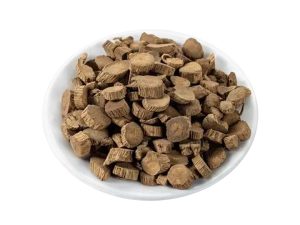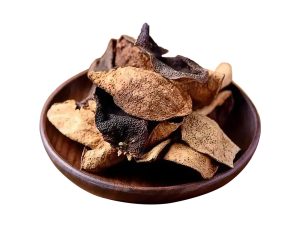
Diedacao is the name of a traditional Chinese medicine. It consists of the stems and leaves of Asystasia gangetica (L.) J. Anders., a plant in the Acanthaceae family. It is distributed in Guangxi and Yunnan. It has the effects of dispersing blood stasis, reducing swelling, mending fractures, and stopping bleeding. It is commonly used for bruises and swelling, fractures, and bleeding from external injuries.
Diedacao
Diedacao is the name of a traditional Chinese medicine. It consists of the stems and leaves of Asystasia gangetica (L.) J. Anders., a plant in the Acanthaceae family. It is distributed in Guangxi and Yunnan. It has the effects of dispersing blood stasis, reducing swelling, mending fractures, and stopping bleeding. It is commonly used for bruises and swelling, fractures, and bleeding from external injuries.
Chinese Name : 跌打草
Aliases : Slender-spiked Alchemilla, Thief’s Grass
Nature, Flavor & Meridian Tropism : Pungent in taste, neutral in nature. Entering the Heart and Liver meridians
Benefits & Efficacy
Benefits
Dispels blood stasis, reduces swelling, sets broken bones, and stops bleeding.
Indications
Bruises, swelling, pain, fractures, and bleeding from external injuries.
Usage and Dosage
Internal use: Decoct 15–30 g. External use: Apply an appropriate amount, pounded and applied as a poultice.
Relevant Discussions
1. *Compendium of Guangxi Traditional Chinese Medicine*: “Dispels blood stasis, stops bleeding, relieves pain, and mends fractures. Treats contusions, fractures, and traumatic bleeding.”
2. *Selected Compendium of Guangxi Materia Medica*: “Dispels blood stasis, reduces swelling, stops bleeding, and mends fractures. Treats bone pain from contusions, fractures, and traumatic bleeding.”
3. *Concise Compendium of Guangxi Ethnic Medicine*: “Treats uterine prolapse and rectal prolapse (Zhuang ethnic group).”
Applications
Related Compatibility
1. For swelling and pain from contusions and fractures, and fractures: 30–60 g of fresh (Dieda Cao) stems and leaves; pound into a paste, wrap in tree leaves, warm gently, and apply externally. (*Selected Compendium of Guangxi Materia Medica*)
2. For bleeding from external injuries: Pound fresh (Diedacha) leaves into a paste and apply externally. (*Selected Compendium of Guangxi Materia Medica*) 3. For uterine prolapse and rectal prolapse: Use an appropriate amount of Diedacha. Pound it into a paste, warm it gently, and apply it to the vulva or anus (push the prolapsed tissue back into place before application). (*Concise Compendium of Guangxi Ethnic Medicines*)
Processing & Preparation
Harvesting & Processing
It can be harvested year-round and is most often used fresh.
Crude Drug Identification
Properties of Crude Drugs
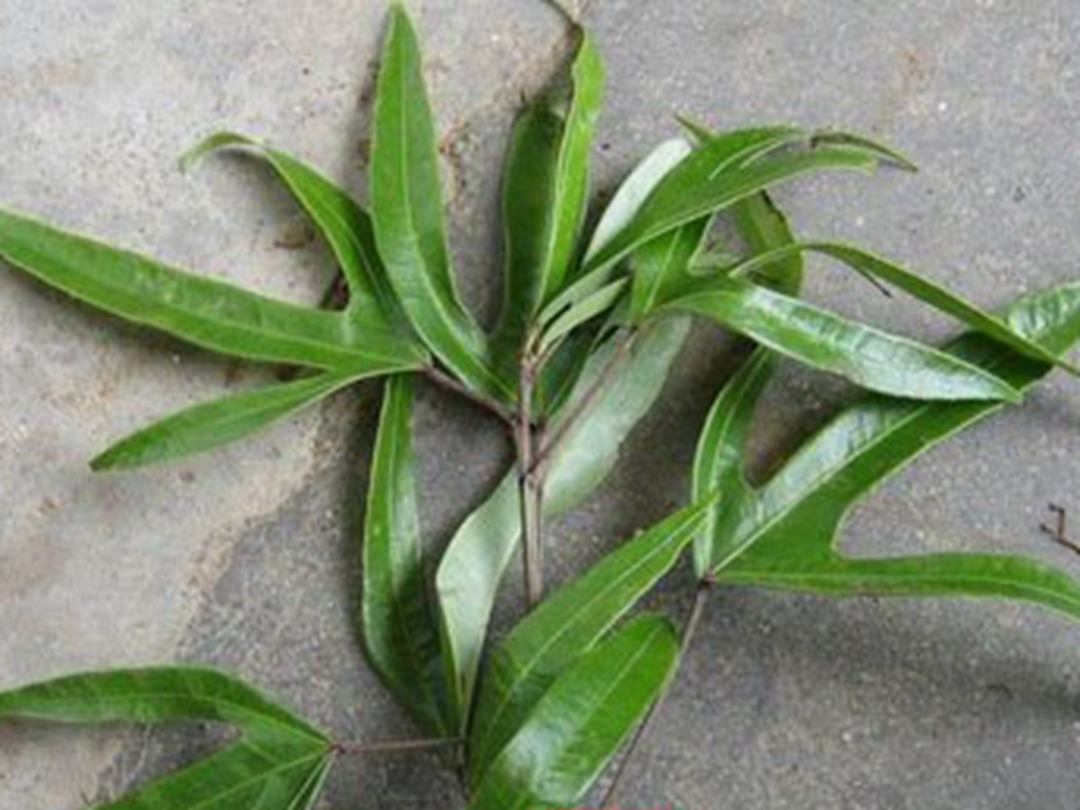
The whole plant can grow up to 1 m in length and is usually cut into sections. The stem has longitudinal ridges, is sparsely branched, and has swollen nodes. The leaves are opposite, wrinkled, and the entire leaf is lanceolate, 6–12 cm long, with a gradually tapering or long-tapering apex, a wedge-shaped base, and a short petiole.
Botanical Information
Botanical Classification
A plant of the Acanthaceae family, *Shiwangcuo*.
Morphological Characteristics
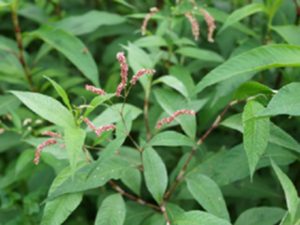
A perennial herb reaching up to 1 m in height. The stem is ribbed, green, with swollen, purplish nodes. Simple leaves are opposite and have short petioles; the leaf blades are ovate-lanceolate or elliptic, 8–11 cm long and 3–3.5 cm wide, with an acuminate or caudate apex, a nearly rounded base, and entire margins; the upper surface is green and rough, while the lower surface is pale green and sparsely pubescent.The raceme is terminal, approximately 8 cm long; flowers are mostly solitary and偏向 one side; pedicels are approximately 3 cm long; both bracts and bracteoles are small and linear; the calyx is 5-lobed to the base;Flowers are white; the corolla tube is short, expanded at the top, and 5-lobed at the apex, with lobes of nearly equal size; there are 4 stamens, diadelphous, with 2 anther chambers of unequal height and a small white tip at the base. The capsule is oblong, 1.8–2.2 cm long, containing 4 seeds in the upper part, while the lower part is solid and stalk-like. Flowering period: November–December through March of the following year.
Distribution Area
Distributed in Guangxi and Yunnan.