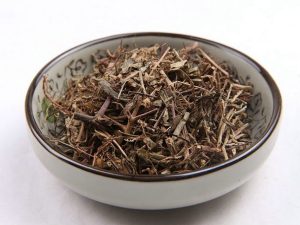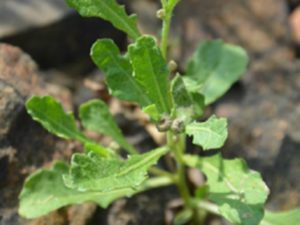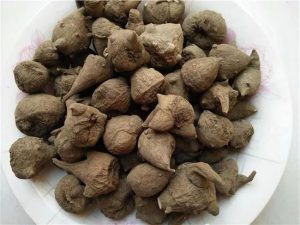
Stenotaphrum, a name in traditional Chinese medicine. It refers to the whole plant of Stenotaphrum helferi Munro ex Hook. f., a member of the Poaceae family. It is distributed in Guangdong, Guangxi, Yunnan, and other regions. It has the effects of tonifying qi and inducing labor. It is commonly used for gastric ptosis, uterine prolapse, habitual miscarriage, and dystocia.
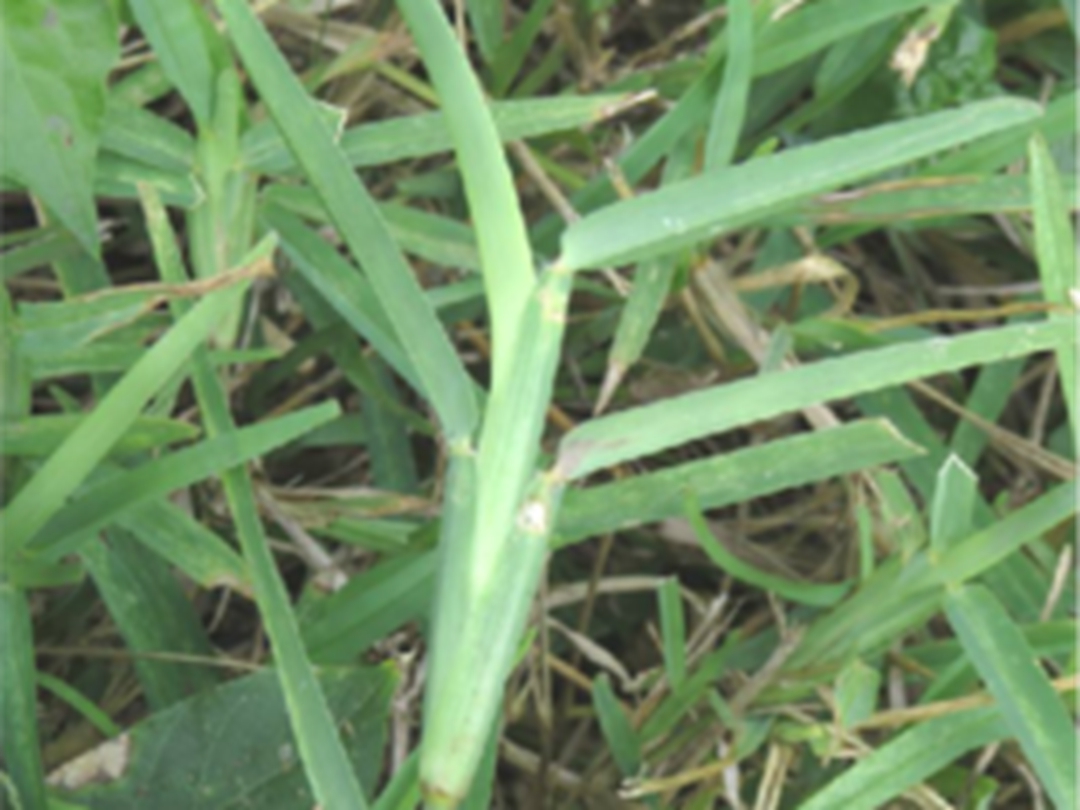
Blunt-leaved Grass
Stenotaphrum, a name in traditional Chinese medicine. It refers to the whole plant of Stenotaphrum helferi Munro ex Hook. f., a member of the Poaceae family. It is distributed in Guangdong, Guangxi, Yunnan, and other regions. It has the effects of tonifying qi and inducing labor. It is commonly used for gastric ptosis, uterine prolapse, habitual miscarriage, and dystocia.
Chinese Name : 钝叶草
Latin Name : Stenotaphrum helferi Munro ex Hook.f.
Aliases : Coix Seed Grass, Duck-Beak Grass
Authentic Producing Area : Guangdong, Guangxi, Yunnan
Nature, Flavor & Meridian Tropism : Sweet in taste, neutral in nature; enters the Stomach and Liver meridians
Benefits & Efficacy
Benefits
Tonifies qi; induces labor.
Indications
Gastric ptosis, uterine prolapse, habitual miscarriage, dystocia.
Usage and Dosage
Internal use: Decoct 15–30 g.
Precautions
Not yet established.
Relevant Discussions
*A Brief Compendium of Guangxi Ethnic Medicines*: “Decoct in water, mix with Longyi (calcined and ground into powder), and take orally to treat prolonged labor and retained placenta.”
Applications
Processing & Preparation
Harvesting & Processing
Harvested in summer and fall; sun-dried.
Crude Drug Identification
Botanical Information
Botanical Classification
A plant of the Poaceae family, known as Blunt-leaved Grass.
Morphological Characteristics
A perennial herb. The lower part of the culm is prostrate, rooting at the nodes, and producing erect flowering stems 10–40 cm tall. The leaf sheaths are loose, usually longer than the internodes, flattened with a ridge on the back, often covering only the lower part of the internode, smooth and glabrous;The ligule is extremely short, with short white cilia at the apex; the leaf blade is strap-shaped, 5–17 cm long and 5–11 mm wide, with a slightly blunt apex and a short point, a truncate or nearly rounded base, glabrous on both surfaces, and a rough margin.The inflorescence rachis is flattened and leaf-like, winged, 10–15 cm long, 3–5 mm wide, with slightly rough margins; the spikelets are embedded in depressions along the rachis, 7–18 mm long, with a trigonal rachilla that is rough-edged and extends beyond the terminal spikelet to form a small point at the apex;Spikelets are alternate, ovate-lanceolate, 4–4.5 mm long, containing two florets, with only the second floret fertile; glumes are acute at the apex, with small transverse veins between the main veins; the first glume is broadly ovate, 1/2–2/3 the length of the spikelet, with (3–)5–7 veins; the second glume is approximately as long as the spikelet, with 9–11 veins; the first floret is male;The first glume is as long as the spikelet, with 7 veins; the inner glume is thickly membranous, slightly shorter than the outer glume, with 2 veins; the second glume is leathery, with a small, pubescent tip, and its margin wraps around the inner glume. Flowering and fruiting occur in autumn.
Distribution Area
Distributed in Guangdong, Guangxi, Yunnan, and other regions.