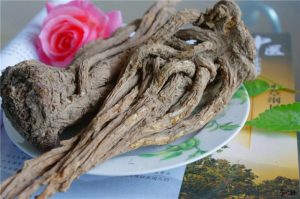
Dong Quai
Gastrodia Elata
Astragalus
Cordyceps sinensis
cordyceps tea
Grains
Legumes

Pottsia

Pottsia is a traditional Chinese medicinal herb derived from the roots of Pottsia laxiflora (Blume) O.K. Tünze, a plant in the Apocynaceae family. It is named “Pottsia” because its fruits are long and slender, numerous, and hang down like a door curtain.Traditional medicine considers it to have a bitter and pungent taste and a slightly warm nature; it enters the Liver and Kidney meridians and is effective in dispelling wind and dampness, as well as promoting blood circulation and unblocking the meridians. It is commonly used to treat rheumatic pain, trauma, and amenorrhea in women.

Mi Sui Hua

Misuihua, a name in traditional Chinese medicine. It refers to the stems and leaves of Euryachinensis R.Br., a plant in the genus Euryachinensis of the family Theaceae. The plant is distributed in Jiangxi, Fujian, Taiwan, Hunan, Guangdong, Guangxi, Guizhou, and other regions. It has the effects of clearing heat, removing dampness, detoxifying, and promoting the healing of sores.It is primarily used to treat common cold with fever, damp-heat jaundice, sores, abscesses, and toxic swellings, burns and scalds, snake and insect bites, and bleeding from external injuries.

Red-haired Acanthopanax

Red-haired Acanthopanax, a name in traditional Chinese medicine. It is the stem bark or root bark of Acanthopanax giraldii Harms, a plant in the Araliaceae family. It is distributed in Hebei, Shanxi, Shaanxi, Ningxia, Qinghai, Henan, Hubei, Sichuan, and other regions. It has the effects of dispelling wind-dampness, strengthening tendons and bones, and promoting blood circulation and diuresis.It is commonly used to treat wind-cold-damp bi syndrome, stiffness and pain, weakness of tendons and bones, weakness in the feet and knees, pain in the chest and abdomen, hernias, trauma, fractures, and edema due to physical debility.

Schizonepeta

Schizonepeta, a name in traditional Chinese medicine, refers to the dried aerial parts of Schizonepeta tenuifolia Briq., a plant belonging to the genus Schizonepeta in the Lamiaceae family.This herb has the effects of dispelling wind and relieving exterior syndromes, promoting the eruption of rashes and resolving sores, and stopping bleeding. It is primarily used to treat exterior syndromes caused by external pathogens, measles that fail to erupt, itching associated with rubella, early-stage sores and ulcers accompanied by exterior syndromes, as well as vomiting of blood, epistaxis, and hemorrhage.

Star Anise (Ba Jiao Hui Xiang)

Star Anise

Botanical Source The ripe fruit of Illicium verum Hook.f., a plant belonging to the Magnoliaceae family. Nature, Flavor & Meridian Tropism Pungent in flavor, warm in nature. It acts on the Liver, Kidney, Spleen and Stomach meridians. Functions & Indications Warms yang and dispels cold, regulates qi and relieves pain. It is categorized as an … Read more

Clove (Ding Xiang)

Clove (Ding Xiang)

Botanical Source The flower bud of Eugenia caryophyllata Thunb., a plant of the Myrtaceae family. Nature, Flavor & Meridian Tropism Pungent in flavor, warm in nature. It acts on the Spleen, Stomach and Kidney meridians. Functions & Indications Warms the middle energizer and reverses adverse qi flow; tonifies the kidney and strengthens yang. It is … Read more